Buying Ferry Tickets
Kupowanie biletów na prom
Emma and Jack buy tickets for the ferry to the island. They ask about the price and the next sailing.
Emma i Jack kupują bilety na prom na wyspę. Pytają o cenę i najbliższy rejs.
Dialog7
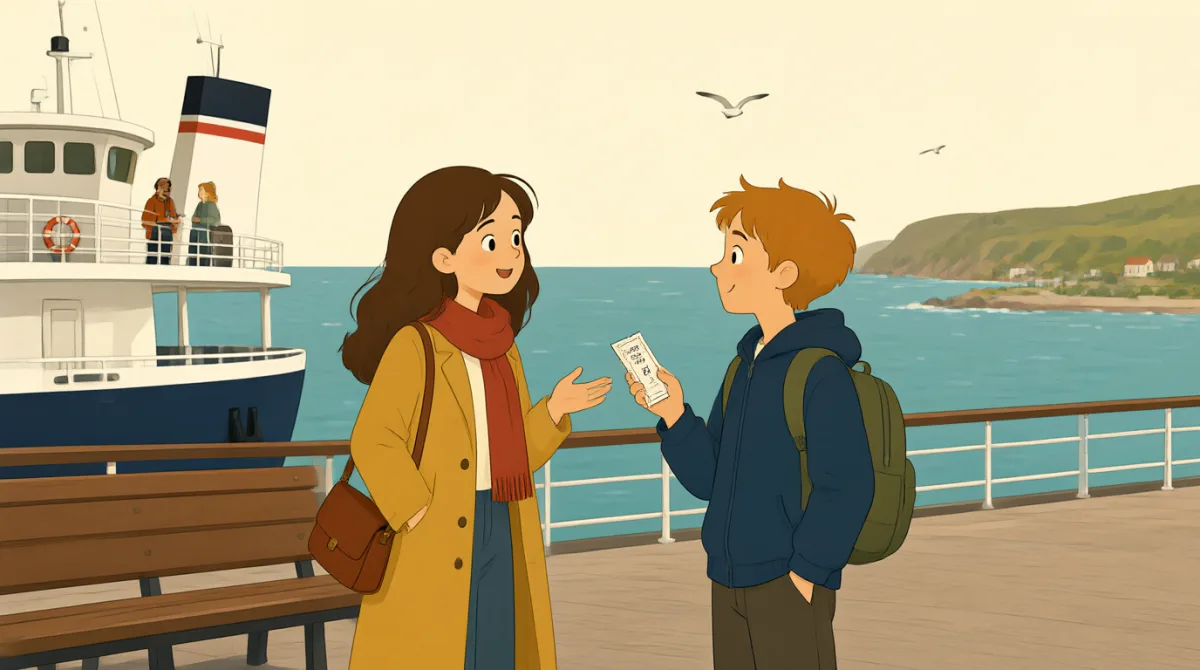

Hi, two tickets to the island, please. How much are they?
Dzień dobry, poproszę dwa bilety na wyspę. Ile kosztują?

And when is the next ferry? We’d like to leave soon.
A kiedy odpływa najbliższy prom? Chcielibyśmy wkrótce wyruszyć.
Is it the one that leaves at ten thirty?
Czy chodzi o ten, który odpływa o dziesiątej trzydzieści?
Yes, that works. Do we need to buy return tickets now?
Tak, pasuje. Czy musimy już teraz kupić bilety powrotne?
How much are two round-trip tickets altogether?
Ile łącznie kosztują dwa bilety w obie strony?
Great. I’ll pay by card. Can we board right away?
Świetnie. Zapłacę kartą. Czy możemy od razu wejść na pokład?
Thanks! Which way should we go to get on the ferry?
Dziękuję! Którędy powinniśmy iść, żeby wejść na prom?
Słownictwo8
- two tickets to the islanddwa bilety na wyspę
This means two ferry tickets for travel to the island. Use “tickets to [place]” when buying tickets for a destination.
Chodzi o dwa bilety na prom na wyspę. Przy kupowaniu biletów do danego miejsca użyj angielskiego wyrażenia “tickets to [place]”.
- How much are they?Ile kosztują?
This asks for the price of the tickets. Use it to ask how much several items cost.
To pytanie o cenę biletów. Użyj go, by zapytać, ile kosztuje kilka rzeczy.
- the next ferrynajbliższy prom
This means the ferry that will leave soonest. Use “the next [bus/train/ferry]” to ask about the soonest departure.
Chodzi o prom, który odpłynie najwcześniej. Użyj wyrażenia “the next [bus/train/ferry]”, by zapytać o najbliższy odjazd.
- leave soonwkrótce wyruszyć
This means to go in the near future. Use it when you want to travel shortly.
Chodzi o wyjazd w niedalekiej przyszłości. Użyj tego wyrażenia, gdy chcesz wkrótce gdzieś pojechać.
- return ticketsbilety powrotne
These tickets let you travel to a place and come back. You can ask if you need to buy them before your trip.
Te bilety pozwalają dojechać do jakiegoś miejsca i wrócić. Możesz zapytać, czy trzeba je kupić przed podróżą.
- round-trip ticketsbilety w obie strony
These tickets include travel there and back. This phrase is useful when asking about the total cost of a return journey.
Te bilety obejmują podróż tam i z powrotem. To przydatne wyrażenie, gdy pytasz o całkowity koszt podróży powrotnej.
- pay by cardzapłacić kartą
This means to use a bank or credit card to pay. You can say “I’ll pay by card” when choosing how to pay.
Chodzi o płacenie kartą bankową lub kredytową. Możesz powiedzieć “I’ll pay by card”, gdy wybierasz sposób płatności.
- board right awayod razu wejść na pokład
This means to get on the ferry immediately. Use “board” when getting on a ship, plane, or other form of transport.
Chodzi o natychmiastowe wejście na prom. Czasownika “board” używa się, mówiąc o wsiadaniu na statek, do samolotu lub innego środka transportu.
Kluczowe zdania8
- 1
Hi, two tickets to the island, please.
Dzień dobry, poproszę dwa bilety na wyspę.
This is a polite way to buy tickets. You can reuse it by changing the number of tickets or the destination.
To uprzejmy sposób na kupienie biletów. Możesz użyć tego zwrotu ponownie, zmieniając liczbę biletów lub miejsce docelowe.
- 2
How much are they?
Ile kosztują?
Use this to ask for the price of several things. “They” refers to the tickets.
Użyj tego pytania, by zapytać o cenę kilku rzeczy. “They” odnosi się do biletów.
- 3
And when is the next ferry?
A kiedy odpływa najbliższy prom?
This is a useful way to ask about the soonest departure. Replace “ferry” with another type of transport, such as “bus” or “train.”
To przydatny sposób, by zapytać o najbliższy odjazd. Zastąp “ferry” innym środkiem transportu, na przykład “bus” lub “train”.
- 4
We’d like to leave soon.
Chcielibyśmy wkrótce wyruszyć.
This politely explains that you want to travel soon. You can use “We’d like to…” to state what you want.
To uprzejmy sposób, by wyjaśnić, że chcecie wkrótce wyruszyć. Możesz użyć “We’d like to…”, by powiedzieć, czego chcecie.
- 5
Do we need to buy return tickets now?
Czy musimy już teraz kupić bilety powrotne?
Use this to ask if you should buy tickets for the journey back at the same time. Replace “return tickets” with another thing you need to buy.
Użyj tego pytania, by dowiedzieć się, czy bilety na drogę powrotną trzeba kupić od razu. Zastąp “return tickets” inną rzeczą, którą musisz kupić.
- 6
How much are two round-trip tickets altogether?
Ile łącznie kosztują dwa bilety w obie strony?
This asks for the total price of two tickets for travel there and back. You can change the number or type of ticket.
To pytanie o łączną cenę dwóch biletów na podróż tam i z powrotem. Możesz zmienić liczbę lub rodzaj biletów.
- 7
I’ll pay by card.
Zapłacę kartą.
This is a simple way to say how you will pay. Replace “by card” with another payment method, such as “in cash.”
To prosty sposób, by powiedzieć, jak zapłacisz. Zastąp “by card” inną metodą płatności, na przykład “in cash”.
- 8
Which way should we go to get on the ferry?
Którędy powinniśmy iść, żeby wejść na prom?
Use this to ask for directions to the place where you board. Replace “ferry” with another form of transport.
Użyj tego pytania, by poprosić o wskazówki, jak dotrzeć do miejsca, w którym wsiada się na pokład. Zastąp “ferry” innym środkiem transportu.