Reviewing the New Lease
Emma and Mia carefully review the revised lease, checking the rent, term, repair commitments, and notice requirements. Mia flags a clause that Emma wants David to clarify before she signs.
Dialogue10
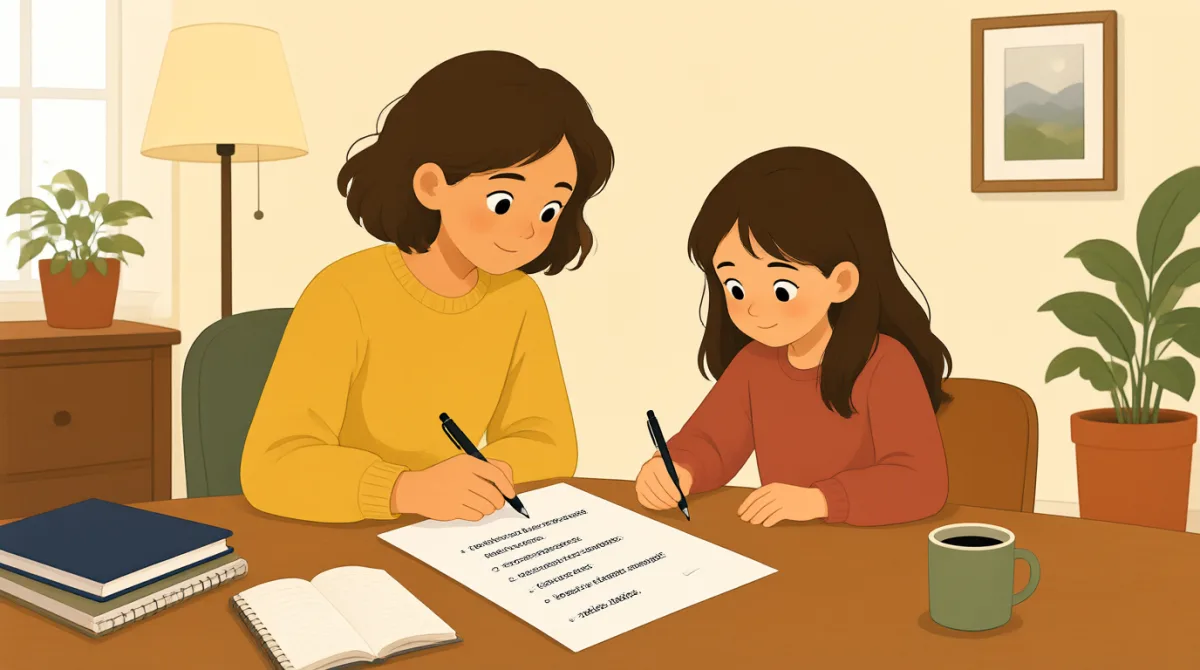

I’ve printed the revised lease. The rent is lower than the first offer, and the term is twelve months, as we discussed. Can you check it with me?

Of course. The rent and start date look right. I’d also make sure the repair commitments are written into the lease, not just mentioned in a separate email.
They’re listed here: the kitchen tap will be fixed within two weeks, and the drafty window will be sealed by the end of next month. That matches what we agreed.
Good. I’d keep a copy of this version, too. Now, what does the section on notice say? That’s often where the wording gets a little tricky.
It says I have to give sixty days’ notice before the lease ends if I don’t plan to renew. I thought the deadline was thirty days. Did I misunderstand?
Maybe, but don’t assume. Check whether that clause applies to ending the lease or only to opting out of another renewal. The distinction matters.
You’re right. It says I need to give sixty days’ notice to vacate, but it doesn’t explain what happens if I miss that date. I’d rather get that clarified.
That’s sensible. You could ask whether the lease would automatically convert to month-to-month, and if so, whether the rent or notice period would change.
I’ll ask before I sign. Everything else looks consistent, but I don’t want to gloss over a clause that could leave me on the hook for another month’s rent.
Exactly. Once you get a clear answer in writing, compare it with the rest of the agreement, then you’ll be in a much better position to decide.
Vocabulary6
- repair commitments
Promises to complete specific repairs. Here, they refer to the landlord’s agreement to fix the tap and seal the window.
- written into the lease
Included as part of the formal rental agreement. This makes the commitment easier to verify than a promise made only in conversation.
- give sixty days’ notice
Tell the other party at least sixty days in advance. The phrase is useful when discussing deadlines for ending or renewing an agreement.
- convert to month-to-month
Change from a fixed-term rental agreement to one that renews monthly. You can use this phrase to ask what happens after a lease term ends.
- on the hook for
Responsible for paying or dealing with something. In this context, Emma is concerned she might have to pay another month’s rent.
- gloss over
Ignore or give too little attention to an important detail. It is often used when someone wants to make sure a problem is examined carefully.
Key Sentences7
- 1
I’d also make sure the repair commitments are written into the lease, not just mentioned in a separate email.
This is a useful way to request that an important promise be included in a formal agreement. You can reuse the structure “I’d make sure [something] is written into [document].”
- 2
I thought the deadline was thirty days. Did I misunderstand?
This politely checks a possible misunderstanding without directly accusing the other person of making an error. Use it when information seems different from what you expected.
- 3
Check whether that clause applies to ending the lease or only to opting out of another renewal.
This sentence shows how to ask someone to distinguish between two possible meanings of a contract clause. The pattern “Check whether [rule] applies to A or only to B” is useful when clarifying terms.
- 4
I’d rather get that clarified.
This is a concise way to say that you want more information before moving forward. The phrase “I’d rather” helps express a preference tactfully.
- 5
You could ask whether the lease would automatically convert to month-to-month, and if so, whether the rent or notice period would change.
This sentence models a careful, conditional question about what might happen under an agreement. “And if so” is useful for asking a follow-up based on a possible answer.
- 6
Everything else looks consistent, but I don’t want to gloss over a clause that could leave me on the hook for another month’s rent.
This balances a positive assessment with a specific concern. It is useful when you want to explain why one unresolved detail matters before you agree to something.
- 7
Once you get a clear answer in writing, compare it with the rest of the agreement, then you’ll be in a much better position to decide.
This gives practical advice in a clear sequence: get written confirmation, review the agreement, and then decide. You can reuse “Once you [action], [next step], then you’ll be in a better position to [decision].”