Practicing With a Friend
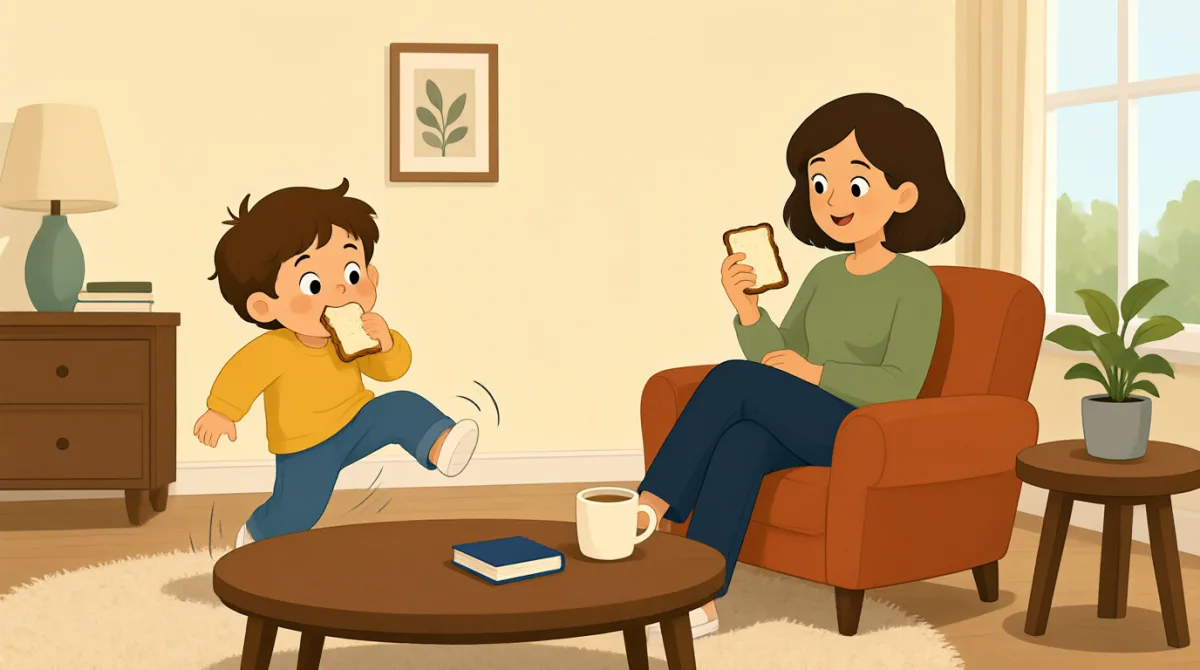
Leo practices his toast with Emma and stumbles over a few lines. She offers practical advice about slowing down, making eye contact, and keeping the speech brief.
Dialogue9

Okay, Emma, here goes. “Jack and Mia are the kind of couple who make every room brighter...” Wait, that sounds cheesy.

It’s a sweet idea, but try saying it in your own voice. Start with the story you picked, and let that show why they work so well together.
Right. “Last summer, Jack brought Mia a huge umbrella, even though the sun was shining. He said, ‘You never know.’”
That’s funny, and it shows how thoughtful he is. Slow down a little, though—you rushed through the best part.
I did, didn’t I? I get nervous and start racing. Should I look at my notes the whole time?
Just glance at them when you need to. Make eye contact with Jack and Mia, then look around the room. It’ll feel more personal.
Okay, let me try again. “Jack always plans ahead, and Mia makes even his careful plans more fun.” Is that too much?
No, that’s lovely. Keep it brief, take a breath before you start, and don’t worry about sounding perfect.
Thanks. I’ll keep the story, look up more, and speak slowly. I think I can do this now.
Vocabulary7
- in your own voice
To say something in a way that feels natural and true to you. Use it when you want someone to sound genuine rather than overly formal.
- work so well together
To have qualities or personalities that fit together nicely. You can use this phrase to describe a successful team or couple.
- Slow down a little
A gentle way to ask someone to speak or move more slowly. You can use it when someone is rushing and you want them to be easier to follow.
- glance at them
To look at something quickly. Here, it means checking notes briefly without reading them the whole time.
- make eye contact
To look at someone’s eyes while speaking or listening. It can help a conversation or speech feel more personal.
- keep it brief
To make something short and focused. Use this advice when a speech, message, or explanation should not take too long.
- take a breath
To breathe in before doing something, often to relax or prepare. It is useful advice when you feel nervous before speaking.
Key Sentences7
- 1
It’s a sweet idea, but try saying it in your own voice.
This sentence gives kind, practical feedback while encouraging someone to sound natural. Use “try [verb]-ing” to make a gentle suggestion.
- 2
Start with the story you picked, and let that show why they work so well together.
This explains how to use a story to support a point. You can adapt it with “Start with [example], and let that show why [person or thing]...”.
- 3
Slow down a little, though—you rushed through the best part.
This gives specific feedback about speaking pace and explains why it matters. “You rushed through” can describe doing something too quickly.
- 4
Should I look at my notes the whole time?
This is a useful way to ask for advice about what to do in a situation. Replace “look at my notes” with another action you are unsure about.
- 5
Make eye contact with Jack and Mia, then look around the room.
This gives clear instructions for connecting with an audience. You can use “Make eye contact with [person], then...” to describe a sequence.
- 6
Keep it brief, take a breath before you start, and don’t worry about sounding perfect.
This combines practical advice with reassurance. Use this pattern to offer several simple suggestions before a stressful task.
- 7
I’ll keep the story, look up more, and speak slowly.
This sentence summarizes a plan using a series of actions. You can adapt it with “I’ll [action], [action], and [action]” to explain what you will do.