Talking With Guests Afterwards
After the toast, guests tell Leo they enjoyed his story, and he chats with Jack and Mia about how the speech went. He admits he was nervous at first but is glad he spoke from the heart.
Dialogue9
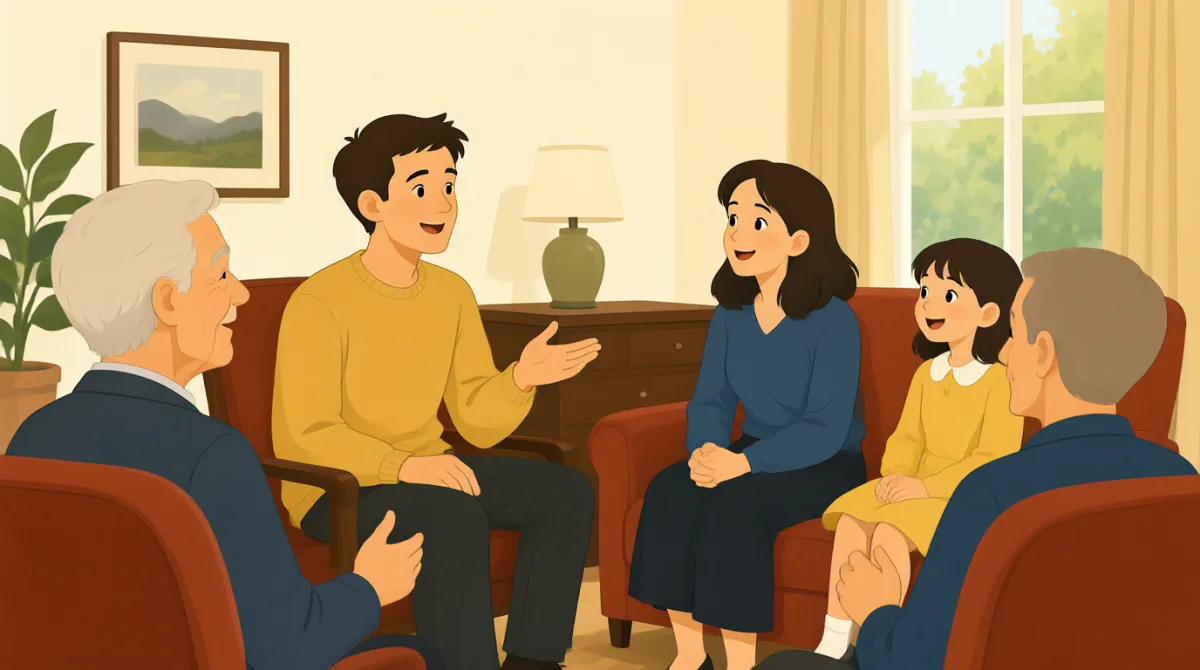

Leo, that was a great toast. You made everyone laugh, and then you said exactly what Mia and I needed to hear.

Thanks. I was pretty nervous at first, but once I started telling the story, it felt more natural.

You could tell it came from the heart. I loved how you showed that Jack always thinks of other people.
That’s one of the things I admire about him. And you bring out his thoughtful side even more, Mia.
I’m glad you went with that story. It was funny without embarrassing either of us, which is harder than it sounds.
I almost rushed through the ending, but I remembered to slow down. Seeing everyone smile helped me relax.
You did a lovely job. Thank you for making this moment feel even more special for us.
I’m really glad I said yes. I was worried I’d freeze up, but speaking honestly made all the difference.
Well, you’ve earned yourself a piece of wedding cake—and don’t worry, there’s plenty to go around.
Vocabulary8
- pretty nervous
Quite anxious or worried. Use “pretty” before an adjective to make it sound conversational, as in “I was pretty nervous before the interview.”
- came from the heart
Was sincere and expressed genuine feelings. You can say this about a speech, message, or gift that feels honest and personal.
- bring out his thoughtful side
Help him show more of his caring and considerate nature. “Bring out someone’s [quality]” is useful for describing how a person or situation encourages a quality.
- went with that story
Chose to use that story. “Go with” is a natural conversational way to talk about choosing an option.
- rushed through the ending
Said or did the ending too quickly. “Rush through” can describe doing any part of a task without taking enough time.
- freeze up
Become unable to speak or act because you feel nervous. You can use it when talking about presentations, interviews, or other stressful moments.
- made all the difference
Had a very important and positive effect. Use this phrase to explain what helped a situation turn out better.
- plenty to go around
More than enough for everyone to have some. This friendly phrase is useful when offering food, drinks, or other shared things.
Key Sentences8
- 1
I was pretty nervous at first, but once I started telling the story, it felt more natural.
This sentence describes how an activity became easier after you began. Reuse “I was nervous at first, but once I started…” to talk about presentations, conversations, or new experiences.
- 2
You could tell it came from the heart.
This is a warm way to say that someone’s words felt sincere. You can use “You could tell…” to share an impression based on what someone said or did.
- 3
I loved how you showed that Jack always thinks of other people.
This sentence gives a specific reason for liking something. Reuse “I loved how you showed that…” to compliment someone’s writing, speech, or actions.
- 4
I’m glad you went with that story.
This is a natural way to say you think someone made a good choice. Replace “that story” with another option, such as “that restaurant” or “the earlier train.”
- 5
Seeing everyone smile helped me relax.
This explains what made the speaker feel calmer. Use “Seeing [someone] [do something] helped me…” to describe what made a situation easier.
- 6
I was worried I’d freeze up, but speaking honestly made all the difference.
This sentence contrasts a fear with what ultimately helped. Reuse “I was worried I’d…, but…” to describe overcoming a concern, and “made all the difference” to emphasize what helped.
- 7
Thank you for making this moment feel even more special for us.
This is a warm, thoughtful way to thank someone for adding to an important occasion. You can adapt it for celebrations by changing “this moment” to “the day” or “the evening.”
- 8
Well, you’ve earned yourself a piece of wedding cake—and don’t worry, there’s plenty to go around.
This playful sentence rewards someone and reassures them that there is enough to share. Reuse “You’ve earned yourself…” as a lighthearted offer after someone has done something well.