The First Swimming Lesson
첫 수영 수업
Emma brings her daughter to the first lesson and meets Mia, the swimming coach. Mia explains what the children will do in class.
에마는 딸을 첫 수영 수업에 데려와 수영 코치 미아를 만나요. 미아는 아이들이 수업에서 무엇을 할지 설명해요.
대화8
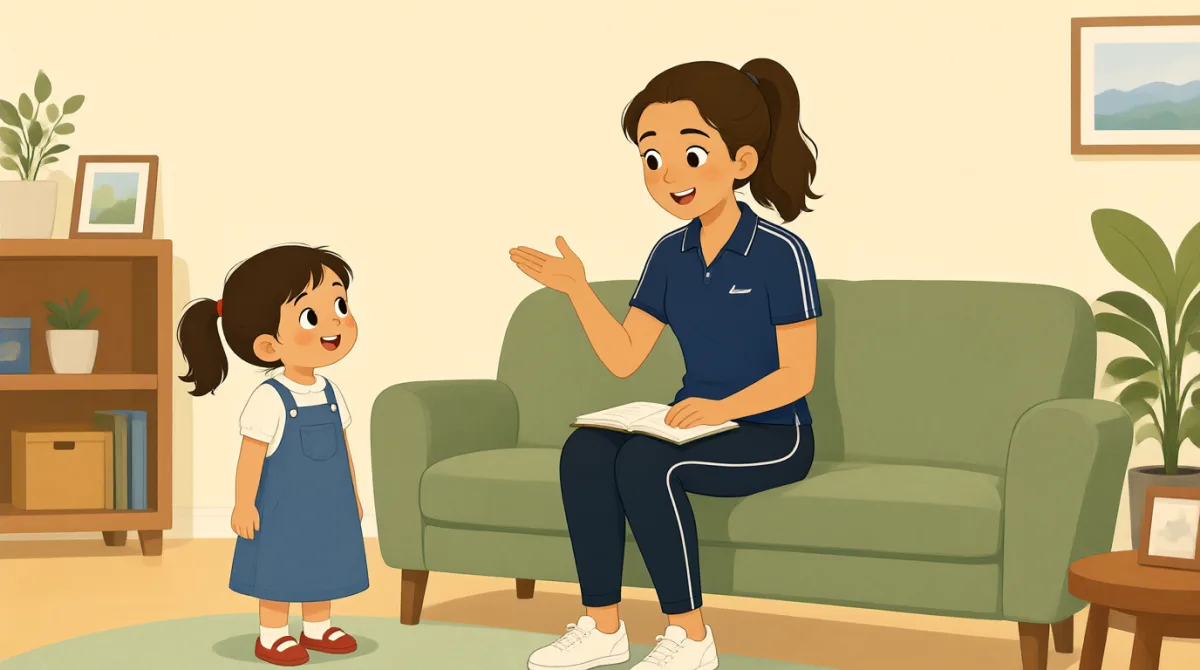

Hi, I’m here for my daughter’s first swimming lesson.
안녕하세요, 딸의 첫 수영 수업 때문에 왔어요.

Welcome! I’m Mia, her coach. Let’s get her ready by the pool.
어서 오세요! 저는 코치 미아예요. 수영장 옆에서 수업 준비를 해 볼게요.
What will the children do in class today?
오늘 수업에서 아이들은 뭘 하나요?
We’ll start with a warm-up, then practice kicking and blowing bubbles.
준비 운동을 하고 나서 발차기와 물속에서 숨을 내쉬어 거품 만들기를 연습할 거예요.
That sounds fun. Should she wear her goggles now?
재미있겠네요. 지금 수경을 써야 하나요?
Yes, please. She should also wear her swim cap and bring a towel.
네, 써 주세요. 수영모도 쓰고 수건도 가져와야 해요.
Okay. Can I watch from here during the lesson?
알겠어요. 수업하는 동안 여기서 지켜봐도 될까요?
Of course. Please stay behind the glass, and I’ll come talk to you afterward.
물론이죠. 유리창 뒤쪽에 계시면 수업이 끝난 후에 제가 와서 말씀드릴게요.
어휘8
- first swimming lesson첫 수영 수업
This is the first class a child has to learn how to swim. You can use “first” before the name of a new class or activity.
아이가 수영을 배우기 위해 처음 듣는 수업이에요. 새로운 수업이나 활동 이름 앞에 “first”를 붙여 말할 수 있어요.
- get her ready준비를 시키다
This means help her prepare for the lesson. You can use “get someone ready” before an activity or event.
수업을 준비할 수 있도록 도와준다는 뜻이에요. 어떤 활동이나 행사가 있기 전에 “get someone ready”라고 말할 수 있어요.
- warm-up준비 운동
A warm-up is easy exercise at the start of a class. It helps the body get ready for more activity.
수업을 시작할 때 하는 가벼운 운동이에요. 더 많이 움직이기 전에 몸을 준비하는 데 도움이 돼요.
- blowing bubbles물속에서 숨을 내쉬어 거품 만들기
This means breathing out into the water to make bubbles. Children often practice this when learning to swim.
물속으로 숨을 내쉬어 거품을 만든다는 뜻이에요. 아이들이 수영을 배울 때 자주 연습하는 동작이에요.
- goggles수경
Goggles are special glasses that protect your eyes in the water. You can ask, “Should I wear my goggles now?”
물속에서 눈을 보호하는 특수 안경이에요. “Should I wear my goggles now?”(지금 수경을 써야 하나요?)라고 물어볼 수 있어요.
- swim cap수영모
A swim cap is a close-fitting hat worn in the pool. You can use “wear a swim cap” to talk about putting one on.
수영장에서 쓰는 머리에 꼭 맞는 모자예요. 수영모를 쓰는 것을 말할 때 “wear a swim cap”이라고 할 수 있어요.
- behind the glass유리창 뒤쪽에
This means on the other side of the glass, where parents can watch the lesson. You can use “behind” to say where someone should stay.
유리창 반대편, 부모가 수업을 지켜볼 수 있는 곳을 뜻해요. 누군가가 어디에 있어야 하는지 말할 때 “behind”를 쓸 수 있어요.
- afterward나중에, 그 후에
“Afterward” means after something is finished. You can use it to say when you will do something later.
“Afterward”는 어떤 일이 끝난 뒤를 뜻해요. 나중에 무엇을 할지 말할 때 쓸 수 있어요.
핵심 문장7
- 1
I’m here for my daughter’s first swimming lesson.
딸의 첫 수영 수업 때문에 왔어요.
Use this sentence to explain why you have come somewhere. You can replace “my daughter’s first swimming lesson” with another appointment or activity.
어떤 장소에 온 이유를 설명할 때 쓰는 문장이에요. “my daughter’s first swimming lesson” 대신 다른 약속이나 활동을 넣을 수 있어요.
- 2
Let’s get her ready by the pool.
수영장 옆에서 수업 준비를 해 볼게요.
This is a friendly way to suggest preparing someone for an activity. Replace “her” with another person, and change “by the pool” to the place where you will get ready.
누군가가 활동을 준비하도록 돕자고 친근하게 제안하는 표현이에요. “her”를 다른 사람으로 바꾸고 “by the pool”에는 준비할 장소를 넣어 보세요.
- 3
What will the children do in class today?
오늘 수업에서 아이들은 뭘 하나요?
Use this question to ask about a class plan. You can replace “the children” with “we” or “my child” to ask about other people.
수업 계획을 물어볼 때 쓰는 질문이에요. 다른 사람들에 대해 물으려면 “the children”을 “we”나 “my child”로 바꿀 수 있어요.
- 4
We’ll start with a warm-up, then practice kicking and blowing bubbles.
준비 운동을 하고 나서 발차기와 물속에서 숨을 내쉬어 거품 만들기를 연습할 거예요.
This sentence explains what will happen first and next. Use “We’ll start with…” to describe the beginning of a lesson or activity.
무엇을 먼저 하고 다음에 할지 설명하는 문장이에요. 수업이나 활동의 시작을 설명할 때 “We’ll start with…”라고 말해 보세요.
- 5
Should she wear her goggles now?
지금 수경을 써야 하나요?
Use “Should she…?” to ask if someone ought to do something. Replace “she” and “wear her goggles” to ask about another person or action.
“Should she…?”는 누군가가 어떤 일을 하는 게 좋을지 물어볼 때 써요. 다른 사람이나 행동에 대해 묻고 싶다면 “she”와 “wear her goggles”를 바꾸면 돼요.
- 6
Can I watch from here during the lesson?
수업하는 동안 여기서 지켜봐도 될까요?
This is a polite way to ask permission to watch. You can replace “watch” with another activity and “the lesson” with another event.
지켜봐도 되는지 정중하게 허락을 구하는 표현이에요. “watch”를 다른 활동으로, “the lesson”을 다른 행사로 바꿔 쓸 수 있어요.
- 7
Please stay behind the glass, and I’ll come talk to you afterward.
유리창 뒤쪽에 계세요. 수업이 끝난 후에 제가 와서 말씀드릴게요.
This sentence gives a polite instruction and explains what will happen later. Use “Please stay…” to ask someone to remain in a place.
정중하게 요청하면서 나중에 무엇을 할지도 알려 주는 문장이에요. 누군가에게 한곳에 머물러 달라고 할 때 “Please stay…”라고 말해 보세요.