Telling a Friend You Are Late
친구에게 늦는다고 말하기
Emma calls Mia and says she is late because she got off at the wrong stop. Mia tells her not to worry.
에마가 미아에게 전화해 잘못된 정류장에서 내려서 늦는다고 말해요. 미아는 걱정하지 말라고 해요.
대화7
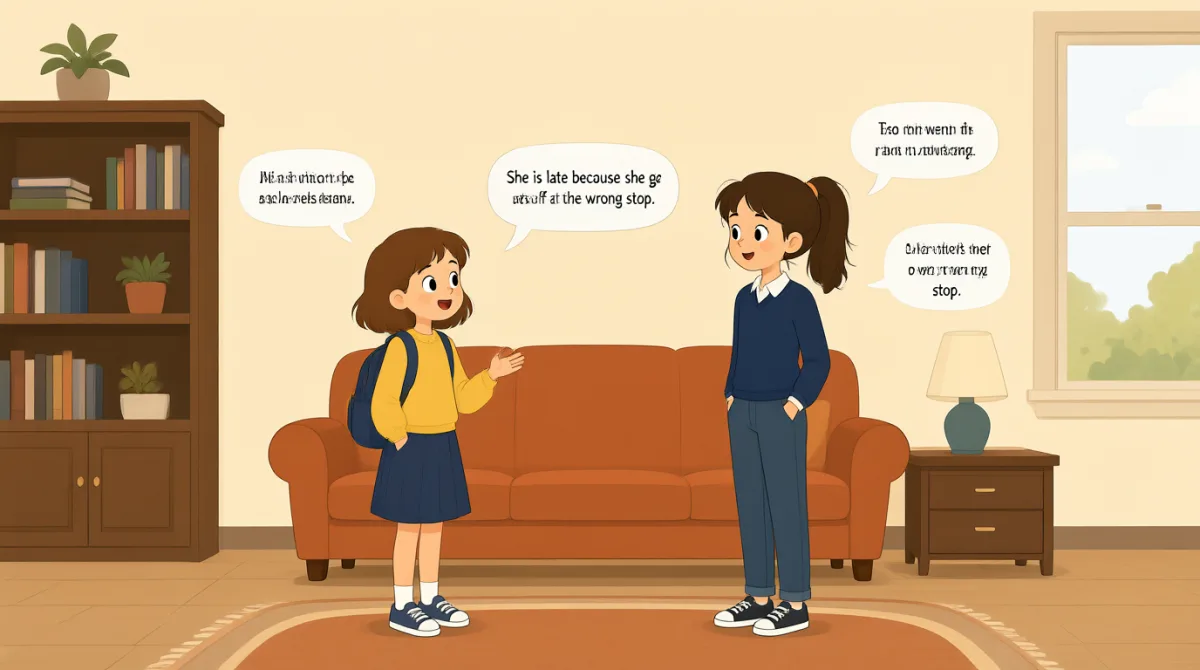

Hi, Mia. I’m sorry, but I’m late.
안녕, 미아. 미안한데 나 늦을 것 같아.

That’s okay. Are you on the train?
괜찮아. 지금 기차 타고 있어?
No. I got off at the wrong stop.
아니. 잘못된 정류장에서 내렸어.
Oh no! Are you going back now?
아이고! 지금 돌아가는 중이야?
Yes. I’m waiting for the next train.
응. 다음 기차 기다리고 있어.
Don’t worry. Take your time.
걱정하지 마. 천천히 와.
Thanks. I’ll call you when I arrive.
고마워. 도착하면 전화할게.
어휘6
- I’m late늦다
This means you are not on time. Use it to tell someone you will arrive after the planned time.
제시간에 도착하지 못한다는 뜻이에요. 약속한 시간보다 늦게 도착할 거라고 누군가에게 알릴 때 써요.
- That’s okay괜찮아
This means you are not upset about something. Use it to make someone feel better.
어떤 일로 기분이 상하지 않았다는 뜻이에요. 상대를 안심시키고 싶을 때 써요.
- the wrong stop잘못된 정류장
This means a stop that is not the one you wanted. Use it when you leave a bus or train in the wrong place.
내리려고 했던 곳이 아닌 정류장을 뜻해요. 버스나 기차를 엉뚱한 곳에서 내렸을 때 써요.
- the next train다음 기차
This means the train that comes after the one you missed or left. You can also say “the next bus.”
놓쳤거나 내린 기차 다음에 오는 기차를 뜻해요. “the next bus”라고도 할 수 있어요.
- Take your time천천히 해
This means there is no need to hurry. Use it to tell someone to go at a comfortable speed.
서두를 필요가 없다는 뜻이에요. 상대에게 편한 속도로 하라고 말할 때 써요.
- when I arrive내가 도착할 때
This means at the time I get to a place. Use it to say when you will do something.
내가 어떤 장소에 도착하는 시점을 뜻해요. 언제 무언가를 할지 말할 때 써요.
핵심 문장8
- 1
I’m sorry, but I’m late.
미안한데 나 늦을 것 같아.
Use this to apologize and explain that you will not arrive on time. You can replace “late” with a short reason, such as “I’m sorry, but I’m sick.”
늦어서 미안하다고 사과하고 제시간에 도착하지 못한다고 설명할 때 써요. “late” 대신 “I’m sorry, but I’m sick.”처럼 짧은 이유를 넣을 수도 있어요.
- 2
Are you on the train?
지금 기차 타고 있어?
Use this question to ask if someone is riding a train now. You can replace “train” with “bus” or another form of transport.
상대가 지금 기차를 타고 있는지 물을 때 써요. “train” 대신 “bus”나 다른 교통수단을 넣을 수 있어요.
- 3
I got off at the wrong stop.
잘못된 정류장에서 내렸어.
Use this to explain that you left a bus or train at a stop you did not want. You can change “stop” to “station” when talking about a train station.
원하지 않았던 정류장에서 버스나 기차를 내렸다고 설명할 때 써요. 기차역에 대해 말할 때는 “stop”을 “station”으로 바꿀 수 있어요.
- 4
Are you going back now?
지금 돌아가는 중이야?
Use this to ask if someone is returning to a place now. You can replace “back” with a place, such as “Are you going home now?”
상대가 지금 어떤 곳으로 돌아가고 있는지 물을 때 써요. “back” 대신 “Are you going home now?”처럼 장소를 넣을 수 있어요.
- 5
I’m waiting for the next train.
다음 기차 기다리고 있어.
Use this to say that you are staying somewhere until another train comes. You can replace “train” with “bus” or another thing you are waiting for.
다음 기차가 올 때까지 어딘가에서 기다리고 있다고 말할 때 써요. “train” 대신 “bus”나 기다리는 다른 것을 넣을 수 있어요.
- 6
Don’t worry.
걱정하지 마.
Use this to comfort someone who feels nervous or upset. You can say it by itself or add a reason to feel calm.
불안하거나 속상한 사람을 안심시킬 때 써요. 이 말만 해도 되고, 안심할 만한 이유를 덧붙여도 돼요.
- 7
Take your time.
천천히 해.
Use this to tell someone that they do not need to hurry. It is a kind response when someone is late or moving slowly.
서두를 필요가 없다고 상대에게 말할 때 써요. 누군가 늦거나 천천히 움직일 때 다정하게 건넬 수 있는 말이에요.
- 8
I’ll call you when I arrive.
도착하면 전화할게.
Use this to promise to call someone after you get to a place. Replace “call” with another action, such as “text you.”
어떤 장소에 도착한 뒤 전화하겠다고 약속할 때 써요. “call” 대신 “text you”처럼 다른 행동을 넣을 수 있어요.