Telling a Friend You Are Late
告诉朋友自己迟到了
Emma calls Mia and says she is late because she got off at the wrong stop. Mia tells her not to worry.
艾玛打电话给米娅,说自己因为下错站而迟到了。米娅告诉她不用担心。
对话7
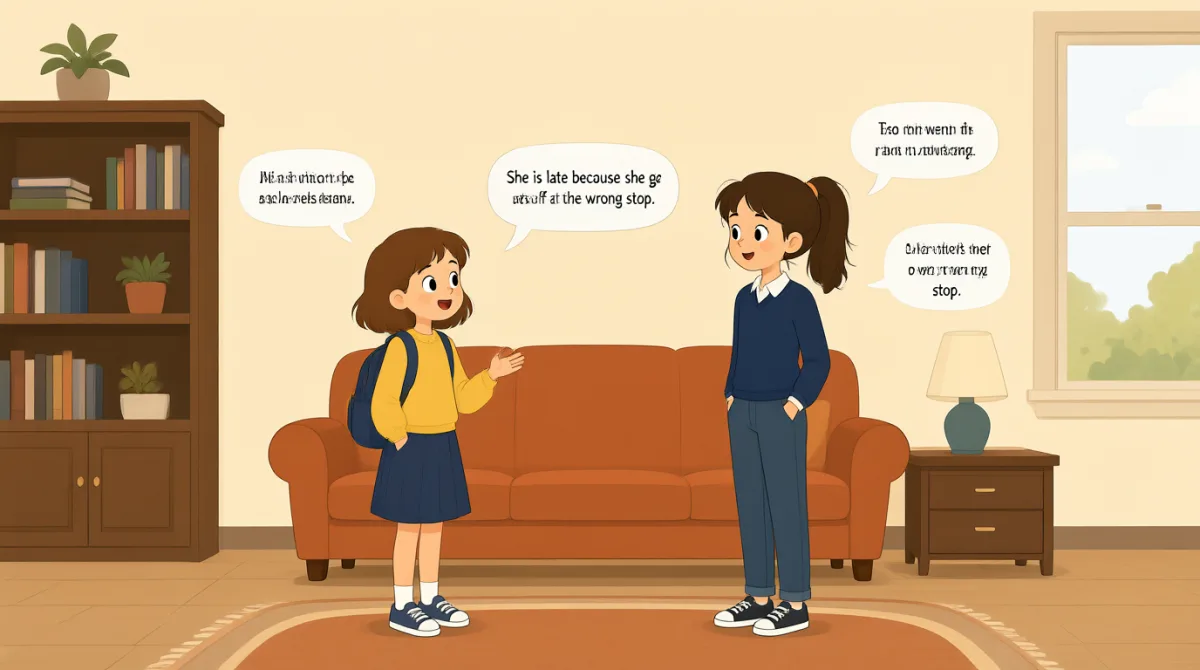

Hi, Mia. I’m sorry, but I’m late.
嗨,米娅。对不起,我要迟到了。

That’s okay. Are you on the train?
没关系。你在火车上吗?
No. I got off at the wrong stop.
没有。我下错站了。
Oh no! Are you going back now?
哎呀!你现在要回去吗?
Yes. I’m waiting for the next train.
是的。我在等下一班火车。
Don’t worry. Take your time.
别担心,慢慢来。
Thanks. I’ll call you when I arrive.
谢谢。我到了就给你打电话。
词汇6
- I’m late我迟到了
This means you are not on time. Use it to tell someone you will arrive after the planned time.
这表示你没有准时。可以用这句话告诉别人,你会比约定的时间晚到。
- That’s okay没关系
This means you are not upset about something. Use it to make someone feel better.
这表示你并不介意某件事。可以用这句话安慰别人。
- the wrong stop下错站
This means a stop that is not the one you wanted. Use it when you leave a bus or train in the wrong place.
这表示你下车的站不是自己想去的那个站。乘坐公交车或火车时下错地方,就可以这样说。
- the next train下一班火车
This means the train that comes after the one you missed or left. You can also say “the next bus.”
这表示错过或离开的那班火车之后开来的火车。你也可以说“the next bus”。
- Take your time慢慢来
This means there is no need to hurry. Use it to tell someone to go at a comfortable speed.
这表示不用着急。可以用这句话告诉别人,按自己舒服的速度来就好。
- when I arrive我到的时候
This means at the time I get to a place. Use it to say when you will do something.
这表示我到达某个地方的时间。可以用它说明你什么时候会做某件事。
重点句子8
- 1
I’m sorry, but I’m late.
对不起,我迟到了。
Use this to apologize and explain that you will not arrive on time. You can replace “late” with a short reason, such as “I’m sorry, but I’m sick.”
用这句话道歉,并说明自己不能准时到。你可以把“late”换成简短的原因,比如“I’m sorry, but I’m sick.”(对不起,我生病了。)
- 2
Are you on the train?
你在火车上吗?
Use this question to ask if someone is riding a train now. You can replace “train” with “bus” or another form of transport.
用这个问题询问别人现在是不是正在坐火车。你可以把“train”换成“bus”或其他交通工具。
- 3
I got off at the wrong stop.
我下错站了。
Use this to explain that you left a bus or train at a stop you did not want. You can change “stop” to “station” when talking about a train station.
用这句话说明你在不想下的站下了公交车或火车。说到火车站时,可以把“stop”换成“station”。
- 4
Are you going back now?
你现在要回去吗?
Use this to ask if someone is returning to a place now. You can replace “back” with a place, such as “Are you going home now?”
用这个问题询问别人现在是不是要回某个地方。你可以把“back”换成具体地点,比如“Are you going home now?”(你现在要回家吗?)
- 5
I’m waiting for the next train.
我在等下一班火车。
Use this to say that you are staying somewhere until another train comes. You can replace “train” with “bus” or another thing you are waiting for.
用这句话说明你会留在某个地方,直到有下一班火车来。你可以把“train”换成“bus”或其他你正在等的东西。
- 6
Don’t worry.
别担心。
Use this to comfort someone who feels nervous or upset. You can say it by itself or add a reason to feel calm.
用这句话安慰感到紧张或难过的人。可以单独说,也可以补充让对方安心的理由。
- 7
Take your time.
慢慢来。
Use this to tell someone that they do not need to hurry. It is a kind response when someone is late or moving slowly.
用这句话告诉别人不用着急。别人迟到或动作比较慢时,这是一种体贴的回应。
- 8
I’ll call you when I arrive.
我到了就给你打电话。
Use this to promise to call someone after you get to a place. Replace “call” with another action, such as “text you.”
用这句话答应别人,自己到达某个地方后会给对方打电话。你可以把“call”换成其他动作,比如“text you”。