Telling a Friend You Are Late
友達に遅れると伝える
Emma calls Mia and says she is late because she got off at the wrong stop. Mia tells her not to worry.
エマはミアに電話して、間違った駅で降りてしまったので遅れると伝えます。ミアは心配しないでと言います。
会話7
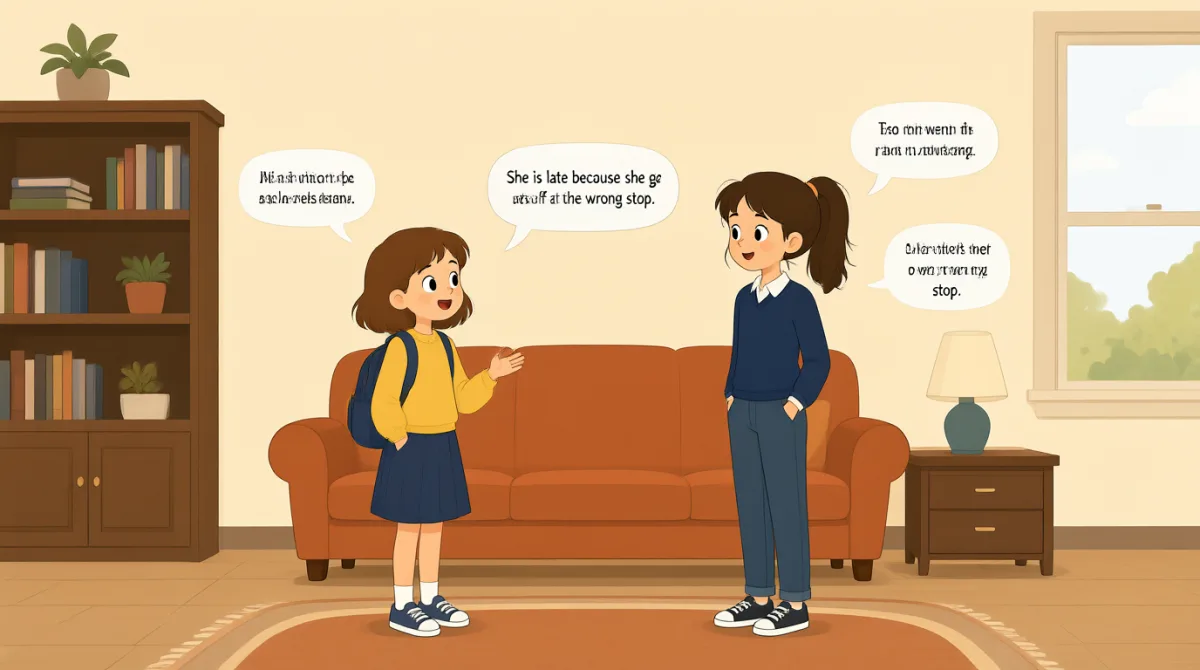

Hi, Mia. I’m sorry, but I’m late.
もしもし、ミア。ごめん、遅れちゃう。

That’s okay. Are you on the train?
大丈夫だよ。電車に乗ってる?
No. I got off at the wrong stop.
ううん。間違った駅で降りちゃった。
Oh no! Are you going back now?
あら大変!今戻ってるところ?
Yes. I’m waiting for the next train.
うん。次の電車を待ってる。
Don’t worry. Take your time.
心配しないで。ゆっくりでいいよ。
Thanks. I’ll call you when I arrive.
ありがとう。着いたら電話するね。
語彙6
- I’m late遅れてる
This means you are not on time. Use it to tell someone you will arrive after the planned time.
時間どおりではないという意味です。予定の時間より遅れて着くことを伝えるときに使います。
- That’s okay大丈夫だよ
This means you are not upset about something. Use it to make someone feel better.
何かについて腹を立てていない、気にしていないという意味です。相手を安心させるときに使います。
- the wrong stop間違った駅
This means a stop that is not the one you wanted. Use it when you leave a bus or train in the wrong place.
降りるつもりだった駅とは違う駅という意味です。バスや電車を違う場所で降りてしまったときに使います。
- the next train次の電車
This means the train that comes after the one you missed or left. You can also say “the next bus.”
乗り遅れたり、降りたりした電車の次に来る電車という意味です。「次のバス」とも言えます。
- Take your timeゆっくりでいいよ
This means there is no need to hurry. Use it to tell someone to go at a comfortable speed.
急ぐ必要はないという意味です。焦らず、自分のペースで進めばいいと伝えるときに使います。
- when I arrive着いたら
This means at the time I get to a place. Use it to say when you will do something.
ある場所に着いたときという意味です。何かをいつするか伝えるときに使います。
重要な文8
- 1
I’m sorry, but I’m late.
ごめん、遅れちゃう。
Use this to apologize and explain that you will not arrive on time. You can replace “late” with a short reason, such as “I’m sorry, but I’m sick.”
謝りながら、時間どおりに着けないことを伝えるときに使います。「late」を短い理由に置き換えて、「I’m sorry, but I’m sick.」のように言うこともできます。
- 2
Are you on the train?
電車に乗ってる?
Use this question to ask if someone is riding a train now. You can replace “train” with “bus” or another form of transport.
相手が今、電車に乗っているか尋ねるときに使います。「train」を「bus」やほかの乗り物に置き換えることもできます。
- 3
I got off at the wrong stop.
間違った駅で降りちゃった。
Use this to explain that you left a bus or train at a stop you did not want. You can change “stop” to “station” when talking about a train station.
降りるつもりではなかった駅で、バスや電車を降りてしまったと説明するときに使います。電車の駅について話すときは、「stop」を「station」に変えられます。
- 4
Are you going back now?
今戻ってるところ?
Use this to ask if someone is returning to a place now. You can replace “back” with a place, such as “Are you going home now?”
相手が今、ある場所に戻っているか尋ねるときに使います。「back」を場所に置き換えて、「Are you going home now?」のように言うこともできます。
- 5
I’m waiting for the next train.
次の電車を待ってる。
Use this to say that you are staying somewhere until another train comes. You can replace “train” with “bus” or another thing you are waiting for.
次の電車が来るまで、ある場所で待っていると伝えるときに使います。「train」を「bus」や、待っているほかのものに置き換えられます。
- 6
Don’t worry.
心配しないで。
Use this to comfort someone who feels nervous or upset. You can say it by itself or add a reason to feel calm.
不安だったり、動揺したりしている人を安心させるときに使います。この一言だけでも、落ち着ける理由を付け加えても大丈夫です。
- 7
Take your time.
ゆっくりでいいよ。
Use this to tell someone that they do not need to hurry. It is a kind response when someone is late or moving slowly.
急がなくていいと相手に伝えるときに使います。相手が遅れていたり、ゆっくり行動していたりするときに、思いやりを示す言い方です。
- 8
I’ll call you when I arrive.
着いたら電話するね。
Use this to promise to call someone after you get to a place. Replace “call” with another action, such as “text you.”
ある場所に着いたあとで電話すると約束するときに使います。「call」を「text you」のような別の行動に置き換えられます。