Waiting for the Next Train
다음 열차 기다리기
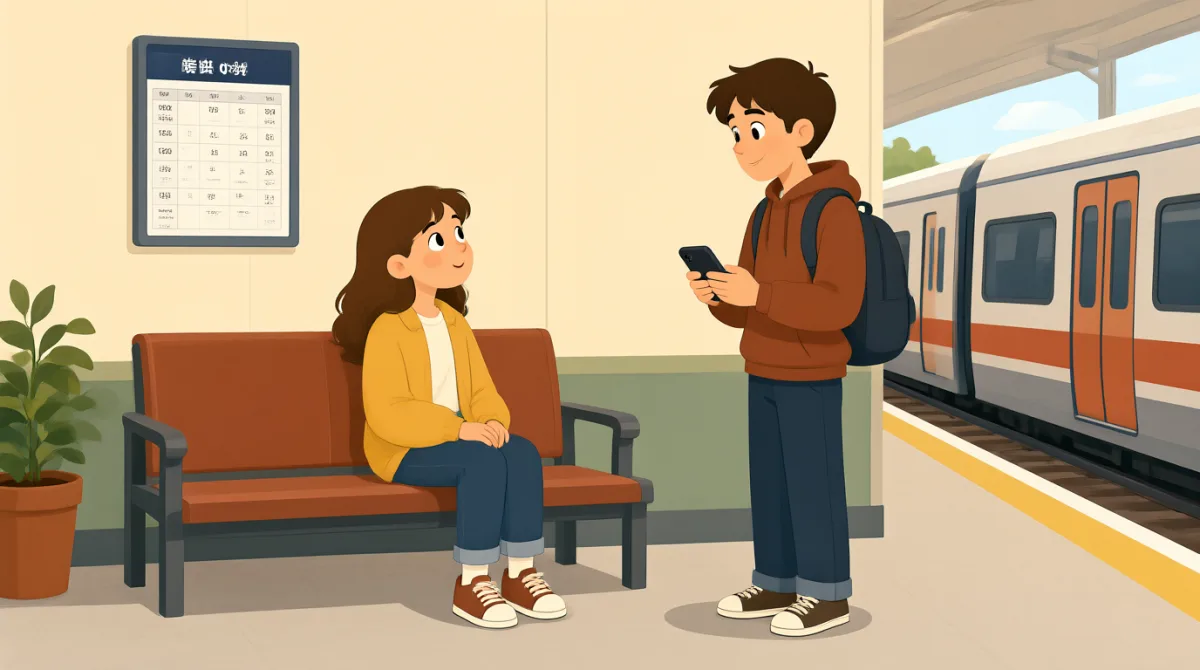
Emma and Jack wait for the next train. Emma asks how long it will take, and Jack checks the schedule.
에마와 잭은 다음 열차를 기다려요. 에마가 얼마나 기다려야 하는지 묻자 잭이 시간표를 확인해요.
대화7

Where do we wait for the next train?
다음 열차는 어디서 기다려?

Here, on this platform.
여기, 이 승강장에서.
How long do we wait?
얼마나 기다려야 해?
Let me check the schedule.
시간표 좀 확인해 볼게.
It comes in ten minutes.
10분 뒤에 와.
That’s not too long.
그렇게 오래는 아니네.
No. We can wait here.
응. 여기서 기다리면 돼.
어휘7
- platform승강장
The platform is the place where you wait for a train. You can say, “We are on this platform.”
승강장은 열차를 기다리는 곳이에요. “We are on this platform.”이라고 말할 수 있어요.
- How long얼마나 오래
Use “How long” to ask about the time something takes. For example, “How long do we wait?”
걸리는 시간을 물어볼 때 “How long”을 써요. 예를 들어 “How long do we wait?”라고 물을 수 있어요.
- wait for기다리다
“Wait for” means to stay until someone or something comes. You can say, “I wait for the bus.”
“Wait for”는 누군가나 무언가가 올 때까지 기다린다는 뜻이에요. “I wait for the bus.”라고 말할 수 있어요.
- schedule시간표
A schedule shows the times when trains or buses come. You can check the schedule to know when to leave.
“Schedule”은 열차나 버스가 언제 오는지 보여 주는 시간표예요. 언제 출발해야 하는지 알고 싶을 때 시간표를 확인할 수 있어요.
- in ten minutes10분 후에
This means something will happen ten minutes from now. You can use it to say when a train will come.
지금부터 10분 뒤에 무언가가 일어난다는 뜻이에요. 열차가 언제 오는지 말할 때 쓸 수 있어요.
- not too long그렇게 오래 걸리지 않는
This means the wait is short enough or okay. You can say, “The walk is not too long.”
기다리는 시간이 길지 않거나 괜찮다는 뜻이에요. “The walk is not too long.”이라고 말할 수도 있어요.
- We can wait here.여기서 기다려도 돼요.
This is a simple way to say that staying in this place is possible. You can change “here” to another place, like “inside.”
현재 있는 곳에 계속 있어도 된다고 간단히 말하는 표현이에요. “here”를 “inside”처럼 다른 장소를 나타내는 말로 바꿀 수 있어요.
핵심 문장8
- 1
Where do we wait for the next train?
다음 열차는 어디서 기다려?
Use this question to ask where to wait for a train. You can replace “train” with “bus” or another form of transport.
열차를 어디서 기다려야 하는지 물을 때 쓰는 질문이에요. “train” 대신 “bus”나 다른 교통수단을 넣어도 돼요.
- 2
Here, on this platform.
여기, 이 승강장에서.
This gives a short answer about where to wait. You can use “Here, at the bus stop” in a similar situation.
기다릴 장소를 짧게 알려 주는 대답이에요. 비슷한 상황에서 “Here, at the bus stop”이라고 할 수도 있어요.
- 3
How long do we wait?
얼마나 기다려야 해?
Use this to ask how much time you need to wait. You can also ask, “How long do we walk?”
얼마나 기다려야 하는지 물을 때 써요. “How long do we walk?”라고 물을 수도 있어요.
- 4
Let me check the schedule.
시간표 좀 확인해 볼게.
Say this when you want to look up the times before answering. You can replace “schedule” with “map” or “address.”
대답하기 전에 시간을 찾아보고 싶을 때 하는 말이에요. “schedule” 대신 “map”이나 “address”를 넣어도 돼요.
- 5
It comes in ten minutes.
10분 뒤에 와.
This tells someone when a train or bus will arrive. Replace “ten minutes” with another amount of time.
열차나 버스가 언제 도착하는지 알려 주는 말이에요. “ten minutes”를 다른 시간으로 바꿔 말할 수 있어요.
- 6
That’s not too long.
그렇게 오래는 아니네.
Use this to say that a wait or activity does not take too much time. You can say it about a walk, too.
기다리거나 어떤 일을 하는 데 시간이 너무 오래 걸리지 않는다고 말할 때 써요. 걷는 시간에 대해서도 쓸 수 있어요.
- 7
No.
응.
This is a short way to agree with a negative statement or answer a question negatively. Here, Jack agrees that the wait is not too long.
부정적인 말에 동의하거나 부정의 대답을 할 때 쓰는 짧은 표현이에요. 여기서는 잭이 기다리는 시간이 그리 길지 않다는 데 동의해요.
- 8
We can wait here.
여기서 기다리면 돼.
Use this to suggest staying in the current place. You can change “here” to another location, such as “inside.”
지금 있는 곳에 머물자고 제안할 때 써요. “here”를 “inside”처럼 다른 장소로 바꿀 수 있어요.