Telling a Friend You Are Late
Decirle a una amiga que llegarás tarde
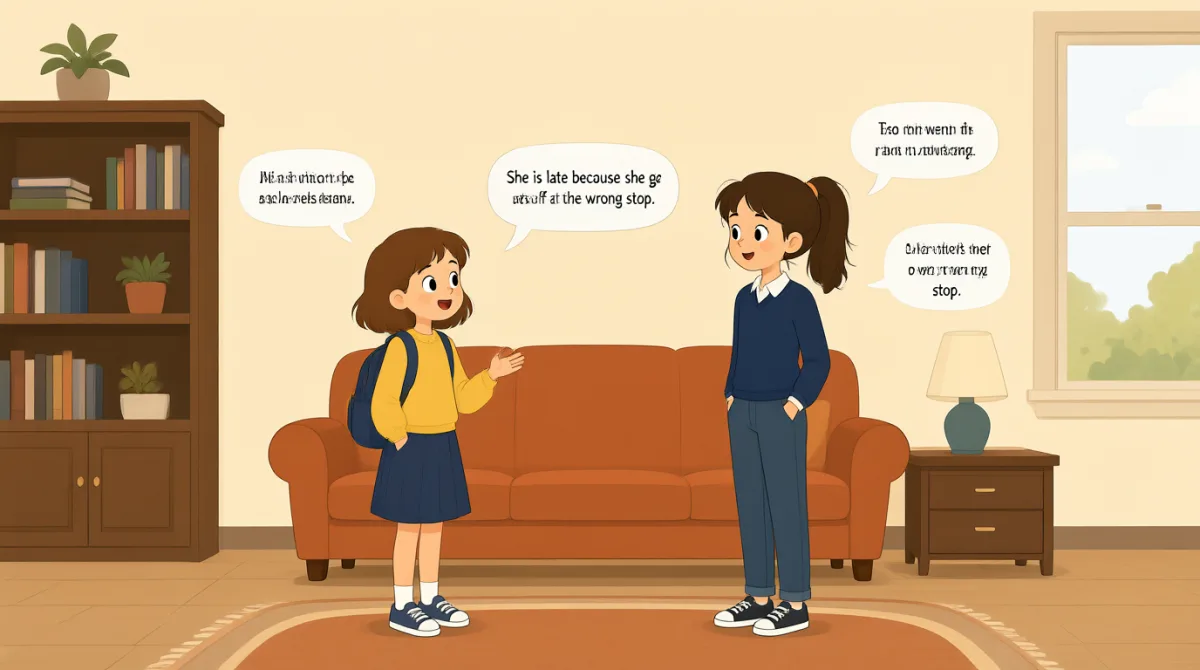
Emma calls Mia and says she is late because she got off at the wrong stop. Mia tells her not to worry.
Emma llama a Mia y le dice que llegará tarde porque se bajó en la parada equivocada. Mia le dice que no se preocupe.
Diálogo7

Hi, Mia. I’m sorry, but I’m late.
Hola, Mia. Lo siento, pero voy tarde.

That’s okay. Are you on the train?
No pasa nada. ¿Estás en el tren?
No. I got off at the wrong stop.
No. Me bajé en la parada equivocada.
Oh no! Are you going back now?
¡Ay, no! ¿Vas a regresar ahora?
Yes. I’m waiting for the next train.
Sí. Estoy esperando el próximo tren.
Don’t worry. Take your time.
No te preocupes. Tómate tu tiempo.
Thanks. I’ll call you when I arrive.
Gracias. Te llamo cuando llegue.
Vocabulario6
- I’m latevoy tarde
This means you are not on time. Use it to tell someone you will arrive after the planned time.
Significa que no llegarás a tiempo. Úsalo para decirle a alguien que llegarás después de la hora prevista.
- That’s okayNo pasa nada
This means you are not upset about something. Use it to make someone feel better.
Significa que algo no te molesta. Úsalo para tranquilizar a alguien.
- the wrong stopla parada equivocada
This means a stop that is not the one you wanted. Use it when you leave a bus or train in the wrong place.
Se refiere a una parada que no era la que querías. Úsalo cuando te bajas del autobús o del tren en el lugar equivocado.
- the next trainel próximo tren
This means the train that comes after the one you missed or left. You can also say “the next bus.”
Se refiere al tren que llega después del que perdiste o del que te bajaste. También puedes decir “the next bus” (el próximo autobús).
- Take your timeTómate tu tiempo
This means there is no need to hurry. Use it to tell someone to go at a comfortable speed.
Significa que no hace falta apresurarse. Úsalo para decirle a alguien que vaya a un ritmo cómodo.
- when I arrivecuando llegue
This means at the time I get to a place. Use it to say when you will do something.
Significa en el momento en que llegue a un lugar. Úsalo para decir cuándo harás algo.
Frases clave8
- 1
I’m sorry, but I’m late.
Lo siento, pero voy tarde.
Use this to apologize and explain that you will not arrive on time. You can replace “late” with a short reason, such as “I’m sorry, but I’m sick.”
Usa esta frase para disculparte y explicar que no llegarás a tiempo. Puedes reemplazar “late” por una razón breve, como en “I’m sorry, but I’m sick.” (Lo siento, pero estoy enferma.).
- 2
Are you on the train?
¿Estás en el tren?
Use this question to ask if someone is riding a train now. You can replace “train” with “bus” or another form of transport.
Usa esta pregunta para preguntar si alguien está viajando en tren en ese momento. Puedes reemplazar “train” por “bus” u otro medio de transporte.
- 3
I got off at the wrong stop.
Me bajé en la parada equivocada.
Use this to explain that you left a bus or train at a stop you did not want. You can change “stop” to “station” when talking about a train station.
Usa esta frase para explicar que te bajaste del autobús o del tren en una parada que no era la que querías. Puedes cambiar “stop” por “station” cuando hables de una estación de tren.
- 4
Are you going back now?
¿Vas a regresar ahora?
Use this to ask if someone is returning to a place now. You can replace “back” with a place, such as “Are you going home now?”
Usa esta pregunta para saber si alguien está regresando a un lugar ahora. Puedes reemplazar “back” por un lugar, como en “Are you going home now?” (¿Vas a casa ahora?).
- 5
I’m waiting for the next train.
Estoy esperando el próximo tren.
Use this to say that you are staying somewhere until another train comes. You can replace “train” with “bus” or another thing you are waiting for.
Usa esta frase para decir que te quedarás en algún lugar hasta que llegue otro tren. Puedes reemplazar “train” por “bus” u otra cosa que estés esperando.
- 6
Don’t worry.
No te preocupes.
Use this to comfort someone who feels nervous or upset. You can say it by itself or add a reason to feel calm.
Usa esta frase para tranquilizar a alguien que está nervioso o preocupado. Puedes decirla sola o añadir un motivo para que se quede tranquilo.
- 7
Take your time.
Tómate tu tiempo.
Use this to tell someone that they do not need to hurry. It is a kind response when someone is late or moving slowly.
Usa esta frase para decirle a alguien que no hace falta que se apresure. Es una respuesta amable cuando alguien llega tarde o se mueve despacio.
- 8
I’ll call you when I arrive.
Te llamaré cuando llegue.
Use this to promise to call someone after you get to a place. Replace “call” with another action, such as “text you.”
Usa esta frase para prometer que llamarás a alguien después de llegar a un lugar. Reemplaza “call” por otra acción, como en “text you” (escribirte).