Following the Recipe
Tarifi Takip Etmek
The class follows the recipe and adds the ingredients to a pot. Grace explains when to stir and how long to cook the food.
Sınıf tarifi takip edip malzemeleri tencereye ekliyor. Grace ne zaman karıştırılması ve yemeğin ne kadar pişirilmesi gerektiğini açıklıyor.
Diyalog9
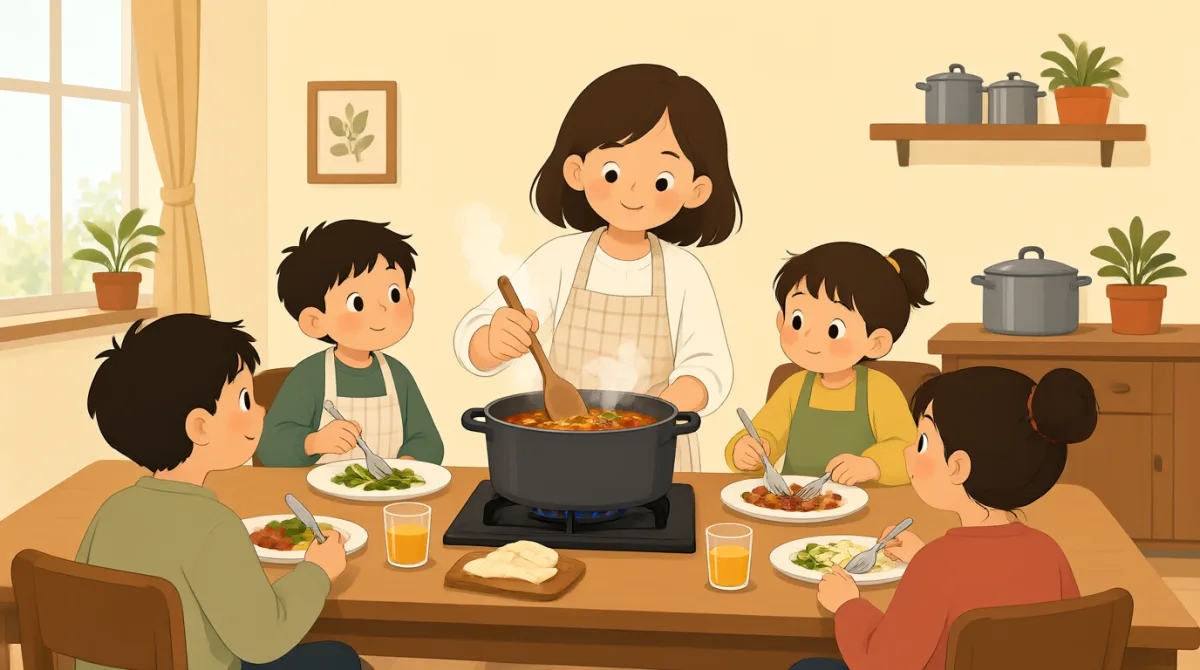

Now, read the recipe. First, pour two cups of water into the pot.
Şimdi tarifi okuyun. Önce tencereye iki bardak su dökün.

Should I add the tomatoes now, or wait until the water gets hot?
Domatesleri şimdi mi ekleyeyim, yoksa su ısınana kadar bekleyeyim mi?
Wait until it boils. Then add the tomatoes, beans, and a little salt.
Kaynamasını bekle. Sonra domatesleri, fasulyeleri ve biraz tuzu ekle.

How long should we cook everything? I don't want to burn lunch.
Her şeyi ne kadar pişirmeliyiz? Öğle yemeğini yakmak istemiyorum.
Cook it for ten minutes. Stir it gently every few minutes.
On dakika pişirin. Birkaç dakikada bir nazikçe karıştırın.
The soup is bubbling now. Should I turn the heat down?
Çorba şimdi fokurdamaya başladı. Ocağın altını kısayım mı?
Yes, turn it down to low. Keep stirring so nothing sticks.
Evet, kısık ateşe alın. Dibi tutmasın diye karıştırmaya devam edin.
I stirred it, and the beans feel soft. Can we taste it now?
Karıştırdım, fasulyeler yumuşamış. Şimdi tadına bakabilir miyiz?
Sure. Take a small spoonful, and tell me if it needs more salt.
Tabii. Küçük bir kaşık al ve biraz daha tuz gerekip gerekmediğini söyle.
Kelime Bilgisi8
- pour two cups of wateriki bardak su dökmek
This means to put two cups of water into the pot. You can use “pour” when adding a liquid to a container.
Bu, tencereye iki bardak su koymak demek. Bir kaba sıvı eklerken “pour” (dökmek) diyebilirsin.
- until it boilskaynamasını bekleyene kadar
This means to wait until the water gets very hot and starts bubbling. You can say “until it boils” when explaining when to do something.
Bu, su çok ısınıp kabarcıklar çıkarmaya başlayana kadar beklemek demek. Bir şeyi ne zaman yapacağını söylerken “until it boils” (kaynamasına kadar) diyebilirsin.
- add the tomatoesdomatesleri eklemek
This means to put the tomatoes into the pot. Use “add” when putting an ingredient into food.
Bu, domatesleri tencereye koymak demek. Yemeğe bir malzeme koyarken “add” (eklemek) fiilini kullan.
- stir it gentlynazikçe karıştırmak
This means to mix the food slowly and carefully with a spoon. You can use “stir gently” when giving cooking instructions.
Bu, yemeği bir kaşıkla yavaşça ve dikkatlice karıştırmak demek. Yemek tarifinde talimat verirken “stir gently” (nazikçe karıştırmak) diyebilirsin.
- turn it down to lowocağın altını kısık ateşe almak
This means to lower the heat to a low setting. You can use this phrase when a dish needs to cook more slowly.
Bu, ateşi düşük bir ayara getirmek demek. Bir yemeğin daha yavaş pişmesi gerektiğinde bu ifadeyi kullanabilirsin.
- sticksdibi tutmak
Here, “sticks” means food gets attached to the bottom of the pot. You can say “so nothing sticks” when explaining why you should stir.
Burada “sticks”, yemeğin tencerenin dibine yapışması demek. Karıştırmanın neden gerekli olduğunu açıklarken “so nothing sticks” (hiçbir şey dibe yapışmasın diye) diyebilirsin.
- a small spoonfulküçük bir kaşık
This means a small amount of food that fits on a spoon. Use it when tasting food or serving a little.
Bu, bir kaşığa sığan az miktarda yiyecek demek. Yemeğin tadına bakarken ya da az miktarda servis ederken kullanabilirsin.
- needs more saltbiraz daha tuz gerekmesi
This means the food may need extra salt to taste better. You can use this phrase when asking someone to check the flavor.
Bu, tadının daha güzel olması için yemeğe biraz daha tuz eklemek gerekebileceği anlamına gelir. Birinden yemeğin tadını kontrol etmesini isterken bu ifadeyi kullanabilirsin.
Önemli Cümleler8
- 1
First, pour two cups of water into the pot.
Önce tencereye iki bardak su dökün.
This gives a clear first step in a recipe. You can reuse the pattern “First, pour [amount] of [liquid] into the [container].”
Bu cümle, tarifteki ilk adımı açıkça belirtir. “First, pour [amount] of [liquid] into the [container].” kalıbını yeniden kullanabilirsin (Önce [miktar] [sıvıyı] [kabın] içine dökün.).
- 2
Should I add the tomatoes now, or wait until the water gets hot?
Domatesleri şimdi mi ekleyeyim, yoksa su ısınana kadar bekleyeyim mi?
This is a useful way to ask whether to do something now or later. Replace “add the tomatoes” with another task to ask about the right time.
Bir şeyi şimdi mi yoksa daha sonra mı yapman gerektiğini sormanın kullanışlı bir yolu. Doğru zamanı sormak için “add the tomatoes” yerine başka bir işi koyabilirsin.
- 3
Cook it for ten minutes.
On dakika pişirin.
This tells someone how long to cook something. You can use “Cook it for [time]” to give a simple cooking instruction.
Bu cümle, bir şeyin ne kadar pişirilmesi gerektiğini söyler. Basit bir yemek talimatı vermek için “Cook it for [time]” kalıbını kullanabilirsin ([süre] boyunca pişirin.).
- 4
Stir it gently every few minutes.
Birkaç dakikada bir nazikçe karıştırın.
This gives both the action and how often to do it. You can change “gently” or “every few minutes” to give different instructions.
Bu cümle hem yapılacak işi hem de ne sıklıkta yapılacağını belirtir. Farklı talimatlar vermek için “gently” ya da “every few minutes” ifadelerini değiştirebilirsin.
- 5
Yes, turn it down to low.
Evet, ocağın altını kısık ateşe alın.
This is a short, practical instruction for lowering the heat. You can replace “low” with another heat setting, such as “medium.”
Bu, ateşi kısmak için kısa ve pratik bir talimattır. “Low” yerine “medium” gibi başka bir ısı ayarı kullanabilirsin.
- 6
Keep stirring so nothing sticks.
Dibi tutmasın diye karıştırmaya devam edin.
This explains what to keep doing and why. Use “Keep [verb]-ing so [result]” to give a helpful reminder.
Bu cümle, ne yapmaya devam etmen gerektiğini ve nedenini açıklar. Yararlı bir hatırlatma yapmak için “Keep [verb]-ing so [result]” kalıbını kullanabilirsin ([sonuç] olması için [fiil]-meye devam et.).
- 7
Can we taste it now?
Şimdi tadına bakabilir miyiz?
This is a simple way to ask if it is okay to try some food. You can replace “taste it” with another action to ask permission.
Bir yemeği tatmanın uygun olup olmadığını sormanın basit bir yolu. İzin istemek için “taste it” yerine başka bir eylem koyabilirsin.
- 8
Take a small spoonful, and tell me if it needs more salt.
Küçük bir kaşık al ve biraz daha tuz gerekip gerekmediğini söyle.
This gives someone two clear steps: taste a little and say what the food needs. You can replace “more salt” with another ingredient or seasoning.
Bu cümle iki açık adım verir: azıcık tadına bakmak ve yemeğin neye ihtiyacı olduğunu söylemek. “More salt” yerine başka bir malzeme ya da baharat kullanabilirsin.