Following the Recipe
اتباع الوصفة
The class follows the recipe and adds the ingredients to a pot. Grace explains when to stir and how long to cook the food.
يتبع الصف الوصفة ويضيف المكونات إلى قدر. تشرح غريس متى يجب التحريك وكم من الوقت ينبغي طهي الطعام.
حوار9
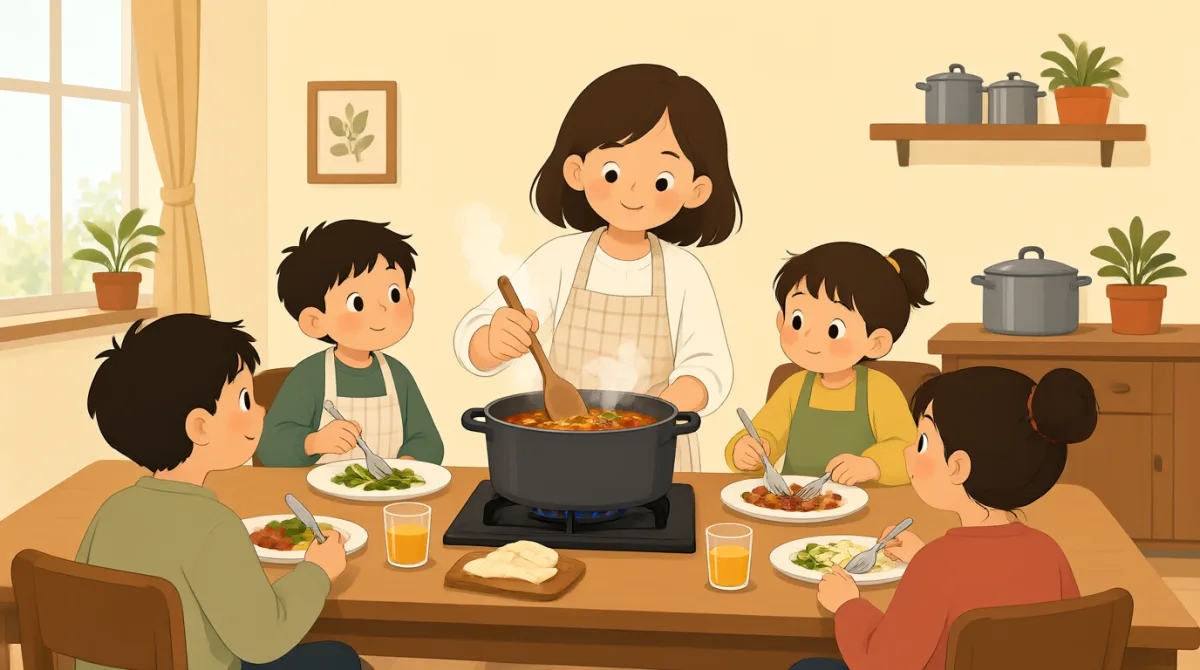

Now, read the recipe. First, pour two cups of water into the pot.
حسنًا، اقرأوا الوصفة. أولًا، اسكبوا كوبين من الماء في القدر.

Should I add the tomatoes now, or wait until the water gets hot?
هل أضيف الطماطم الآن، أم أنتظر حتى يسخن الماء؟
Wait until it boils. Then add the tomatoes, beans, and a little salt.
انتظري حتى يغلي. ثم أضيفي الطماطم والفاصولياء وقليلًا من الملح.

How long should we cook everything? I don't want to burn lunch.
كم من الوقت ينبغي أن نطهو كل شيء؟ لا أريد أن أحرق الغداء.
Cook it for ten minutes. Stir it gently every few minutes.
اطهوه لمدة عشر دقائق. حرّكوه برفق كل بضع دقائق.
The soup is bubbling now. Should I turn the heat down?
الحساء يغلي الآن. هل أخفّض الحرارة؟
Yes, turn it down to low. Keep stirring so nothing sticks.
نعم، خفّضيها إلى درجة منخفضة. واصلي التحريك حتى لا يلتصق شيء بالقاع.
I stirred it, and the beans feel soft. Can we taste it now?
حرّكته، وأصبحت الفاصولياء طرية. هل يمكننا تذوقه الآن؟
Sure. Take a small spoonful, and tell me if it needs more salt.
بالتأكيد. خذوا ملعقة صغيرة وأخبروني إن كان يحتاج إلى مزيد من الملح.
المفردات8
- pour two cups of waterاسكب كوبين من الماء
This means to put two cups of water into the pot. You can use “pour” when adding a liquid to a container.
يعني هذا أن تضع كوبين من الماء في القدر. يمكنك استخدام “pour” عند إضافة سائل إلى وعاء.
- until it boilsحتى يغلي
This means to wait until the water gets very hot and starts bubbling. You can say “until it boils” when explaining when to do something.
يعني هذا الانتظار حتى يصبح الماء شديد السخونة ويبدأ في الفقاعات. يمكنك قول “until it boils” لتوضيح الوقت المناسب لفعل شيء ما.
- add the tomatoesأضف الطماطم
This means to put the tomatoes into the pot. Use “add” when putting an ingredient into food.
يعني هذا وضع الطماطم في القدر. استخدم “add” عند وضع مكوّن في الطعام.
- stir it gentlyحرّكه برفق
This means to mix the food slowly and carefully with a spoon. You can use “stir gently” when giving cooking instructions.
يعني هذا خلط الطعام ببطء وحذر باستخدام ملعقة. يمكنك استخدام “stir gently” عند إعطاء تعليمات للطهي.
- turn it down to lowاخفض الحرارة إلى درجة منخفضة
This means to lower the heat to a low setting. You can use this phrase when a dish needs to cook more slowly.
يعني هذا خفض الحرارة إلى مستوى منخفض. يمكنك استخدام هذه العبارة عندما يحتاج الطبق إلى الطهي ببطء أكثر.
- sticksيلتصق
Here, “sticks” means food gets attached to the bottom of the pot. You can say “so nothing sticks” when explaining why you should stir.
هنا، تعني “sticks” أن الطعام يلتصق بقاع القدر. يمكنك قول “so nothing sticks” لتوضيح سبب ضرورة التحريك.
- a small spoonfulملعقة صغيرة
This means a small amount of food that fits on a spoon. Use it when tasting food or serving a little.
يعني هذا كمية صغيرة من الطعام تكفيها ملعقة. استخدمها عند تذوق الطعام أو تقديم كمية قليلة منه.
- needs more saltيحتاج إلى مزيد من الملح
This means the food may need extra salt to taste better. You can use this phrase when asking someone to check the flavor.
يعني هذا أن الطعام قد يحتاج إلى ملح إضافي ليصبح مذاقه أفضل. يمكنك استخدام هذه العبارة عندما تطلب من شخص أن يتذوق الطعام ويتحقق من نكهته.
الجمل الأساسية8
- 1
First, pour two cups of water into the pot.
أولًا، اسكب كوبين من الماء في القدر.
This gives a clear first step in a recipe. You can reuse the pattern “First, pour [amount] of [liquid] into the [container].”
توضح هذه الجملة خطوة أولى في الوصفة. يمكنك استخدام النمط “First, pour [amount] of [liquid] into the [container].”
- 2
Should I add the tomatoes now, or wait until the water gets hot?
هل أضيف الطماطم الآن، أم أنتظر حتى يسخن الماء؟
This is a useful way to ask whether to do something now or later. Replace “add the tomatoes” with another task to ask about the right time.
هذه طريقة مفيدة للسؤال عمّا إذا كان ينبغي فعل شيء الآن أم لاحقًا. استبدل “add the tomatoes” بمهمة أخرى للسؤال عن الوقت المناسب.
- 3
Cook it for ten minutes.
اطهوه لمدة عشر دقائق.
This tells someone how long to cook something. You can use “Cook it for [time]” to give a simple cooking instruction.
تخبر هذه الجملة شخصًا بالمدة التي ينبغي أن يطهو فيها شيئًا. يمكنك استخدام “Cook it for [time]” لإعطاء تعليمات بسيطة للطهي.
- 4
Stir it gently every few minutes.
حرّكه برفق كل بضع دقائق.
This gives both the action and how often to do it. You can change “gently” or “every few minutes” to give different instructions.
توضح هذه الجملة الفعل وعدد مرات القيام به. يمكنك تغيير “gently” أو “every few minutes” لإعطاء تعليمات مختلفة.
- 5
Yes, turn it down to low.
نعم، اخفض الحرارة إلى درجة منخفضة.
This is a short, practical instruction for lowering the heat. You can replace “low” with another heat setting, such as “medium.”
هذه تعليمات قصيرة وعملية لخفض الحرارة. يمكنك استبدال “low” بإعداد آخر للحرارة، مثل “medium.”
- 6
Keep stirring so nothing sticks.
واصل التحريك حتى لا يلتصق شيء بالقاع.
This explains what to keep doing and why. Use “Keep [verb]-ing so [result]” to give a helpful reminder.
توضح هذه الجملة ما ينبغي مواصلة فعله والسبب وراء ذلك. استخدم “Keep [verb]-ing so [result]” لتقديم تذكير مفيد.
- 7
Can we taste it now?
هل يمكننا تذوقه الآن؟
This is a simple way to ask if it is okay to try some food. You can replace “taste it” with another action to ask permission.
هذه طريقة بسيطة للسؤال عمّا إذا كان مسموحًا تذوق بعض الطعام. يمكنك استبدال “taste it” بفعل آخر لطلب الإذن.
- 8
Take a small spoonful, and tell me if it needs more salt.
خذ ملعقة صغيرة وأخبرني إن كان يحتاج إلى مزيد من الملح.
This gives someone two clear steps: taste a little and say what the food needs. You can replace “more salt” with another ingredient or seasoning.
تعطي هذه الجملة خطوتين واضحتين: تذوق قليلًا وأخبرني بما يحتاج إليه الطعام. يمكنك استبدال “more salt” بمكوّن أو مُنكّه آخر.