Following the Recipe
按照食譜烹飪
The class follows the recipe and adds the ingredients to a pot. Grace explains when to stir and how long to cook the food.
大家按照食譜把食材放進鍋裡。Grace說明什麼時候攪拌,以及要煮多久。
對話9
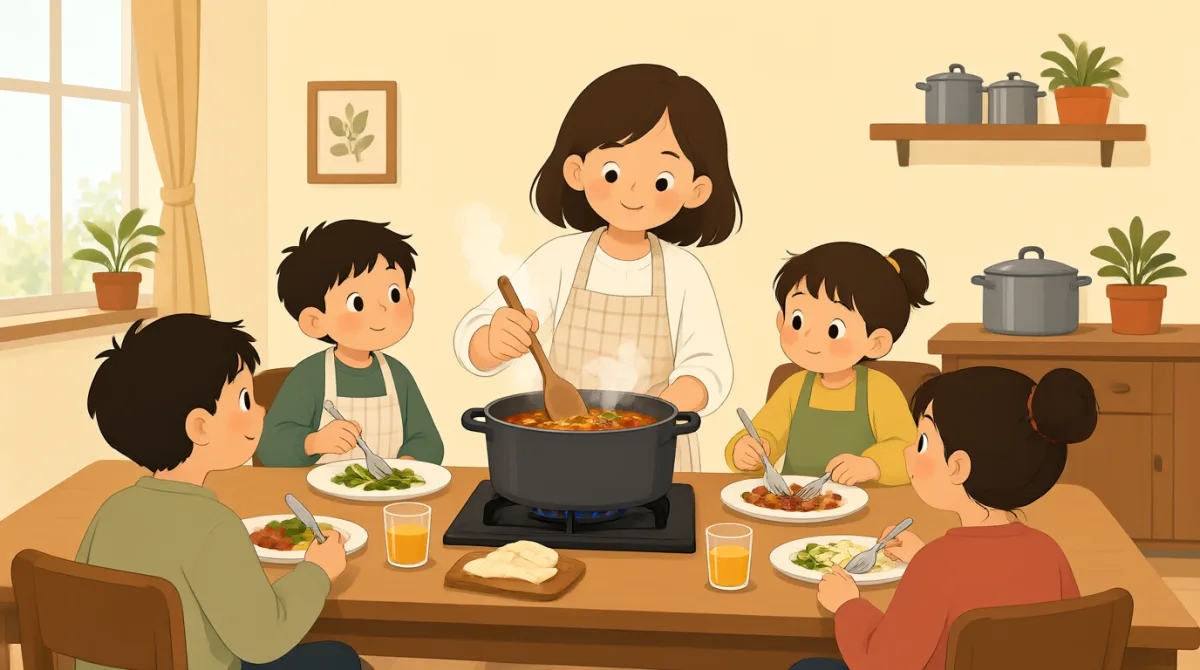

Now, read the recipe. First, pour two cups of water into the pot.
現在,看看食譜。首先,把兩杯水倒進鍋裡。

Should I add the tomatoes now, or wait until the water gets hot?
我現在應該加番茄,還是等水熱了再加?
Wait until it boils. Then add the tomatoes, beans, and a little salt.
等水燒開。然後加入番茄、豆子和少許鹽。

How long should we cook everything? I don't want to burn lunch.
這些食材要煮多久?我可不想把午餐燒糊。
Cook it for ten minutes. Stir it gently every few minutes.
煮十分鐘。每隔幾分鐘輕輕攪拌一下。
The soup is bubbling now. Should I turn the heat down?
湯現在在冒泡了。我應該把火調小嗎?
Yes, turn it down to low. Keep stirring so nothing sticks.
對,把火調到小火。繼續攪拌,別讓食材粘鍋。
I stirred it, and the beans feel soft. Can we taste it now?
我攪拌過了,豆子摸起來很軟。我們現在可以嚐嚐嗎?
Sure. Take a small spoonful, and tell me if it needs more salt.
當然。舀一小勺嚐嚐,告訴我還需不需要加鹽。
詞彙8
- pour two cups of water往鍋裡倒兩杯水
This means to put two cups of water into the pot. You can use “pour” when adding a liquid to a container.
意思是把兩杯水倒進鍋裡。往容器里加液體時,可以用“pour”。
- until it boils直到水燒開
This means to wait until the water gets very hot and starts bubbling. You can say “until it boils” when explaining when to do something.
意思是等水變得很熱並開始冒泡。說明什麼時候做某事時,可以說“until it boils”。
- add the tomatoes加入番茄
This means to put the tomatoes into the pot. Use “add” when putting an ingredient into food.
意思是把番茄放進鍋裡。把食材放進食物裡時,可以用“add”。
- stir it gently輕輕攪拌
This means to mix the food slowly and carefully with a spoon. You can use “stir gently” when giving cooking instructions.
意思是用勺子慢慢地、小心地攪動食物。給出烹飪指示時,可以說“stir gently”。
- turn it down to low把火調到小火
This means to lower the heat to a low setting. You can use this phrase when a dish needs to cook more slowly.
意思是把火力調低。菜需要慢慢煮的時候,可以用這個說法。
- sticks粘鍋
Here, “sticks” means food gets attached to the bottom of the pot. You can say “so nothing sticks” when explaining why you should stir.
這裡的“sticks”是指食物粘在鍋底。解釋為什麼要攪拌時,可以說“so nothing sticks”。
- a small spoonful一小勺
This means a small amount of food that fits on a spoon. Use it when tasting food or serving a little.
意思是一勺能裝下的少量食物。嘗味道或少量盛取時可以用這個說法。
- needs more salt還需要加鹽
This means the food may need extra salt to taste better. You can use this phrase when asking someone to check the flavor.
意思是食物可能還需要加點鹽,味道才更好。請別人嚐嚐味道時,可以用這個說法。
關鍵句8
- 1
First, pour two cups of water into the pot.
首先,把兩杯水倒進鍋裡。
This gives a clear first step in a recipe. You can reuse the pattern “First, pour [amount] of [liquid] into the [container].”
這句話清楚地說明了食譜的第一步。你可以套用“First, pour [amount] of [liquid] into the [container].”這個句型。
- 2
Should I add the tomatoes now, or wait until the water gets hot?
我現在應該加番茄,還是等水熱了再加?
This is a useful way to ask whether to do something now or later. Replace “add the tomatoes” with another task to ask about the right time.
這是詢問現在做某事還是稍後做的實用說法。把“add the tomatoes”換成其他任務,就可以詢問什麼時候做合適。
- 3
Cook it for ten minutes.
煮十分鐘。
This tells someone how long to cook something. You can use “Cook it for [time]” to give a simple cooking instruction.
這句話告訴別人要煮多久。你可以用“Cook it for [time]”來簡單說明烹飪時間。
- 4
Stir it gently every few minutes.
每隔幾分鐘輕輕攪拌一下。
This gives both the action and how often to do it. You can change “gently” or “every few minutes” to give different instructions.
這句話既說明了要做什麼,也說明了多久做一次。你可以替換“gently”或“every few minutes”,來給出不同的指示。
- 5
Yes, turn it down to low.
對,把火調到小火。
This is a short, practical instruction for lowering the heat. You can replace “low” with another heat setting, such as “medium.”
這是一句簡短實用的指示,告訴別人把火調小。你可以把“low”換成其他火力檔位,比如“medium”。
- 6
Keep stirring so nothing sticks.
繼續攪拌,別讓食物粘鍋。
This explains what to keep doing and why. Use “Keep [verb]-ing so [result]” to give a helpful reminder.
這句話說明了要繼續做什麼,以及這樣做的原因。你可以用“Keep [verb]-ing so [result]”來提醒別人。
- 7
Can we taste it now?
我們現在可以嚐嚐嗎?
This is a simple way to ask if it is okay to try some food. You can replace “taste it” with another action to ask permission.
這是詢問能不能嘗一點食物的簡單說法。你可以把“taste it”換成其他動作來徵求許可。
- 8
Take a small spoonful, and tell me if it needs more salt.
舀一小勺嚐嚐,告訴我還需不需要加鹽。
This gives someone two clear steps: taste a little and say what the food needs. You can replace “more salt” with another ingredient or seasoning.
這句話清楚地告訴別人要做兩件事:嘗一點,然後說說食物還需要什麼。你可以把“more salt”換成其他食材或調味料。