The First Swimming Lesson
तैराकी का पहला पाठ
Emma brings her daughter to the first lesson and meets Mia, the swimming coach. Mia explains what the children will do in class.
एमा अपनी बेटी को पहले पाठ के लिए लाती है और तैराकी की कोच मिया से मिलती है। मिया बताती है कि बच्चे कक्षा में क्या करेंगे।
संवाद8
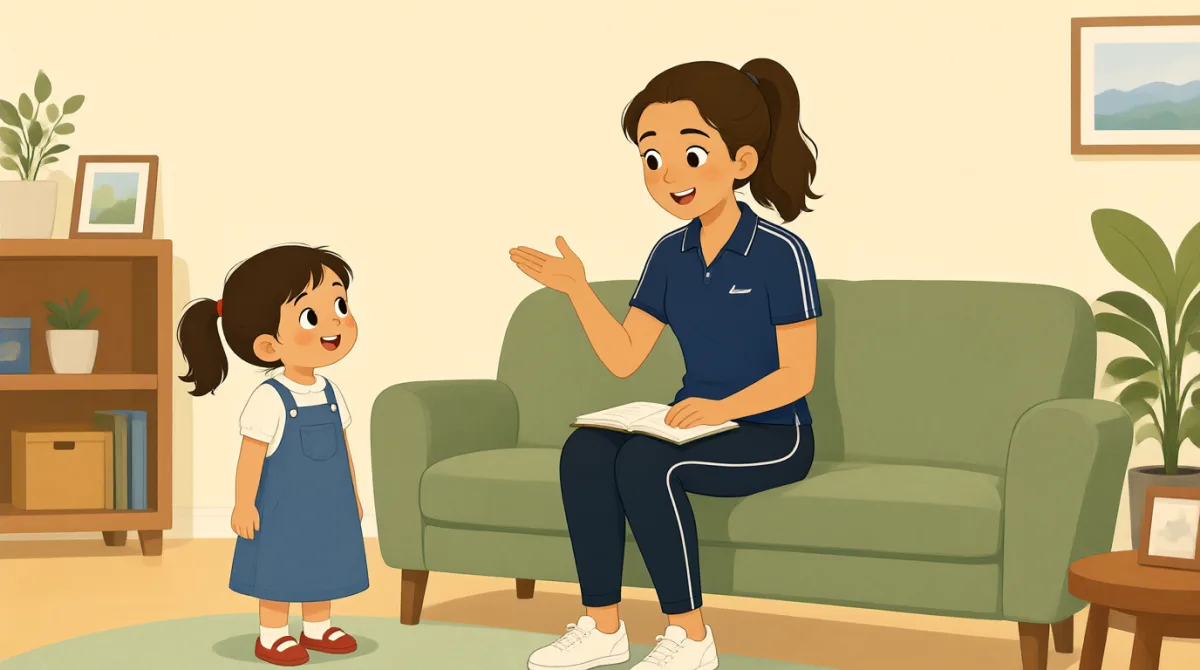

Hi, I’m here for my daughter’s first swimming lesson.
नमस्ते, मैं अपनी बेटी को तैराकी के पहले पाठ के लिए लाई हूँ।

Welcome! I’m Mia, her coach. Let’s get her ready by the pool.
स्वागत है! मैं मिया हूँ, उसकी कोच। आइए, पूल के पास उसे तैयार कर लें।
What will the children do in class today?
आज बच्चे कक्षा में क्या करेंगे?
We’ll start with a warm-up, then practice kicking and blowing bubbles.
हम शुरुआत हल्की कसरत से करेंगे, फिर पैरों से पानी मारने और पानी में बुलबुले बनाने का अभ्यास करेंगे।
That sounds fun. Should she wear her goggles now?
यह तो मज़ेदार लगता है। क्या उसे अभी अपना स्विमिंग चश्मा पहनना चाहिए?
Yes, please. She should also wear her swim cap and bring a towel.
जी, कृपया। उसे स्विमिंग कैप भी पहननी चाहिए और एक तौलिया भी लाना चाहिए।
Okay. Can I watch from here during the lesson?
ठीक है। क्या मैं पाठ के दौरान यहाँ से देख सकती हूँ?
Of course. Please stay behind the glass, and I’ll come talk to you afterward.
बिल्कुल। कृपया शीशे के पीछे रहें, मैं बाद में आपसे बात करने आऊँगी।
शब्दावली8
- first swimming lessonतैराकी का पहला पाठ
This is the first class a child has to learn how to swim. You can use “first” before the name of a new class or activity.
यह वह पहली कक्षा होती है जिसमें बच्चा तैरना सीखता है। किसी नई कक्षा या गतिविधि के नाम से पहले “first” (पहला/पहली) लगा सकते हैं।
- get her readyउसे तैयार करना
This means help her prepare for the lesson. You can use “get someone ready” before an activity or event.
इसका मतलब है पाठ के लिए उसकी तैयारी में मदद करना। किसी गतिविधि या कार्यक्रम से पहले “get someone ready” का इस्तेमाल कर सकते हैं।
- warm-upहल्की कसरत
A warm-up is easy exercise at the start of a class. It helps the body get ready for more activity.
“warm-up” कक्षा की शुरुआत में की जाने वाली आसान कसरत होती है। इससे शरीर आगे की गतिविधि के लिए तैयार होता है।
- blowing bubblesपानी में बुलबुले बनाना
This means breathing out into the water to make bubbles. Children often practice this when learning to swim.
इसका मतलब है पानी में साँस छोड़कर बुलबुले बनाना। तैरना सीखते समय बच्चे अक्सर इसका अभ्यास करते हैं।
- gogglesस्विमिंग चश्मा
Goggles are special glasses that protect your eyes in the water. You can ask, “Should I wear my goggles now?”
“goggles” ऐसा खास चश्मा होता है जो पानी में आँखों की रक्षा करता है। आप पूछ सकते हैं, “Should I wear my goggles now?” (क्या मुझे अभी अपना स्विमिंग चश्मा पहनना चाहिए?)
- swim capस्विमिंग कैप
A swim cap is a close-fitting hat worn in the pool. You can use “wear a swim cap” to talk about putting one on.
“swim cap” पूल में पहनी जाने वाली सिर से चिपकी हुई टोपी होती है। इसे पहनने की बात कहने के लिए “wear a swim cap” कह सकते हैं।
- behind the glassशीशे के पीछे
This means on the other side of the glass, where parents can watch the lesson. You can use “behind” to say where someone should stay.
इसका मतलब है शीशे की दूसरी ओर, जहाँ से माता-पिता पाठ देख सकते हैं। किसी को यह बताने के लिए कि उसे कहाँ रहना चाहिए, “behind” का इस्तेमाल कर सकते हैं।
- afterwardबाद में
“Afterward” means after something is finished. You can use it to say when you will do something later.
“Afterward” का मतलब है किसी चीज़ के ख़त्म होने के बाद। आप इसका इस्तेमाल यह बताने के लिए कर सकते हैं कि आप कोई काम बाद में कब करेंगे।
मुख्य वाक्य7
- 1
I’m here for my daughter’s first swimming lesson.
मैं अपनी बेटी को तैराकी के पहले पाठ के लिए लाई हूँ।
Use this sentence to explain why you have come somewhere. You can replace “my daughter’s first swimming lesson” with another appointment or activity.
कहीं आने की वजह बताने के लिए यह वाक्य इस्तेमाल करें। “my daughter’s first swimming lesson” की जगह किसी दूसरी मुलाक़ात या गतिविधि का नाम रख सकते हैं।
- 2
Let’s get her ready by the pool.
आइए, पूल के पास उसे तैयार कर लें।
This is a friendly way to suggest preparing someone for an activity. Replace “her” with another person, and change “by the pool” to the place where you will get ready.
किसी को गतिविधि के लिए तैयार करने का सुझाव देने का यह दोस्ताना तरीका है। “her” की जगह किसी दूसरे व्यक्ति का नाम लें और “by the pool” की जगह वह जगह बताएं जहाँ आप तैयारी करेंगे।
- 3
What will the children do in class today?
आज बच्चे कक्षा में क्या करेंगे?
Use this question to ask about a class plan. You can replace “the children” with “we” or “my child” to ask about other people.
कक्षा में क्या करने की योजना है, यह पूछने के लिए इस सवाल का इस्तेमाल करें। दूसरे लोगों के बारे में पूछने के लिए “the children” की जगह “we” या “my child” रख सकते हैं।
- 4
We’ll start with a warm-up, then practice kicking and blowing bubbles.
हम शुरुआत हल्की कसरत से करेंगे, फिर पैरों से पानी मारने और पानी में बुलबुले बनाने का अभ्यास करेंगे।
This sentence explains what will happen first and next. Use “We’ll start with…” to describe the beginning of a lesson or activity.
इस वाक्य में बताया गया है कि पहले और उसके बाद क्या होगा। पाठ या गतिविधि की शुरुआत बताने के लिए “We’ll start with…” का इस्तेमाल करें।
- 5
Should she wear her goggles now?
क्या उसे अभी अपना स्विमिंग चश्मा पहनना चाहिए?
Use “Should she…?” to ask if someone ought to do something. Replace “she” and “wear her goggles” to ask about another person or action.
यह पूछने के लिए “Should she…?” का इस्तेमाल करें कि किसी को कुछ करना चाहिए या नहीं। किसी दूसरे व्यक्ति या काम के बारे में पूछने के लिए “she” और “wear her goggles” बदल दें।
- 6
Can I watch from here during the lesson?
क्या मैं पाठ के दौरान यहाँ से देख सकती हूँ?
This is a polite way to ask permission to watch. You can replace “watch” with another activity and “the lesson” with another event.
देखने की अनुमति माँगने का यह विनम्र तरीका है। आप “watch” की जगह कोई दूसरी गतिविधि और “the lesson” की जगह कोई दूसरा कार्यक्रम रख सकते हैं।
- 7
Please stay behind the glass, and I’ll come talk to you afterward.
कृपया शीशे के पीछे रहें, मैं बाद में आपसे बात करने आऊँगी।
This sentence gives a polite instruction and explains what will happen later. Use “Please stay…” to ask someone to remain in a place.
इस वाक्य में विनम्रता से निर्देश दिया गया है और बताया गया है कि बाद में क्या होगा। किसी से एक जगह पर बने रहने के लिए कहने हेतु “Please stay…” का इस्तेमाल करें।