The First Swimming Lesson
La primera clase de natación
Emma brings her daughter to the first lesson and meets Mia, the swimming coach. Mia explains what the children will do in class.
Emma lleva a su hija a su primera clase de natación y conoce a Mia, la entrenadora. Mia le explica qué harán los niños en clase.
Diálogo8
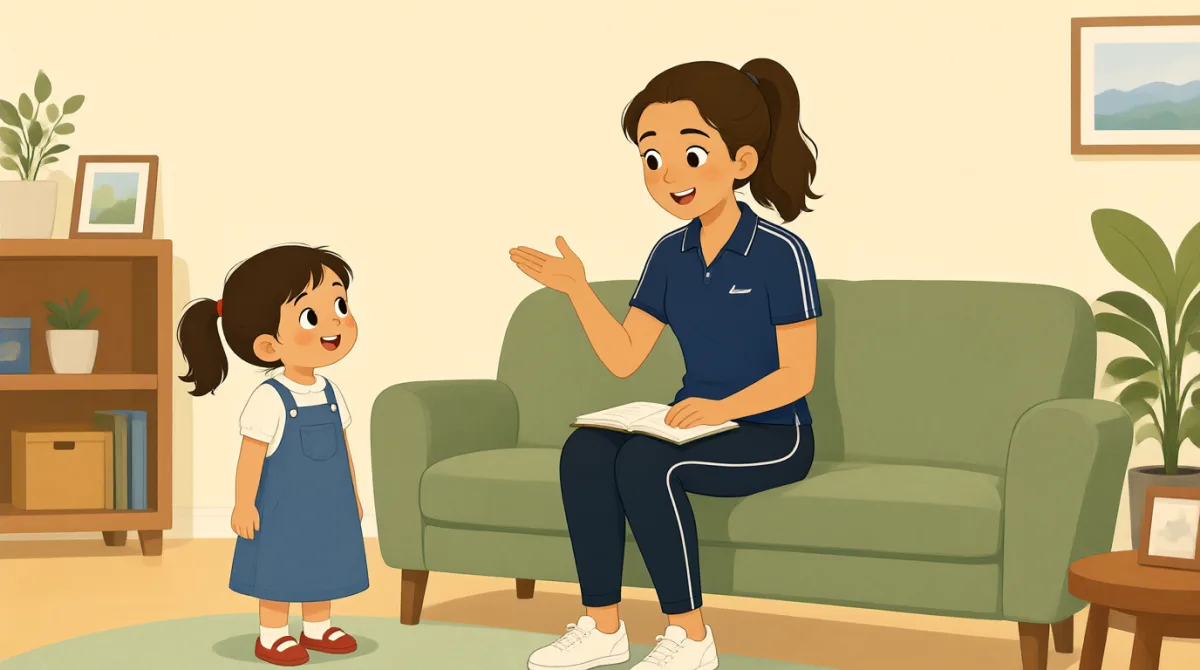

Hi, I’m here for my daughter’s first swimming lesson.
Hola, vengo por la primera clase de natación de mi hija.

Welcome! I’m Mia, her coach. Let’s get her ready by the pool.
¡Bienvenidas! Soy Mia, su entrenadora. Vamos a prepararla junto a la piscina.
What will the children do in class today?
¿Qué harán los niños en clase hoy?
We’ll start with a warm-up, then practice kicking and blowing bubbles.
Empezaremos con un calentamiento y después practicaremos las patadas y a soplar burbujas.
That sounds fun. Should she wear her goggles now?
Suena divertido. ¿Debería ponerse las gafas de natación ahora?
Yes, please. She should also wear her swim cap and bring a towel.
Sí, por favor. También debería ponerse el gorro de natación y traer una toalla.
Okay. Can I watch from here during the lesson?
De acuerdo. ¿Puedo mirar desde aquí durante la clase?
Of course. Please stay behind the glass, and I’ll come talk to you afterward.
Por supuesto. Quédate detrás del vidrio y luego iré a hablar contigo.
Vocabulario8
- first swimming lessonprimera clase de natación
This is the first class a child has to learn how to swim. You can use “first” before the name of a new class or activity.
Es la primera clase que toma un niño para aprender a nadar. Puedes usar “first” antes del nombre de una clase o actividad nueva.
- get her readyprepararla
This means help her prepare for the lesson. You can use “get someone ready” before an activity or event.
Significa ayudarla a prepararse para la clase. Puedes usar “get someone ready” antes de una actividad o un evento.
- warm-upcalentamiento
A warm-up is easy exercise at the start of a class. It helps the body get ready for more activity.
Un “warm-up” es una serie de ejercicios suaves al comienzo de una clase. Ayuda a preparar el cuerpo para hacer más actividad.
- blowing bubblessoplar burbujas
This means breathing out into the water to make bubbles. Children often practice this when learning to swim.
Significa soltar el aire dentro del agua para hacer burbujas. Los niños suelen practicar esto cuando están aprendiendo a nadar.
- gogglesgafas de natación
Goggles are special glasses that protect your eyes in the water. You can ask, “Should I wear my goggles now?”
Las “goggles” son gafas especiales que protegen los ojos en el agua. Puedes preguntar: “Should I wear my goggles now?” (¿Debería ponerme las gafas de natación ahora?).
- swim capgorro de natación
A swim cap is a close-fitting hat worn in the pool. You can use “wear a swim cap” to talk about putting one on.
Un “swim cap” es un gorro ajustado que se usa en la piscina. Puedes usar “wear a swim cap” para hablar de ponerse uno.
- behind the glassdetrás del vidrio
This means on the other side of the glass, where parents can watch the lesson. You can use “behind” to say where someone should stay.
Significa al otro lado del vidrio, donde los padres pueden mirar la clase. Puedes usar “behind” para indicar dónde debe quedarse alguien.
- afterwarddespués
“Afterward” means after something is finished. You can use it to say when you will do something later.
“Afterward” significa después de que algo haya terminado. Puedes usarlo para decir cuándo harás algo más tarde.
Frases clave7
- 1
I’m here for my daughter’s first swimming lesson.
Vengo por la primera clase de natación de mi hija.
Use this sentence to explain why you have come somewhere. You can replace “my daughter’s first swimming lesson” with another appointment or activity.
Usa esta frase para explicar por qué has venido a algún lugar. Puedes reemplazar “my daughter’s first swimming lesson” por otra cita o actividad.
- 2
Let’s get her ready by the pool.
Vamos a prepararla junto a la piscina.
This is a friendly way to suggest preparing someone for an activity. Replace “her” with another person, and change “by the pool” to the place where you will get ready.
Esta es una forma cordial de sugerir que preparen a alguien para una actividad. Reemplaza “her” por otra persona y cambia “by the pool” por el lugar donde se prepararán.
- 3
What will the children do in class today?
¿Qué harán los niños en clase hoy?
Use this question to ask about a class plan. You can replace “the children” with “we” or “my child” to ask about other people.
Usa esta pregunta para consultar el plan de una clase. Puedes reemplazar “the children” por “we” o “my child” para preguntar por otras personas.
- 4
We’ll start with a warm-up, then practice kicking and blowing bubbles.
Empezaremos con un calentamiento y después practicaremos las patadas y a soplar burbujas.
This sentence explains what will happen first and next. Use “We’ll start with…” to describe the beginning of a lesson or activity.
Esta frase explica qué pasará primero y qué ocurrirá después. Usa “We’ll start with…” para describir el comienzo de una clase o actividad.
- 5
Should she wear her goggles now?
¿Debería ponerse las gafas de natación ahora?
Use “Should she…?” to ask if someone ought to do something. Replace “she” and “wear her goggles” to ask about another person or action.
Usa “Should she…?” para preguntar si alguien debería hacer algo. Cambia “she” y “wear her goggles” para preguntar por otra persona o acción.
- 6
Can I watch from here during the lesson?
¿Puedo mirar desde aquí durante la clase?
This is a polite way to ask permission to watch. You can replace “watch” with another activity and “the lesson” with another event.
Esta es una forma cortés de pedir permiso para mirar. Puedes reemplazar “watch” por otra actividad y “the lesson” por otro evento.
- 7
Please stay behind the glass, and I’ll come talk to you afterward.
Quédate detrás del vidrio, por favor, y luego iré a hablar contigo.
This sentence gives a polite instruction and explains what will happen later. Use “Please stay…” to ask someone to remain in a place.
Esta frase da una indicación cortés y explica qué pasará después. Usa “Please stay…” para pedirle a alguien que se quede en un lugar.