The First Swimming Lesson
第一次游泳课
Emma brings her daughter to the first lesson and meets Mia, the swimming coach. Mia explains what the children will do in class.
艾玛带女儿来上第一次课,并见到了游泳教练米娅。米娅解释了孩子们在课上要做什么。
对话8
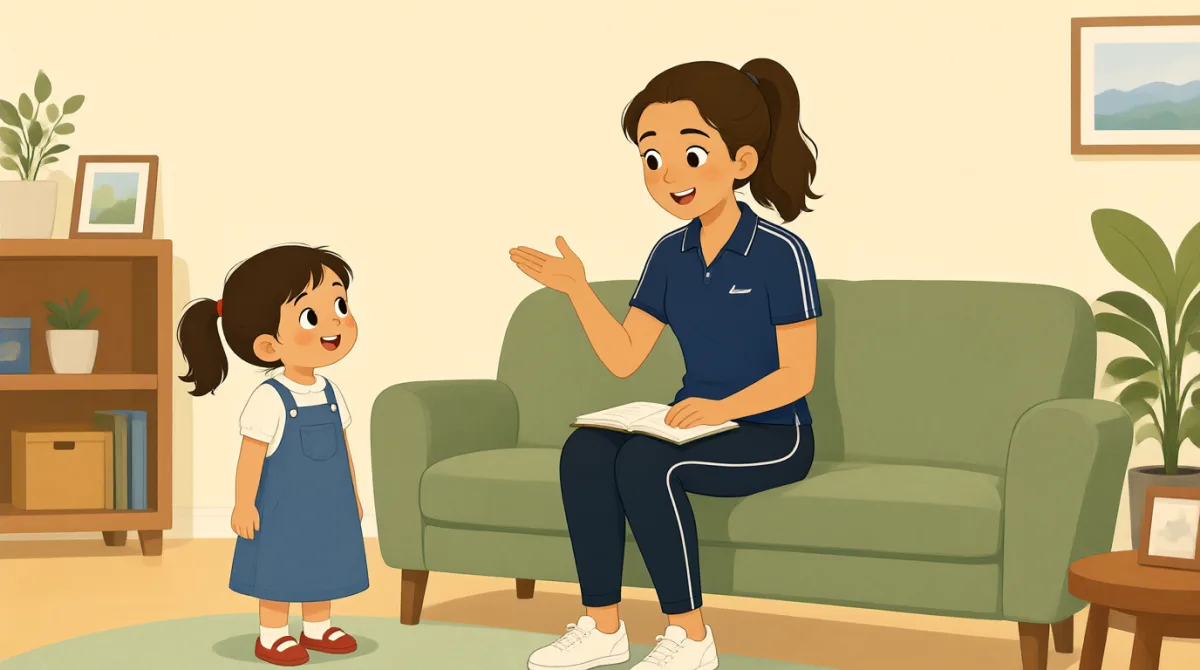

Hi, I’m here for my daughter’s first swimming lesson.
你好,我带女儿来上她的第一节游泳课。

Welcome! I’m Mia, her coach. Let’s get her ready by the pool.
欢迎!我是她的教练米娅。我们到泳池边让她做好准备吧。
What will the children do in class today?
孩子们今天上课会做些什么?
We’ll start with a warm-up, then practice kicking and blowing bubbles.
我们先做热身,然后练习踢腿和吹泡泡。
That sounds fun. Should she wear her goggles now?
听起来很有趣。她现在要戴上泳镜吗?
Yes, please. She should also wear her swim cap and bring a towel.
要的,请让她戴上泳帽,也带一条毛巾。
Okay. Can I watch from here during the lesson?
好的。上课时我可以在这里观看吗?
Of course. Please stay behind the glass, and I’ll come talk to you afterward.
当然可以。请待在玻璃窗后面,下课后我会来和你聊聊。
词汇8
- first swimming lesson第一节游泳课
This is the first class a child has to learn how to swim. You can use “first” before the name of a new class or activity.
这是孩子学习游泳的第一节课。你可以在新课程或活动名称前用“first”表示“第一”。
- get her ready让她做好准备
This means help her prepare for the lesson. You can use “get someone ready” before an activity or event.
意思是帮她为上课做好准备。你可以在活动或事情前用“get someone ready”表示让某人做好准备。
- warm-up热身
A warm-up is easy exercise at the start of a class. It helps the body get ready for more activity.
“warm-up”是课程开始时做的简单运动,能让身体为接下来的活动做好准备。
- blowing bubbles吹泡泡
This means breathing out into the water to make bubbles. Children often practice this when learning to swim.
意思是向水里呼气,吹出泡泡。孩子们学游泳时常会练习这个动作。
- goggles泳镜
Goggles are special glasses that protect your eyes in the water. You can ask, “Should I wear my goggles now?”
“goggles”是游泳时保护眼睛的特殊眼镜。你可以问:“Should I wear my goggles now?”(我现在要戴泳镜吗?)
- swim cap泳帽
A swim cap is a close-fitting hat worn in the pool. You can use “wear a swim cap” to talk about putting one on.
“swim cap”是游泳时戴的贴头泳帽。你可以用“wear a swim cap”来表示戴上泳帽。
- behind the glass在玻璃后面
This means on the other side of the glass, where parents can watch the lesson. You can use “behind” to say where someone should stay.
意思是在玻璃的另一侧,家长可以在那里观看课程。你可以用“behind”说明某人应该待在哪里。
- afterward之后
“Afterward” means after something is finished. You can use it to say when you will do something later.
“Afterward”意思是某件事结束之后。你可以用它来说明之后会做什么。
重点句子7
- 1
I’m here for my daughter’s first swimming lesson.
我是带女儿来上第一节游泳课的。
Use this sentence to explain why you have come somewhere. You can replace “my daughter’s first swimming lesson” with another appointment or activity.
你可以用这句话说明自己为什么来到某个地方。你可以把“my daughter’s first swimming lesson”换成其他预约或活动。
- 2
Let’s get her ready by the pool.
我们到泳池边让她做好准备吧。
This is a friendly way to suggest preparing someone for an activity. Replace “her” with another person, and change “by the pool” to the place where you will get ready.
这是一种友好的提议,表示要帮某人为一项活动做好准备。你可以把“her”换成其他人,把“by the pool”换成准备的地点。
- 3
What will the children do in class today?
孩子们今天上课会做些什么?
Use this question to ask about a class plan. You can replace “the children” with “we” or “my child” to ask about other people.
你可以用这个问题询问课程安排。把“the children”换成“we”或“my child”,就可以询问其他人要做什么。
- 4
We’ll start with a warm-up, then practice kicking and blowing bubbles.
我们先热身,然后练习踢腿和吹泡泡。
This sentence explains what will happen first and next. Use “We’ll start with…” to describe the beginning of a lesson or activity.
这句话说明接下来先做什么、再做什么。你可以用“We’ll start with…”来描述课程或活动的开头。
- 5
Should she wear her goggles now?
她现在要戴泳镜吗?
Use “Should she…?” to ask if someone ought to do something. Replace “she” and “wear her goggles” to ask about another person or action.
你可以用“Should she…?”询问某人是否应该做某事。替换“she”和“wear her goggles”,就能询问其他人或其他动作。
- 6
Can I watch from here during the lesson?
上课时我可以从这里观看吗?
This is a polite way to ask permission to watch. You can replace “watch” with another activity and “the lesson” with another event.
这是一种礼貌的请求方式,用来询问能不能观看。你可以把“watch”换成其他活动,把“the lesson”换成其他事情。
- 7
Please stay behind the glass, and I’ll come talk to you afterward.
请待在玻璃后面,下课后我会来和你聊聊。
This sentence gives a polite instruction and explains what will happen later. Use “Please stay…” to ask someone to remain in a place.
这句话既礼貌地提出了要求,也说明之后会发生什么。你可以用“Please stay…”请别人留在某个地方。