Saying No to a Party Because of Work
仕事でパーティーを断る
Mia invites Emma to a party, but Emma has to work that evening. Emma politely says no and gives a simple reason.
ミアがエマをパーティーに誘いますが、エマはその日の夜に仕事があります。エマは簡単な理由を伝えて、丁寧に断ります。
会話9
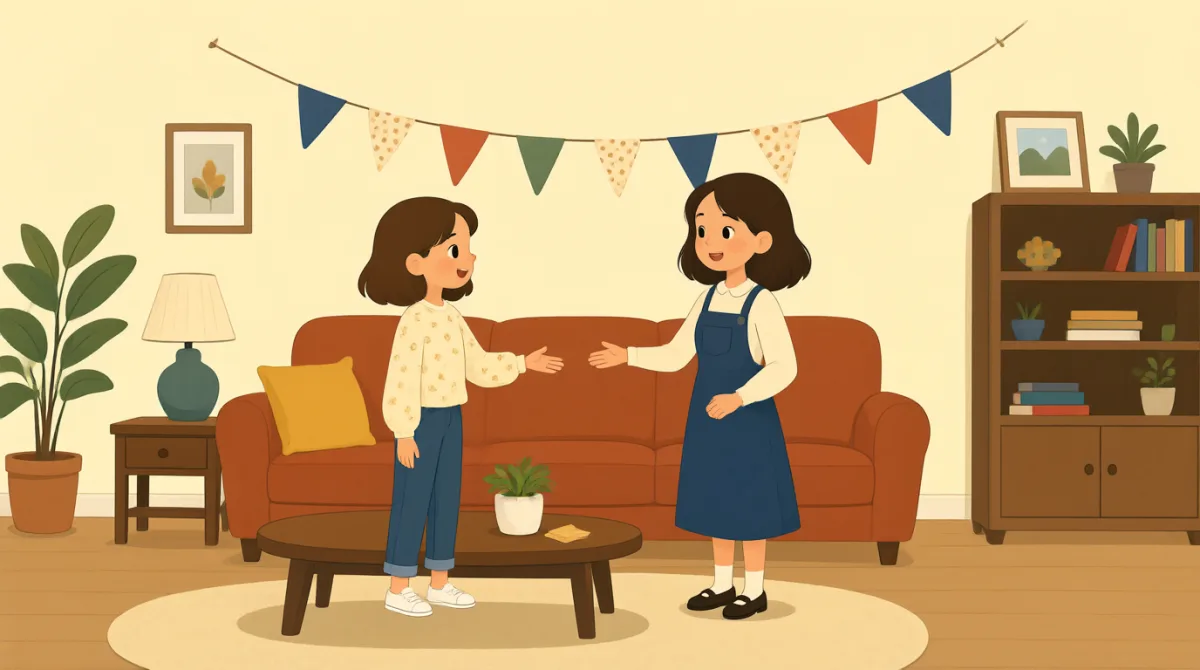

Hi, Emma! Would you like to come to my party on Saturday evening?
やあ、エマ!土曜の夜、うちのパーティーに来ない?

Thanks for inviting me! It sounds fun. What time does it start?
誘ってくれてありがとう!楽しそうだね。何時に始まるの?
It starts at seven. We’ll have snacks and music at my place.
7時からだよ。うちで軽食と音楽を楽しむ予定だよ。
I’m sorry, but I can’t come. I have to work that evening.
ごめんね、行けないんだ。その日の夜は仕事なの。
Oh, that’s too bad. Do you have to work late?
ああ、それは残念。遅くまで仕事なの?
Yes, I do. I finish at nine, so I’ll be tired.
うん。9時に終わるから、疲れちゃうと思う。
I understand. Maybe we can get coffee another day.
そっか。別の日にコーヒーでも飲みに行こうか。
That would be lovely! Are you free next Sunday afternoon?
いいね!次の日曜の午後は空いてる?
Yes, I am. Let’s meet then!
うん、空いてるよ。その日に会おう!
語彙8
- Would you like to come来ない?
This is a polite way to invite someone. You can use it to ask someone to join you for an event.
相手を誘うときの丁寧な言い方です。イベントに一緒に来てもらいたいときに使えます。
- Thanks for inviting me誘ってくれてありがとう
Say this to show that you appreciate an invitation. It is polite even if you cannot go.
誘ってもらったことへの感謝を伝える表現です。行けない場合でも丁寧な印象になります。
- It sounds fun楽しそう
Use this to say that an activity seems enjoyable. It can show interest before you accept or decline an invitation.
何かが楽しそうだと伝える表現です。誘いを受けるか断るかを決める前に、興味があることを示すときにも使えます。
- I can’t come行けない
This is a simple way to say that you cannot attend an event. You can add a reason to make your answer clear.
イベントに参加できないことを簡潔に伝える表現です。理由を付け加えると、返事がより分かりやすくなります。
- I have to work仕事がある
This means that your job requires you to work at that time. Use it to explain why you are not free.
その時間に仕事をしなければならない、という意味です。都合がつかない理由を説明するときに使えます。
- That’s too badそれは残念
Say this when you are sorry that something disappointing has happened. Here, Mia uses it to show understanding.
残念なことがあったときに、気の毒に思う気持ちを伝える表現です。ここではミアがエマの事情を理解していることを示しています。
- another day別の日
This means a different day in the future. You can use it to suggest making plans at another time.
これから先の、別の日という意味です。別の機会に予定を立てようと提案するときに使えます。
- Are you free空いてる?
Use this to ask if someone has time available. Add a day or time to ask about a specific plan.
相手に時間があるか尋ねる表現です。曜日や時間を加えると、具体的な予定について聞けます。
重要な文8
- 1
Would you like to come to my party on Saturday evening?
土曜の夜、うちのパーティーに来ない?
This is a friendly, polite way to invite someone. Change the event and time to make your own invitation.
相手を誘うときの、親しみがあり丁寧な言い方です。イベントや時間を変えて、自分の誘い文句を作れます。
- 2
Thanks for inviting me!
誘ってくれてありがとう!
Use this to thank someone for an invitation. It sounds polite whether you accept or say no.
誘ってくれた人にお礼を言う表現です。誘いを受けるときにも断るときにも、丁寧に聞こえます。
- 3
It sounds fun.
楽しそうだね。
This is a simple way to show that an idea seems enjoyable. You can use it when someone tells you about a plan.
ある考えや予定が楽しそうだと伝える簡単な表現です。相手から予定について聞いたときに使えます。
- 4
I’m sorry, but I can’t come.
ごめんね、行けないんだ。
This is a polite way to decline an invitation. You can follow it with a short reason.
誘いを断るときの丁寧な言い方です。このあとに短い理由を続けられます。
- 5
I have to work that evening.
その日の夜は仕事なの。
Use this sentence to explain that work makes you unavailable. Change “work” to another reason, such as “study,” when needed.
仕事があるため都合がつかないと説明するときに使います。必要に応じて “work” を “study” など別の理由に変えられます。
- 6
Maybe we can get coffee another day.
別の日にコーヒーでも飲みに行こうか。
This is a friendly way to suggest meeting at a different time. You can replace “get coffee” with another activity.
別の機会に会おうと提案する、親しみのある言い方です。“get coffee” を別の活動に置き換えることもできます。
- 7
Are you free next Sunday afternoon?
次の日曜の午後は空いてる?
Use this question to check if someone is available at a specific time. Change the day or time to suggest another plan.
特定の日時に相手の都合がつくか尋ねる表現です。曜日や時間を変えて、別の予定を提案できます。
- 8
Let’s meet then!
じゃあ、その日に会おう!
Say this to agree on a time you have just discussed. It is a simple, friendly way to confirm a plan.
話し合った日時で会うことに同意するときに使います。予定を確認する、簡単で親しみのある表現です。