The Weather Back Home
故郷の天気
Emma asks Mia what the weather is like in different seasons. Mia describes the warm summers and rainy winters.
エマがミアに、季節ごとの天気について尋ねる。ミアは、夏は暖かく、冬は雨が多いと話す。
会話9
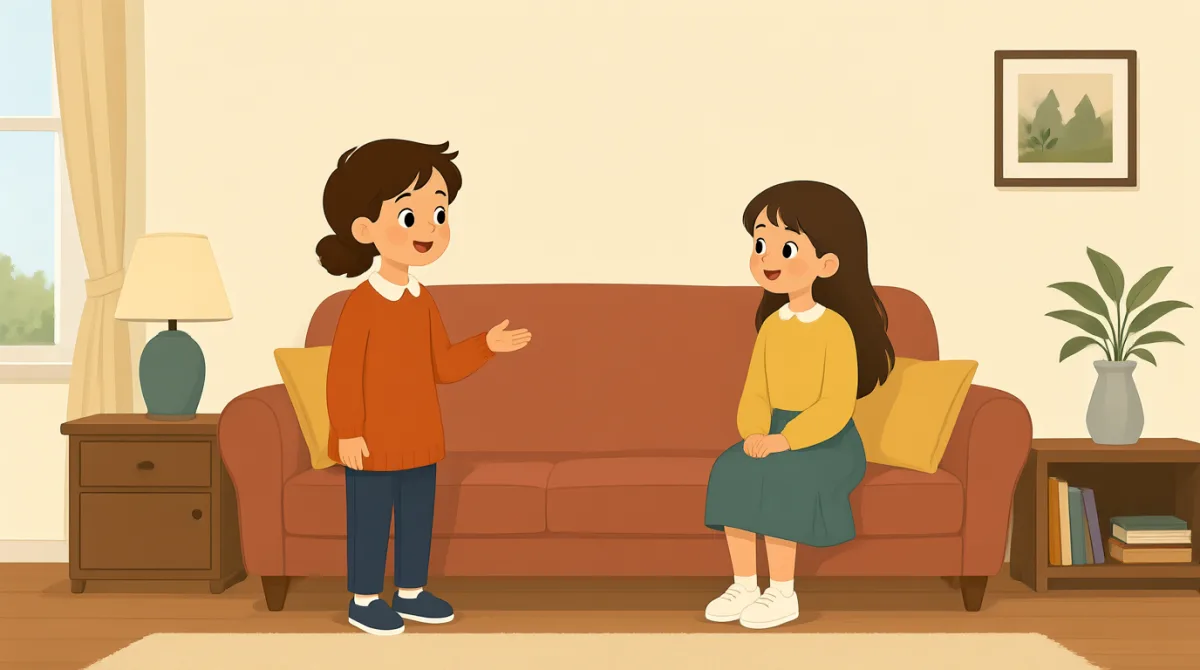

What’s the weather like in your hometown during the year?
故郷の天気って、一年を通してどんな感じ?

It changes with the seasons. Summers are usually warm and sunny.
季節によって変わるよ。夏はたいてい暖かくて晴れてる。
That sounds nice. Does it get very hot in summer?
いいね。夏はすごく暑くなるの?
Some days are hot, but evenings are cooler. We like to walk outside then.
暑い日もあるけど、夕方は涼しくなるよ。その時間に外を散歩するのが好きなんだ。
What are the winters like?
冬はどんな感じ?
Winters are cool and rainy. I always take an umbrella when I go out.
冬は涼しくて雨が多いよ。出かけるときはいつも傘を持っていくんだ。
Does it snow there, too?
そっちも雪が降るの?
Not often. It snowed once when I was a child, and everyone was excited.
あまり降らないよ。子どものころに一度だけ雪が降って、みんな大喜びだった。
I’d love to visit in the summer and enjoy the warm weather.
夏に遊びに行って、暖かい気候を楽しみたいな。
語彙8
- during the year一年を通して
This means throughout all the months of a year. Use it to ask about something that changes from season to season.
一年のすべての月を通じて、という意味です。季節ごとに変わることについて尋ねるときに使えます。
- changes with the seasons季節によって変わる
This means something is different in spring, summer, fall, and winter. You can use it to describe weather or other things that vary during the year.
春、夏、秋、冬で違うという意味です。天気など、一年を通して変化することを説明するときに使えます。
- warm and sunny暖かくて晴れた
This describes pleasant weather with comfortable warmth and plenty of sunshine. Use it to talk about a nice summer day.
ほどよく暖かく、日差しがたっぷりある気持ちのいい天気を表します。夏の快適な天気について話すときに使えます。
- coolerより涼しい
This means less warm than something else. Here, the evenings are cooler than the daytime.
何かと比べて暖かさが少ない、という意味です。ここでは、夕方は昼間より涼しいということです。
- walk outside外を散歩する
This means to take a walk outdoors. You can use it to talk about an activity you enjoy doing in nice weather.
屋外を歩いて楽しむことです。天気のいい日に好きですることについて話すときに使えます。
- go out出かける
This means to leave home and spend time somewhere else. Here, Mia takes an umbrella when she leaves home.
家を出て、ほかの場所で時間を過ごすという意味です。ここでは、ミアが家を出るときに傘を持っていくということです。
- Not often.あまり〜ない
This means something does not happen very frequently. It is a short, natural answer to a yes-or-no question.
何かがあまり頻繁には起こらない、という意味です。はい・いいえで答える質問への、短くて自然な返事です。
- I’d love toぜひ〜したい
This is a friendly way to say you would really like to do something. Use it to express interest in a plan or invitation.
何かを本当にしたいという気持ちを伝える、親しみやすい表現です。予定や誘いに興味があることを表すときに使えます。
重要な文7
- 1
What’s the weather like in your hometown during the year?
故郷の天気って、一年を通してどんな感じ?
Use this to ask someone about the weather in their hometown. You can replace “your hometown” with a place name or another location.
相手の故郷の天気について尋ねる表現です。“your hometown” を地名や別の場所に置き換えて使えます。
- 2
Summers are usually warm and sunny.
夏はたいてい暖かくて晴れてる。
This sentence describes typical summer weather. You can change “Summers” and the weather words to describe another season or place.
夏の典型的な天気を説明する文です。“Summers” と天気を表す言葉を変えれば、別の季節や場所についても説明できます。
- 3
Some days are hot, but evenings are cooler.
暑い日もあるけど、夕方は涼しくなる。
Use this to compare the weather at different times of day. The pattern “Some days are [description], but [time] is [description]” is easy to reuse.
時間帯による天気の違いを比べるときに使えます。“Some days are [description], but [time] is [description]” という形は、別の内容にも応用しやすいです。
- 4
We like to walk outside then.
その時間に外を散歩するのが好きなんだ。
This tells someone what you enjoy doing at a particular time. You can replace “walk outside” with another activity and “then” with a clear time.
特定の時間に何をするのが好きかを伝える文です。“walk outside” を別の活動に、“then” を具体的な時間に置き換えられます。
- 5
I always take an umbrella when I go out.
出かけるときはいつも傘を持っていくんだ。
Use this to describe something you regularly bring when leaving home. You can replace “an umbrella” with another useful item.
家を出るときにいつも持っていくものについて説明する表現です。“an umbrella” を別の便利な持ち物に置き換えて使えます。
- 6
It snowed once when I was a child, and everyone was excited.
子どものころに一度だけ雪が降って、みんな大喜びだった。
This is a simple way to share a past event and people’s reaction to it. Use “It [past-tense verb] once when I was a child” to tell a similar childhood story.
過去の出来事と、それに対する人々の反応を簡潔に伝える表現です。“It [past-tense verb] once when I was a child” を使えば、子どものころの似た出来事を話せます。
- 7
I’d love to visit in the summer and enjoy the warm weather.
夏に遊びに行って、暖かい気候を楽しみたいな。
Use this to express enthusiasm about visiting a place and say what you hope to do there. You can change the season and activity to fit your plans.
ある場所を訪れたい気持ちと、そこで何をしたいかを伝える表現です。予定に合わせて季節や活動を変えられます。