The Weather Back Home
Thời tiết ở quê nhà
Emma asks Mia what the weather is like in different seasons. Mia describes the warm summers and rainy winters.
Emma hỏi Mia thời tiết ở quê cô ấy như thế nào vào các mùa khác nhau. Mia kể về mùa hè ấm áp và mùa đông mưa nhiều.
Hội thoại9
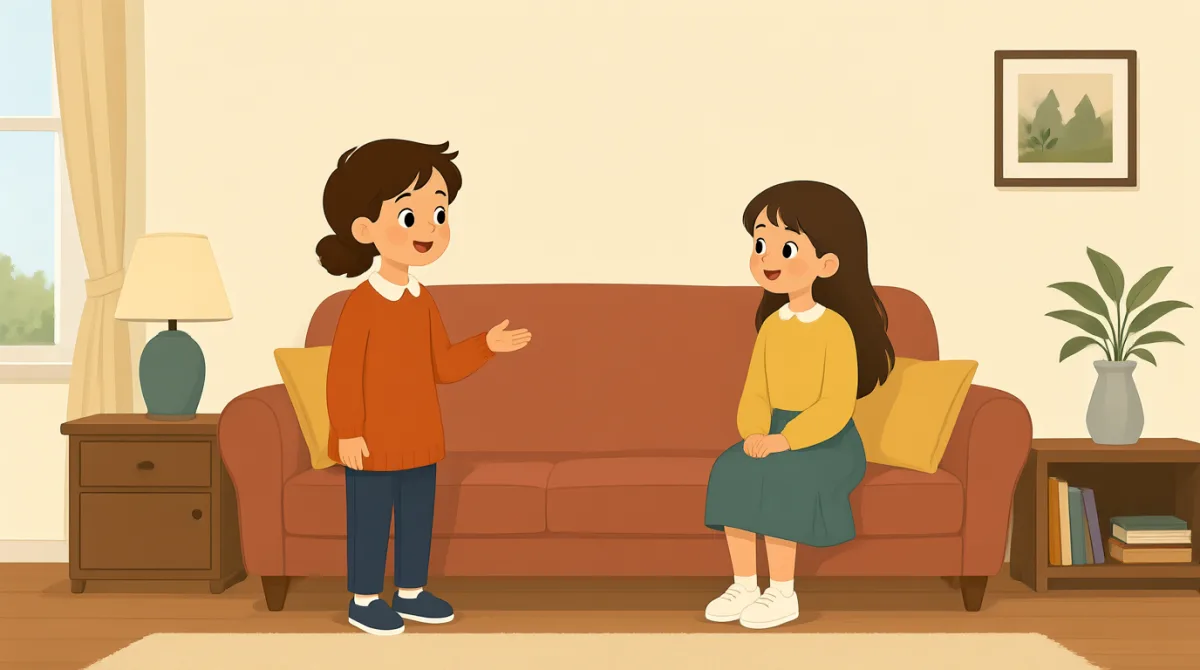

What’s the weather like in your hometown during the year?
Thời tiết ở quê cậu quanh năm thế nào?

It changes with the seasons. Summers are usually warm and sunny.
Thời tiết thay đổi theo mùa. Mùa hè thường ấm áp và nắng đẹp.
That sounds nice. Does it get very hot in summer?
Nghe thích nhỉ. Mùa hè có nóng lắm không?
Some days are hot, but evenings are cooler. We like to walk outside then.
Có ngày nóng, nhưng buổi tối mát hơn. Lúc đó bọn mình thích đi dạo ngoài trời.
What are the winters like?
Mùa đông thì thế nào?
Winters are cool and rainy. I always take an umbrella when I go out.
Mùa đông mát mẻ và mưa nhiều. Mình luôn mang theo ô khi ra ngoài.
Does it snow there, too?
Ở đó cũng có tuyết rơi không?
Not often. It snowed once when I was a child, and everyone was excited.
Không thường xuyên. Hồi nhỏ mình từng thấy tuyết rơi một lần, ai cũng phấn khích.
I’d love to visit in the summer and enjoy the warm weather.
Mình muốn đến thăm nơi đó vào mùa hè để tận hưởng thời tiết ấm áp.
Từ vựng8
- during the yearquanh năm
This means throughout all the months of a year. Use it to ask about something that changes from season to season.
Cụm này có nghĩa là trong suốt các tháng của một năm. Hãy dùng nó để hỏi về điều thay đổi theo từng mùa.
- changes with the seasonsthay đổi theo mùa
This means something is different in spring, summer, fall, and winter. You can use it to describe weather or other things that vary during the year.
Cụm này có nghĩa là điều gì đó khác nhau vào mùa xuân, mùa hè, mùa thu và mùa đông. Bạn có thể dùng cụm này để miêu tả thời tiết hoặc những thứ khác thay đổi trong năm.
- warm and sunnyấm áp và nắng đẹp
This describes pleasant weather with comfortable warmth and plenty of sunshine. Use it to talk about a nice summer day.
Cụm này miêu tả thời tiết dễ chịu, ấm vừa phải và nhiều nắng. Hãy dùng cụm này để nói về một ngày hè đẹp trời.
- coolermát hơn
This means less warm than something else. Here, the evenings are cooler than the daytime.
Từ này có nghĩa là ít ấm hơn so với thứ khác. Ở đây, buổi tối mát hơn ban ngày.
- walk outsideđi dạo ngoài trời
This means to take a walk outdoors. You can use it to talk about an activity you enjoy doing in nice weather.
Cụm này có nghĩa là đi bộ dạo bên ngoài. Bạn có thể dùng cụm này để nói về một hoạt động mình thích làm khi thời tiết đẹp.
- go outra ngoài
This means to leave home and spend time somewhere else. Here, Mia takes an umbrella when she leaves home.
Cụm này có nghĩa là rời khỏi nhà và đến nơi khác. Ở đây, Mia mang theo ô khi rời nhà.
- Not often.Không thường xuyên.
This means something does not happen very frequently. It is a short, natural answer to a yes-or-no question.
Cụm này có nghĩa là điều gì đó không xảy ra thường xuyên. Đây là câu trả lời ngắn gọn, tự nhiên cho một câu hỏi có hoặc không.
- I’d love toMình rất muốn
This is a friendly way to say you would really like to do something. Use it to express interest in a plan or invitation.
Đây là cách thân thiện để nói rằng bạn thực sự muốn làm điều gì đó. Hãy dùng cụm này để thể hiện sự hào hứng với một kế hoạch hoặc lời mời.
Câu trọng tâm7
- 1
What’s the weather like in your hometown during the year?
Thời tiết ở quê cậu quanh năm thế nào?
Use this to ask someone about the weather in their hometown. You can replace “your hometown” with a place name or another location.
Dùng câu này để hỏi ai đó về thời tiết ở quê họ. Bạn có thể thay “your hometown” bằng tên một địa điểm hoặc một nơi khác.
- 2
Summers are usually warm and sunny.
Mùa hè thường ấm áp và nắng đẹp.
This sentence describes typical summer weather. You can change “Summers” and the weather words to describe another season or place.
Câu này miêu tả thời tiết mùa hè thường thấy. Bạn có thể thay “Summers” và các từ miêu tả thời tiết để nói về mùa hoặc địa điểm khác.
- 3
Some days are hot, but evenings are cooler.
Có ngày nóng, nhưng buổi tối mát hơn.
Use this to compare the weather at different times of day. The pattern “Some days are [description], but [time] is [description]” is easy to reuse.
Dùng câu này để so sánh thời tiết vào những thời điểm khác nhau trong ngày. Mẫu câu “Some days are [description], but [time] is [description]” rất dễ áp dụng lại.
- 4
We like to walk outside then.
Lúc đó bọn mình thích đi dạo ngoài trời.
This tells someone what you enjoy doing at a particular time. You can replace “walk outside” with another activity and “then” with a clear time.
Câu này cho người khác biết bạn thích làm gì vào một thời điểm cụ thể. Bạn có thể thay “walk outside” bằng một hoạt động khác và thay “then” bằng một mốc thời gian rõ ràng.
- 5
I always take an umbrella when I go out.
Mình luôn mang theo ô khi ra ngoài.
Use this to describe something you regularly bring when leaving home. You can replace “an umbrella” with another useful item.
Dùng câu này để miêu tả thứ bạn thường mang theo khi rời khỏi nhà. Bạn có thể thay “an umbrella” bằng một vật dụng hữu ích khác.
- 6
It snowed once when I was a child, and everyone was excited.
Hồi nhỏ mình từng thấy tuyết rơi một lần, ai cũng phấn khích.
This is a simple way to share a past event and people’s reaction to it. Use “It [past-tense verb] once when I was a child” to tell a similar childhood story.
Đây là cách đơn giản để kể về một sự việc trong quá khứ và phản ứng của mọi người. Dùng “It [past-tense verb] once when I was a child” để kể một câu chuyện thời thơ ấu tương tự.
- 7
I’d love to visit in the summer and enjoy the warm weather.
Mình rất muốn đến thăm nơi đó vào mùa hè và tận hưởng thời tiết ấm áp.
Use this to express enthusiasm about visiting a place and say what you hope to do there. You can change the season and activity to fit your plans.
Dùng câu này để thể hiện sự hào hứng khi đến thăm một nơi và nói điều bạn hy vọng sẽ làm ở đó. Bạn có thể đổi mùa và hoạt động cho phù hợp với kế hoạch của mình.