The Weather Back Home
Emma asks Mia what the weather is like in different seasons. Mia describes the warm summers and rainy winters.
Dialogue9
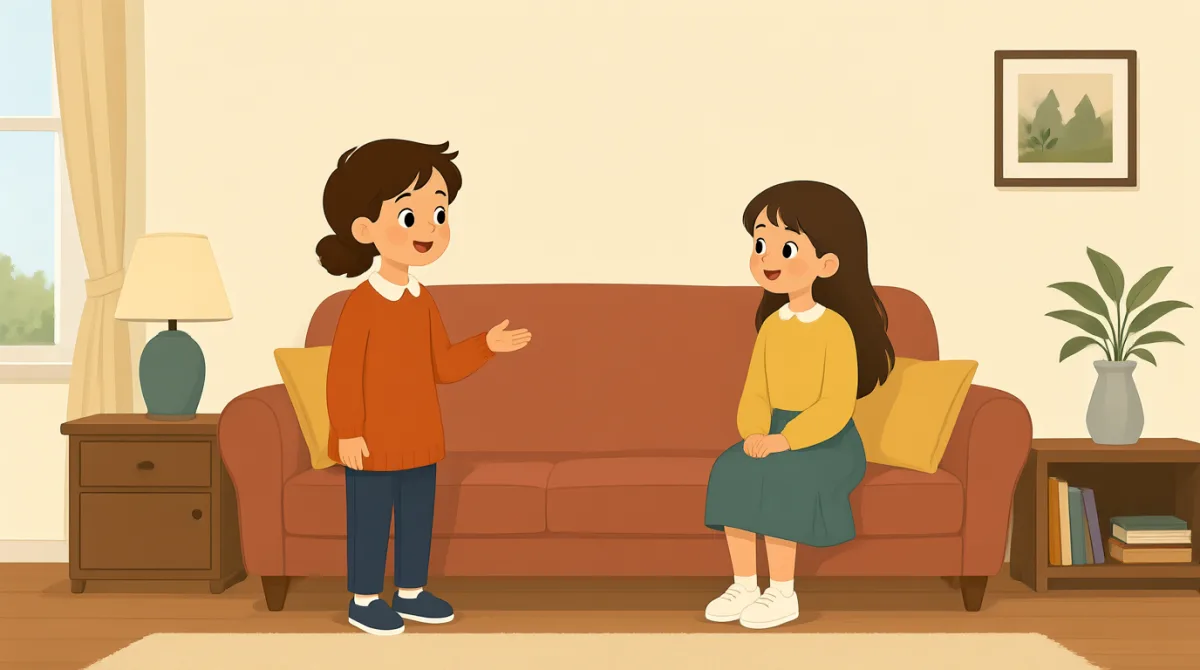

What’s the weather like in your hometown during the year?

It changes with the seasons. Summers are usually warm and sunny.
That sounds nice. Does it get very hot in summer?
Some days are hot, but evenings are cooler. We like to walk outside then.
What are the winters like?
Winters are cool and rainy. I always take an umbrella when I go out.
Does it snow there, too?
Not often. It snowed once when I was a child, and everyone was excited.
I’d love to visit in the summer and enjoy the warm weather.
Vocabulary8
- during the year
This means throughout all the months of a year. Use it to ask about something that changes from season to season.
- changes with the seasons
This means something is different in spring, summer, fall, and winter. You can use it to describe weather or other things that vary during the year.
- warm and sunny
This describes pleasant weather with comfortable warmth and plenty of sunshine. Use it to talk about a nice summer day.
- cooler
This means less warm than something else. Here, the evenings are cooler than the daytime.
- walk outside
This means to take a walk outdoors. You can use it to talk about an activity you enjoy doing in nice weather.
- go out
This means to leave home and spend time somewhere else. Here, Mia takes an umbrella when she leaves home.
- Not often.
This means something does not happen very frequently. It is a short, natural answer to a yes-or-no question.
- I’d love to
This is a friendly way to say you would really like to do something. Use it to express interest in a plan or invitation.
Key Sentences7
- 1
What’s the weather like in your hometown during the year?
Use this to ask someone about the weather in their hometown. You can replace “your hometown” with a place name or another location.
- 2
Summers are usually warm and sunny.
This sentence describes typical summer weather. You can change “Summers” and the weather words to describe another season or place.
- 3
Some days are hot, but evenings are cooler.
Use this to compare the weather at different times of day. The pattern “Some days are [description], but [time] is [description]” is easy to reuse.
- 4
We like to walk outside then.
This tells someone what you enjoy doing at a particular time. You can replace “walk outside” with another activity and “then” with a clear time.
- 5
I always take an umbrella when I go out.
Use this to describe something you regularly bring when leaving home. You can replace “an umbrella” with another useful item.
- 6
It snowed once when I was a child, and everyone was excited.
This is a simple way to share a past event and people’s reaction to it. Use “It [past-tense verb] once when I was a child” to tell a similar childhood story.
- 7
I’d love to visit in the summer and enjoy the warm weather.
Use this to express enthusiasm about visiting a place and say what you hope to do there. You can change the season and activity to fit your plans.