The Weather Back Home
El clima en mi ciudad natal
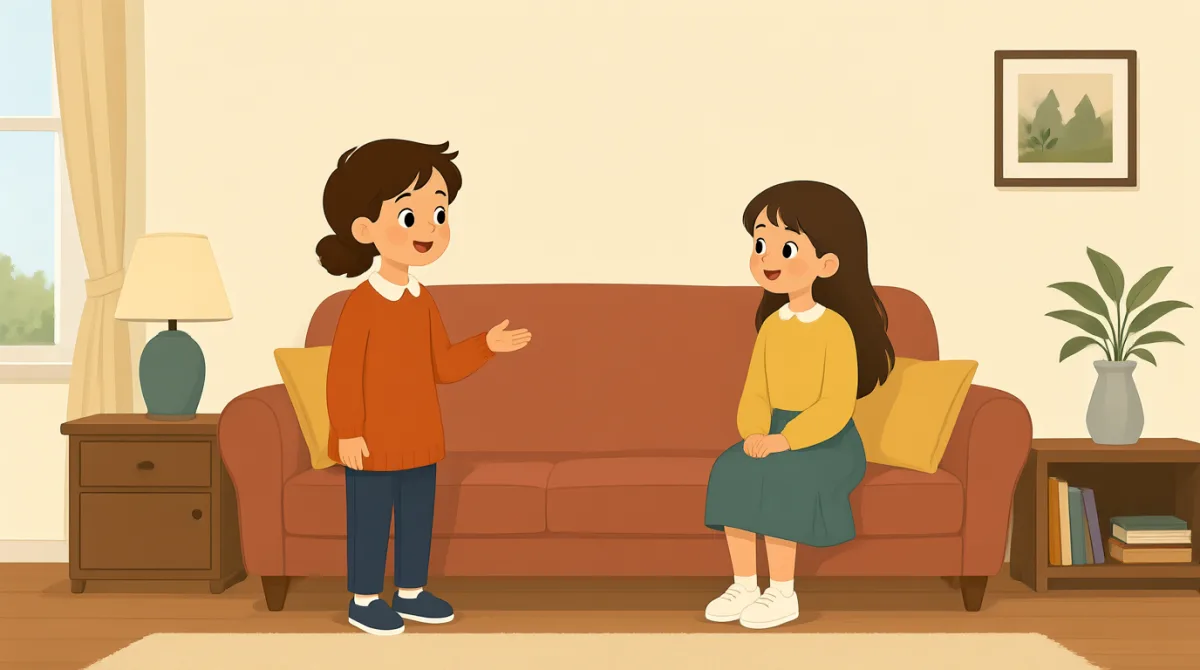
Emma asks Mia what the weather is like in different seasons. Mia describes the warm summers and rainy winters.
Emma le pregunta a Mia cómo es el clima en las distintas estaciones. Mia describe los veranos cálidos y los inviernos lluviosos.
Diálogo9

What’s the weather like in your hometown during the year?
¿Qué clima hace en tu ciudad natal a lo largo del año?

It changes with the seasons. Summers are usually warm and sunny.
Cambia según la estación. Los veranos suelen ser cálidos y soleados.
That sounds nice. Does it get very hot in summer?
Qué lindo. ¿Hace mucho calor en verano?
Some days are hot, but evenings are cooler. We like to walk outside then.
Algunos días hace calor, pero por las tardes refresca. Nos gusta salir a caminar entonces.
What are the winters like?
¿Cómo son los inviernos?
Winters are cool and rainy. I always take an umbrella when I go out.
Los inviernos son frescos y lluviosos. Siempre llevo un paraguas cuando salgo.
Does it snow there, too?
¿También nieva allí?
Not often. It snowed once when I was a child, and everyone was excited.
No muy seguido. Nevó una vez cuando era niña y todos estaban emocionados.
I’d love to visit in the summer and enjoy the warm weather.
Me encantaría visitarte en verano y disfrutar del clima cálido.
Vocabulario8
- during the yeara lo largo del año
This means throughout all the months of a year. Use it to ask about something that changes from season to season.
Significa durante todos los meses del año. Úsalo para preguntar por algo que cambia de una estación a otra.
- changes with the seasonscambia según la estación
This means something is different in spring, summer, fall, and winter. You can use it to describe weather or other things that vary during the year.
Significa que algo es diferente en primavera, verano, otoño e invierno. Puedes usar esta expresión para describir el clima u otras cosas que varían durante el año.
- warm and sunnycálido y soleado
This describes pleasant weather with comfortable warmth and plenty of sunshine. Use it to talk about a nice summer day.
Describe un clima agradable, con una temperatura templada y mucho sol. Úsalo para hablar de un lindo día de verano.
- coolermás fresco
This means less warm than something else. Here, the evenings are cooler than the daytime.
Significa menos cálido que otra cosa. Aquí, las tardes son más frescas que el día.
- walk outsidesalir a caminar
This means to take a walk outdoors. You can use it to talk about an activity you enjoy doing in nice weather.
Significa dar un paseo al aire libre. Puedes usarlo para hablar de una actividad que disfrutas cuando hace buen tiempo.
- go outsalir
This means to leave home and spend time somewhere else. Here, Mia takes an umbrella when she leaves home.
Significa dejar la casa para pasar un rato en otro lugar. Aquí, Mia lleva un paraguas cuando sale de casa.
- Not often.No muy seguido.
This means something does not happen very frequently. It is a short, natural answer to a yes-or-no question.
Significa que algo no sucede con mucha frecuencia. Es una respuesta breve y natural a una pregunta de sí o no.
- I’d love toMe encantaría
This is a friendly way to say you would really like to do something. Use it to express interest in a plan or invitation.
Es una forma amable de decir que realmente te gustaría hacer algo. Úsala para mostrar interés en un plan o una invitación.
Frases clave7
- 1
What’s the weather like in your hometown during the year?
¿Qué clima hace en tu ciudad natal a lo largo del año?
Use this to ask someone about the weather in their hometown. You can replace “your hometown” with a place name or another location.
Usa esta pregunta para preguntarle a alguien por el clima de su ciudad natal. Puedes reemplazar “your hometown” por el nombre de un lugar u otra ubicación.
- 2
Summers are usually warm and sunny.
Los veranos suelen ser cálidos y soleados.
This sentence describes typical summer weather. You can change “Summers” and the weather words to describe another season or place.
Esta oración describe el clima típico del verano. Puedes cambiar “Summers” y las palabras que describen el clima para hablar de otra estación o lugar.
- 3
Some days are hot, but evenings are cooler.
Algunos días hace calor, pero por las tardes refresca.
Use this to compare the weather at different times of day. The pattern “Some days are [description], but [time] is [description]” is easy to reuse.
Úsala para comparar el clima en distintos momentos del día. El patrón “Some days are [description], but [time] is [description]” es fácil de reutilizar.
- 4
We like to walk outside then.
Nos gusta salir a caminar entonces.
This tells someone what you enjoy doing at a particular time. You can replace “walk outside” with another activity and “then” with a clear time.
Esta oración le cuenta a alguien qué disfrutas hacer en un momento determinado. Puedes reemplazar “walk outside” por otra actividad y “then” por una hora o momento más específico.
- 5
I always take an umbrella when I go out.
Siempre llevo un paraguas cuando salgo.
Use this to describe something you regularly bring when leaving home. You can replace “an umbrella” with another useful item.
Úsala para describir algo que sueles llevar cuando sales de casa. Puedes reemplazar “an umbrella” por otro objeto útil.
- 6
It snowed once when I was a child, and everyone was excited.
Nevó una vez cuando era niña y todos estaban emocionados.
This is a simple way to share a past event and people’s reaction to it. Use “It [past-tense verb] once when I was a child” to tell a similar childhood story.
Es una forma sencilla de contar algo que pasó y cómo reaccionó la gente. Usa “It [past-tense verb] once when I was a child” para contar una historia parecida de tu infancia.
- 7
I’d love to visit in the summer and enjoy the warm weather.
Me encantaría visitar tu ciudad en verano y disfrutar del clima cálido.
Use this to express enthusiasm about visiting a place and say what you hope to do there. You can change the season and activity to fit your plans.
Úsala para expresar entusiasmo por visitar un lugar y contar qué esperas hacer allí. Puedes cambiar la estación y la actividad para adaptarlas a tus planes.