Offering Something in Return
お礼に何かを渡す
Emma offers Jack some homemade cookies to thank him for lending the ladder and helping out. Jack happily accepts.
エマは、はしごを貸して手伝ってくれたお礼に、手作りクッキーをジャックに渡します。ジャックは喜んで受け取ります。
会話8
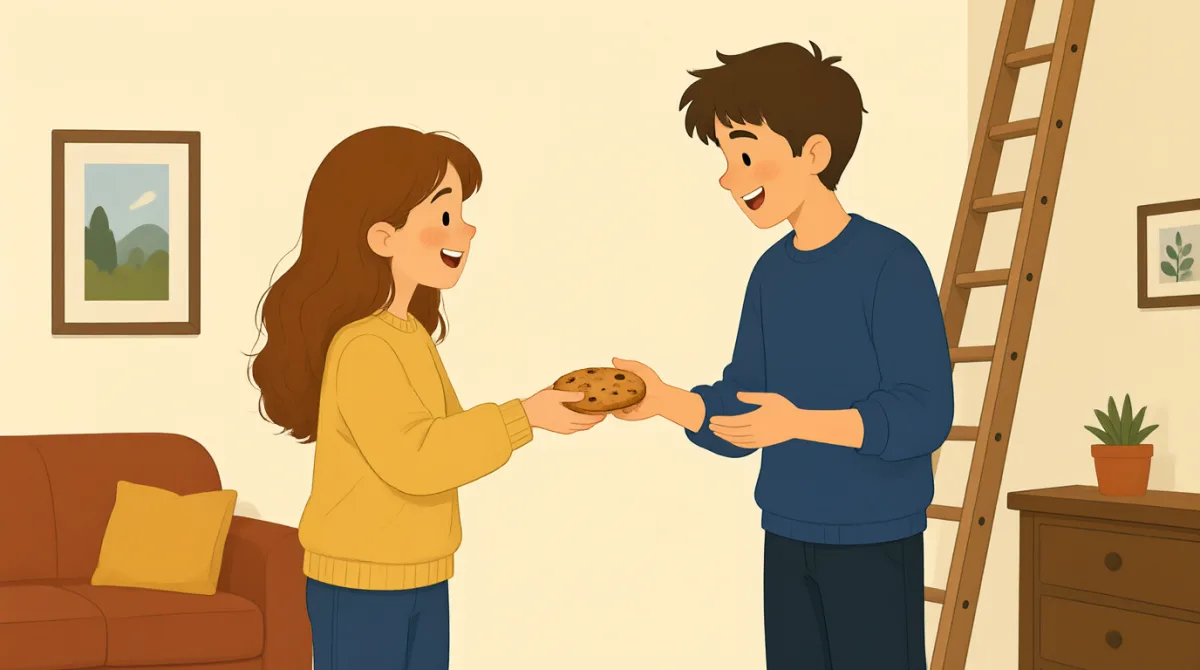

Hi, Jack. I brought you some homemade cookies to say thank you.
やあ、ジャック。お礼に手作りクッキーを持ってきたよ。

That’s so kind of you, Emma. You didn’t have to do that.
エマ、親切にありがとう。そんなことしなくてよかったのに。
I wanted to. You lent me your ladder and helped me hang the birdhouse.
私がそうしたかったの。はしごを貸してくれて、バードハウスを取り付けるのも手伝ってくれたから。
I’m glad to help. How did the birdhouse turn out?
手伝えてよかったよ。バードハウスはどうなった?
It looks great! I saw a little bird checking it out this morning.
すごくいい感じ!今朝、小鳥が様子を見に来てるのを見たよ。
That’s great news. And these cookies smell delicious.
それはよかったね。それに、このクッキー、おいしそうな匂いがするね。
I made chocolate chip ones. Please take some for later.
チョコチップクッキーを作ったんだ。よかったら、あとで食べてね。
Thanks, Emma. I’d love some. I’ll enjoy them with my tea.
ありがとう、エマ。ぜひもらうよ。紅茶と一緒に楽しむね。
語彙8
- homemade cookies手作りクッキー
Cookies made at home, not bought from a store. You can use this phrase to describe food you made yourself.
お店で買ったものではなく、家で作ったクッキーのことです。自分で作った食べ物を表すときに使えます。
- say thank youお礼を言う
To express that you are grateful. You can bring someone a small gift to say thank you.
感謝していることを伝える表現です。お礼を伝えるために、ちょっとした贈り物を渡すこともあります。
- You didn’t have to do that.そんなことしなくてよかったのに。
A polite way to say someone did something kind that was not necessary. People often say this when they receive a gift or favor.
相手の親切に対して、そこまでしなくてもよかったのに、と伝える丁寧な言い方です。贈り物や親切を受けたときによく使います。
- helped me私を手伝ってくれた
Gave me help with something. Use “helped me” to talk about support someone gave in the past.
何かをするのを手助けしてくれた、という意味です。“helped me”は、過去に受けた助けについて話すときに使います。
- turn outどうなる・仕上がる
To have a particular result or appearance. Ask “How did it turn out?” to find out whether something went well.
ある結果や見た目になる、という意味です。“How did it turn out?”と聞くと、うまくいったかどうかを尋ねられます。
- checking it out様子を見ている
Looking at or exploring something. You can use “check it out” when someone takes a closer look at a new place or thing.
何かを見たり、詳しく調べたりすることです。“check it out”は、新しい場所や物をじっくり見てみるときに使えます。
- take someいくつかもらう
Have or accept some of something that is being offered. You can say this when offering food to a guest.
勧められたものを、いくらか受け取ったり食べたりすることです。お客さんに食べ物を勧めるときにも使えます。
- I’d love some.ぜひいただくよ。
A friendly way to accept an offer. Use it when you would really like some food or drink.
勧められたものを喜んで受け取るときの、親しみのある表現です。食べ物や飲み物をぜひ欲しいと思うときに使います。
重要な文8
- 1
I brought you some homemade cookies to say thank you.
お礼に手作りクッキーを持ってきたよ。
Use this sentence when giving someone a small gift to show appreciation. Replace “homemade cookies” with another gift, such as “some flowers.”
感謝の気持ちを表すために、ちょっとした贈り物を渡すときに使う文です。“homemade cookies”を“some flowers”のような別の贈り物に置き換えられます。
- 2
You didn’t have to do that.
そんなことしなくてよかったのに。
This is a polite response when someone does something kind for you. You can use it when receiving a gift or a favor.
誰かが親切にしてくれたときの、丁寧な返事です。贈り物や何かの手助けを受けたときに使えます。
- 3
You lent me your ladder and helped me hang the birdhouse.
はしごを貸してくれて、バードハウスを取り付けるのも手伝ってくれたよね。
Use this sentence to thank someone for specific help they gave you. Replace “lent me your ladder” and “hang the birdhouse” with the favor and task.
具体的にどんな手助けをしてくれたのかを挙げて、お礼を言うときに使います。“lent me your ladder”や“hang the birdhouse”を、受けた親切や作業の内容に置き換えて使えます。
- 4
How did the birdhouse turn out?
バードハウスはどうなった?
Ask this to find out how a finished task or project looks. Replace “the birdhouse” with another project, such as “your painting.”
完成した作業や作品の仕上がりを尋ねるときに使います。“the birdhouse”を“your painting”のような別の作品に置き換えられます。
- 5
I saw a little bird checking it out this morning.
今朝、小鳥が様子を見に来てるのを見たよ。
Use this sentence to describe something you noticed in the past. “Checking it out” means looking at or exploring something.
過去に気づいたことを説明するときに使う文です。“Checking it out”は、何かを見たり、詳しく調べたりするという意味です。
- 6
Please take some for later.
よかったら、あとで食べてね。
This is a friendly way to offer someone food to enjoy later. Replace “some” with the item, such as “a cookie.”
あとで食べてもらうために、食べ物を気軽に勧める言い方です。“some”を“a cookie”のように、具体的な食べ物に置き換えられます。
- 7
I’d love some.
ぜひいただくよ。
Use this friendly phrase to accept an offer. You can say it when someone offers you food or a drink.
勧められたものを喜んで受け取るときに使う、親しみのある表現です。食べ物や飲み物を勧められたときに言えます。
- 8
I’ll enjoy them with my tea.
紅茶と一緒に楽しむね。
Use this to say when or how you plan to enjoy something. Replace “them” with the food or treat you are talking about.
何かをいつ、またはどのように楽しむつもりかを伝える表現です。“them”を、話題にしている食べ物やおやつに置き換えて使えます。