Offering Something in Return
बदले में कुछ देना
Emma offers Jack some homemade cookies to thank him for lending the ladder and helping out. Jack happily accepts.
सीढ़ी उधार देने और मदद करने के लिए एमा, जैक को धन्यवाद देने के तौर पर घर पर बने कुकीज़ देती है। जैक खुशी से उन्हें ले लेता है।
संवाद8
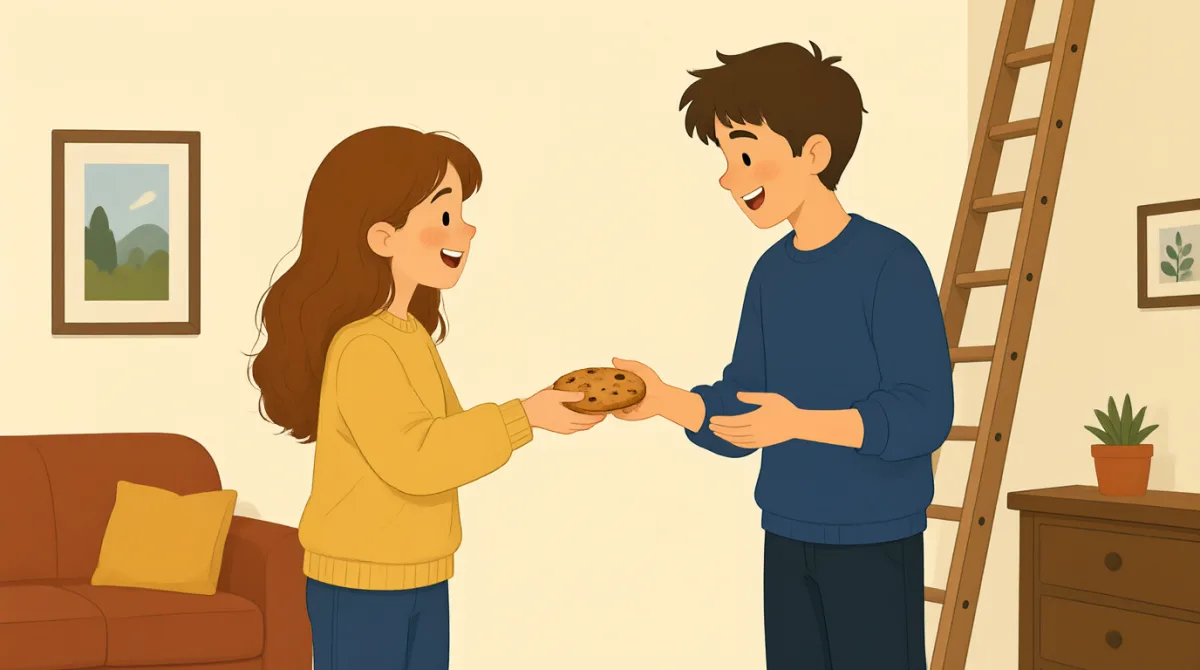

Hi, Jack. I brought you some homemade cookies to say thank you.
हाय, जैक। तुम्हें धन्यवाद कहने के लिए मैं घर पर बने कुछ कुकीज़ लाई हूँ।

That’s so kind of you, Emma. You didn’t have to do that.
तुमने कितनी अच्छी बात की, एमा। तुम्हें ऐसा करने की ज़रूरत नहीं थी।
I wanted to. You lent me your ladder and helped me hang the birdhouse.
मैं ऐसा करना चाहती थी। तुमने मुझे अपनी सीढ़ी उधार दी और बर्डहाउस टाँगने में मेरी मदद की।
I’m glad to help. How did the birdhouse turn out?
मदद करके मुझे खुशी हुई। बर्डहाउस कैसा बना?
It looks great! I saw a little bird checking it out this morning.
बहुत अच्छा लग रहा है! आज सुबह मैंने एक छोटी-सी चिड़िया को उसे देखते हुए पाया।
That’s great news. And these cookies smell delicious.
यह तो बहुत अच्छी खबर है। और इन कुकीज़ की खुशबू भी बहुत अच्छी है।
I made chocolate chip ones. Please take some for later.
मैंने चॉकलेट चिप वाले कुकीज़ बनाए हैं। बाद में खाने के लिए कुछ ले जाना।
Thanks, Emma. I’d love some. I’ll enjoy them with my tea.
शुक्रिया, एमा। मुझे ज़रूर चाहिए। मैं इन्हें अपनी चाय के साथ मज़े से खाऊँगा।
शब्दावली8
- homemade cookiesघर पर बने कुकीज़
Cookies made at home, not bought from a store. You can use this phrase to describe food you made yourself.
घर पर बनाए गए कुकीज़, जो दुकान से खरीदे न गए हों। इस वाक्यांश का इस्तेमाल अपने बनाए खाने के बारे में बताने के लिए कर सकते हो।
- say thank youधन्यवाद कहना
To express that you are grateful. You can bring someone a small gift to say thank you.
अपनी कृतज्ञता जताना। किसी को धन्यवाद कहने के लिए तुम उसे कोई छोटा-सा तोहफ़ा दे सकते हो।
- You didn’t have to do that.तुम्हें ऐसा करने की ज़रूरत नहीं थी।
A polite way to say someone did something kind that was not necessary. People often say this when they receive a gift or favor.
किसी के दयालुता से किए गए ऐसे काम के लिए कहने का विनम्र तरीका, जिसकी ज़रूरत नहीं थी। तोहफ़ा या एहसान मिलने पर लोग अक्सर ऐसा कहते हैं।
- helped meमेरी मदद की
Gave me help with something. Use “helped me” to talk about support someone gave in the past.
किसी काम में मेरी सहायता की। अतीत में किसी से मिली मदद के बारे में बताने के लिए “helped me” कहते हैं।
- turn outनतीजा निकलना
To have a particular result or appearance. Ask “How did it turn out?” to find out whether something went well.
किसी खास नतीजे या रूप में सामने आना। यह जानने के लिए कि कोई काम अच्छा हुआ या नहीं, पूछो “How did it turn out?”।
- checking it outउसे गौर से देखना
Looking at or exploring something. You can use “check it out” when someone takes a closer look at a new place or thing.
किसी चीज़ को देखना या उसे जानने-समझने की कोशिश करना। जब कोई किसी नई जगह या चीज़ को करीब से देखता है, तब “check it out” कह सकते हो।
- take someकुछ ले लेना
Have or accept some of something that is being offered. You can say this when offering food to a guest.
पेश की जा रही किसी चीज़ में से कुछ लेना या स्वीकार करना। मेहमान को खाना देते समय तुम यह कह सकते हो।
- I’d love some.मुझे कुछ ज़रूर चाहिए।
A friendly way to accept an offer. Use it when you would really like some food or drink.
किसी चीज़ की पेशकश स्वीकार करने का दोस्ताना तरीका। जब तुम सचमुच कुछ खाना या पीना चाहो, तब यह कहो।
मुख्य वाक्य8
- 1
I brought you some homemade cookies to say thank you.
तुम्हें धन्यवाद कहने के लिए मैं घर पर बने कुछ कुकीज़ लाई हूँ।
Use this sentence when giving someone a small gift to show appreciation. Replace “homemade cookies” with another gift, such as “some flowers.”
किसी को अपनी सराहना दिखाने के लिए छोटा-सा तोहफ़ा देते समय यह वाक्य कहो। “homemade cookies” की जगह कोई और तोहफ़ा रखो, जैसे “some flowers.”
- 2
You didn’t have to do that.
तुम्हें ऐसा करने की ज़रूरत नहीं थी।
This is a polite response when someone does something kind for you. You can use it when receiving a gift or a favor.
जब कोई तुम्हारे लिए कुछ अच्छा करता है, तो जवाब में यह विनम्रता से कह सकते हो। तोहफ़ा या एहसान मिलने पर इसका इस्तेमाल करो।
- 3
You lent me your ladder and helped me hang the birdhouse.
तुमने मुझे अपनी सीढ़ी उधार दी और बर्डहाउस टाँगने में मेरी मदद की।
Use this sentence to thank someone for specific help they gave you. Replace “lent me your ladder” and “hang the birdhouse” with the favor and task.
किसी की खास मदद के लिए उसे धन्यवाद देने के लिए यह वाक्य कहो। “lent me your ladder” और “hang the birdhouse” की जगह उस एहसान और काम का ज़िक्र करो।
- 4
How did the birdhouse turn out?
बर्डहाउस कैसा बना?
Ask this to find out how a finished task or project looks. Replace “the birdhouse” with another project, such as “your painting.”
तैयार हुए काम या प्रोजेक्ट का रूप कैसा है, यह जानने के लिए पूछो। “the birdhouse” की जगह कोई और प्रोजेक्ट रखो, जैसे “your painting.”
- 5
I saw a little bird checking it out this morning.
आज सुबह मैंने एक छोटी-सी चिड़िया को उसे गौर से देखते हुए पाया।
Use this sentence to describe something you noticed in the past. “Checking it out” means looking at or exploring something.
अतीत में देखी गई किसी बात का वर्णन करने के लिए यह वाक्य कहो। “Checking it out” का मतलब है किसी चीज़ को देखना या उसे जानने-समझने की कोशिश करना।
- 6
Please take some for later.
बाद में खाने के लिए कुछ ले जाना।
This is a friendly way to offer someone food to enjoy later. Replace “some” with the item, such as “a cookie.”
किसी को बाद में खाने के लिए कुछ देने का यह दोस्ताना तरीका है। “some” की जगह खाने की चीज़ का नाम रखो, जैसे “a cookie.”
- 7
I’d love some.
मुझे कुछ ज़रूर चाहिए।
Use this friendly phrase to accept an offer. You can say it when someone offers you food or a drink.
किसी की पेशकश स्वीकार करने के लिए इस दोस्ताना वाक्यांश का इस्तेमाल करो। कोई तुम्हें खाना या पीने की चीज़ दे, तो यह कह सकते हो।
- 8
I’ll enjoy them with my tea.
मैं इन्हें अपनी चाय के साथ मज़े से खाऊँगा।
Use this to say when or how you plan to enjoy something. Replace “them” with the food or treat you are talking about.
कोई चीज़ कब या कैसे खाने का इरादा है, यह बताने के लिए यह कहो। “them” की जगह उस खाने या मिठाई का नाम रखो जिसकी बात हो रही है।