Hot Chocolate After Skiing
स्कीइंग के बाद गरम चॉकलेट
After the lesson, Emma and Jack warm up with hot chocolate. Emma tells Jack what she enjoyed and what she wants to practice next time.
पाठ के बाद, एमा और जैक गरम चॉकलेट पीकर गर्म होते हैं। एमा जैक को बताती है कि उसे क्या अच्छा लगा और अगली बार वह किस चीज़ का अभ्यास करना चाहती है।
संवाद8
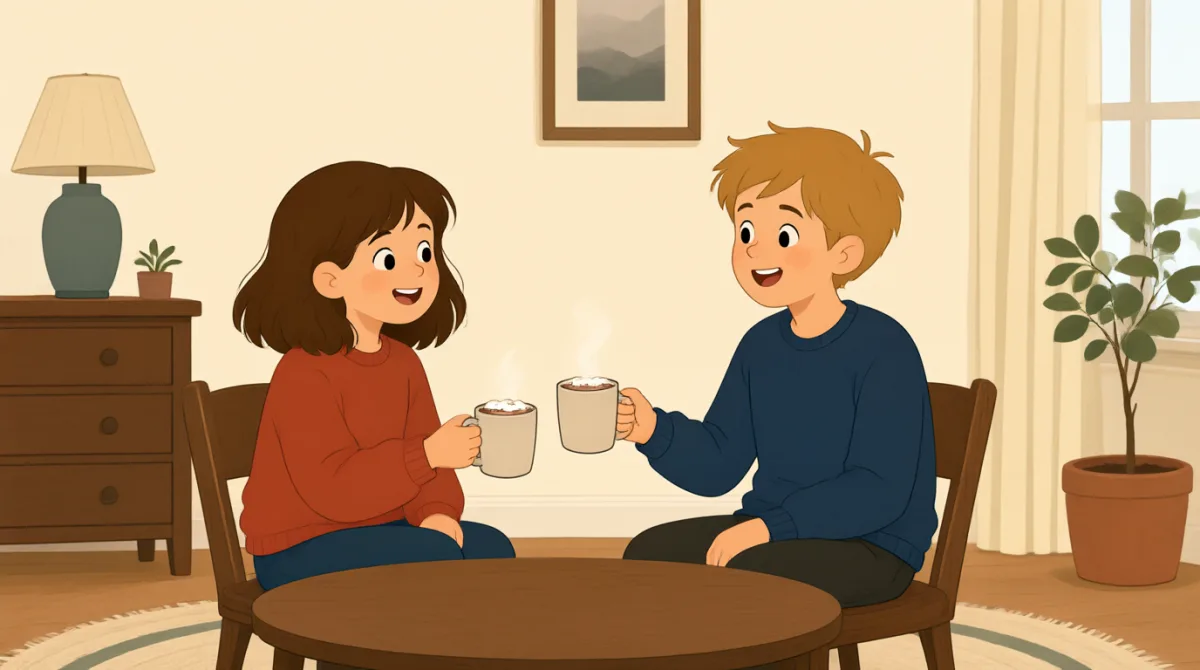

This hot chocolate is just what I need. My hands are still cold.
यह गरम चॉकलेट बिल्कुल वही है जिसकी मुझे ज़रूरत थी। मेरे हाथ अभी भी ठंडे हैं।

You did well today. How did you like your first ski lesson?
आज तुमने अच्छा किया। स्कीइंग का अपना पहला पाठ तुम्हें कैसा लगा?
I loved it! Moving on the snow was fun, even when I fell.
मुझे बहुत अच्छा लगा! बर्फ़ पर चलना मज़ेदार था, गिरने पर भी।
You got back up and tried again. That was the important part.
तुम फिर से उठीं और दोबारा कोशिश की। यही सबसे ज़रूरी बात थी।
I want to practice stopping more next time. I still feel nervous.
अगली बार मैं रुकने का ज़्यादा अभ्यास करना चाहती हूँ। मुझे अभी भी घबराहट होती है।
That makes sense. You’ll feel more sure after a little practice.
यह समझ में आता है। थोड़ा अभ्यास करने के बाद तुम ज़्यादा आत्मविश्वास महसूस करोगी।
Let’s come back next weekend. I’d like to try that easy slope.
चलो, अगले सप्ताहांत फिर आते हैं। मैं उस आसान ढलान पर जाने की कोशिश करना चाहती हूँ।
Sounds good. We can warm up with hot chocolate again afterward.
बढ़िया। उसके बाद हम फिर से गरम चॉकलेट पीकर गर्म हो सकते हैं।
शब्दावली8
- warm upगर्म होना
To get warm after being cold. Here, Emma and Jack warm up by drinking hot chocolate.
ठंड लगने के बाद शरीर को गर्म करना। यहाँ एमा और जैक गरम चॉकलेट पीकर गर्म होते हैं।
- How did you like your first ski lesson?तुम्हें अपना पहला स्कीइंग का पाठ कैसा लगा?
A friendly way to ask what someone thought of an experience. You can use “How did you like...?” to ask about a class, trip, or activity.
किसी से उसके अनुभव के बारे में पूछने का यह एक दोस्ताना तरीका है। किसी कक्षा, यात्रा या गतिविधि के बारे में पूछने के लिए “How did you like...?” कह सकते हो।
- got back upफिर से उठे
Stood up again after falling down. Use “get back up” when someone stands after a fall.
गिरने के बाद दोबारा खड़े होना। जब कोई गिरने के बाद उठता है, तो उसके लिए “get back up” का इस्तेमाल करो।
- tried againदोबारा कोशिश की
Made another attempt after something did not go as planned. You can use this phrase to talk about practicing or not giving up.
जब कोई काम योजना के मुताबिक न हो, तो एक और बार कोशिश करना। अभ्यास करने या हार न मानने के बारे में बात करते समय इस वाक्यांश का इस्तेमाल कर सकते हो।
- next timeअगली बार
On the next occasion. Use it when talking about what you want to do or change in the future.
अगले मौके पर। भविष्य में तुम क्या करना या बदलना चाहते हो, यह बताते समय इसका इस्तेमाल करो।
- That makes sense.यह बात समझ में आती है।
A way to say that you understand why someone feels or thinks something. You can use it to respond supportively.
यह कहने का तरीका है कि तुम समझते हो कि कोई ऐसा क्यों महसूस या सोच रहा है। सहानुभूति जताते हुए जवाब देने के लिए इसका इस्तेमाल कर सकते हो।
- come backवापस आना
Return to a place. Here, Emma suggests returning to the ski area next weekend.
किसी जगह पर फिर से आना। यहाँ एमा अगले सप्ताहांत स्कीइंग की जगह पर लौटने का सुझाव देती है।
- afterwardउसके बाद
At a later time, after something else happens. Here, Jack means they can have hot chocolate after skiing.
कोई दूसरी चीज़ होने के बाद, बाद के समय में। यहाँ जैक का मतलब है कि वे स्कीइंग के बाद गरम चॉकलेट पी सकते हैं।
मुख्य वाक्य8
- 1
This hot chocolate is just what I need.
यह गरम चॉकलेट बिल्कुल वही है जिसकी मुझे ज़रूरत थी।
Use this to say that something is exactly right for you at the moment. Replace “hot chocolate” with something else you need, such as “a warm coat” or “a break.”
किसी चीज़ के बारे में यह कहने के लिए इसका इस्तेमाल करो कि इस वक्त वह तुम्हारे लिए बिल्कुल सही है। “hot chocolate” की जगह अपनी ज़रूरत की कोई दूसरी चीज़ रखो, जैसे “a warm coat” या “a break.”
- 2
How did you like your first ski lesson?
तुम्हें स्कीइंग का अपना पहला पाठ कैसा लगा?
This is a natural way to ask someone what they thought of an experience. Replace “ski lesson” with another activity or event.
किसी से यह पूछने का यह स्वाभाविक तरीका है कि उसे कोई अनुभव कैसा लगा। “ski lesson” की जगह कोई दूसरी गतिविधि या कार्यक्रम रखो।
- 3
Moving on the snow was fun, even when I fell.
बर्फ़ पर चलना मज़ेदार था, गिरने पर भी।
Use “...was fun, even when...” to say you enjoyed an activity despite a difficulty. You can change the activity and the challenge to fit your experience.
किसी मुश्किल के बावजूद यह बताने के लिए कि तुम्हें कोई गतिविधि अच्छी लगी, “...was fun, even when...” का इस्तेमाल करो। अपने अनुभव के हिसाब से गतिविधि और मुश्किल को बदल सकते हो।
- 4
You got back up and tried again.
तुम फिर से उठीं और दोबारा कोशिश की।
This sentence encourages someone by recognizing that they kept going after a problem. Use “got back up” and “tried again” to describe persistence.
यह वाक्य किसी को यह पहचानकर हौसला देता है कि मुश्किल आने के बाद भी उसने कोशिश जारी रखी। लगातार कोशिश करते रहने की बात बताने के लिए “got back up” और “tried again” का इस्तेमाल करो।
- 5
I want to practice stopping more next time.
अगली बार मैं रुकने का ज़्यादा अभ्यास करना चाहती हूँ।
Use this sentence to say what skill you want to improve in the future. Replace “stopping” with another skill, such as “turning” or “speaking.”
भविष्य में तुम किस हुनर को बेहतर करना चाहते हो, यह बताने के लिए इस वाक्य का इस्तेमाल करो। “stopping” की जगह कोई दूसरा हुनर रखो, जैसे “turning” या “speaking.”
- 6
You’ll feel more sure after a little practice.
थोड़ा अभ्यास करने के बाद तुम ज़्यादा आत्मविश्वास महसूस करोगी।
This is a reassuring way to say that practice can build confidence. You can use “You’ll feel more sure” to encourage someone learning a new skill.
यह भरोसा दिलाने का तरीका है कि अभ्यास से आत्मविश्वास बढ़ सकता है। कोई नया हुनर सीख रहे व्यक्ति का हौसला बढ़ाने के लिए “You’ll feel more sure” कह सकते हो।
- 7
Let’s come back next weekend.
चलो, अगले सप्ताहांत फिर आते हैं।
Use “Let’s...” to suggest doing something together, and “come back” to suggest returning to a place. Replace “next weekend” with another time.
साथ मिलकर कुछ करने का सुझाव देने के लिए “Let’s...” और किसी जगह पर लौटने का सुझाव देने के लिए “come back” का इस्तेमाल करो। “next weekend” की जगह कोई और समय रखो।
- 8
We can warm up with hot chocolate again afterward.
हम उसके बाद फिर से गरम चॉकलेट पीकर गर्म हो सकते हैं।
This sentence suggests a plan for what to do after an activity. Replace “hot chocolate” with another way to warm up or relax.
किसी गतिविधि के बाद क्या करने की योजना सुझाने के लिए इस वाक्य का इस्तेमाल करो। गर्म होने या आराम करने के किसी दूसरे तरीके के लिए “hot chocolate” की जगह कोई और चीज़ रखो।