Noticing Your Card Is Gone
पता चलना कि आपका कार्ड गायब है
Emma looks in her bag but cannot find her bank card. She talks with Mia and tries to remember where she used it.
एमा अपने बैग में देखती है, लेकिन उसे अपना बैंक कार्ड नहीं मिलता। वह मिया से बात करती है और याद करने की कोशिश करती है कि उसने कार्ड कहाँ इस्तेमाल किया था।
संवाद9
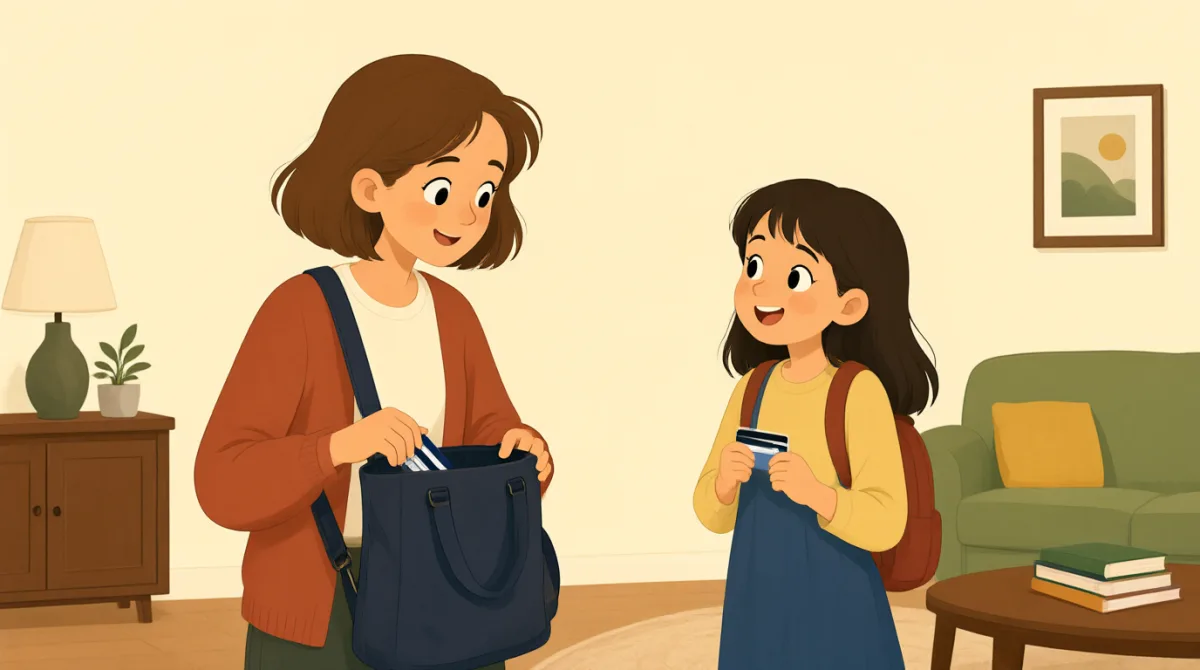

Mia, I can’t find my bank card. I looked in my bag twice.
मिया, मुझे अपना बैंक कार्ड नहीं मिल रहा। मैंने अपने बैग में दो बार देख लिया।

When did you last use it? Maybe you left it somewhere.
तुमने इसे आखिरी बार कब इस्तेमाल किया था? शायद तुम इसे कहीं छोड़ आई हो।
I used it at the grocery store yesterday, then I took the bus home.
मैंने इसे कल किराने की दुकान पर इस्तेमाल किया था, फिर बस से घर आई।
Did you take it out when you paid? Check your coat pockets, too.
पैसे देते समय तुमने इसे बाहर निकाला था? अपने कोट की जेबें भी देख लो।
I remember putting it back in my wallet. My coat pockets are empty.
मुझे याद है कि मैंने इसे वापस अपने बटुए में रख दिया था। मेरे कोट की जेबें खाली हैं।
Could it be in another pocket in your bag? Look through it slowly.
क्या यह तुम्हारे बैग की किसी दूसरी जेब में हो सकता है? उसमें धीरे-धीरे अच्छी तरह देखो।
I checked every pocket. It’s not here. I’m getting worried.
मैंने हर जेब देख ली। यह यहाँ नहीं है। मुझे चिंता होने लगी है।
Let’s think. Did you use it anywhere after the grocery store?
चलो सोचते हैं। क्या तुमने किराने की दुकान के बाद कहीं और इसका इस्तेमाल किया था?
No, I don’t think so. I’ll call the bank if I can’t find it.
नहीं, मुझे नहीं लगता। अगर मुझे यह नहीं मिला, तो मैं बैंक को फोन करूँगी।
शब्दावली8
- bank cardबैंक कार्ड
A card you use to pay for things or take money from your bank. Here, Emma cannot find hers.
ऐसा कार्ड जिससे आप चीज़ों का भुगतान करते हैं या अपने बैंक खाते से पैसे निकालते हैं। यहाँ एमा को अपना कार्ड नहीं मिल रहा है।
- looked in my bagमेरे बैग में देखा
Checked inside my bag to find something. You can say this when explaining where you have searched.
किसी चीज़ को ढूँढ़ने के लिए अपने बैग के अंदर जाँचना। आप यह बता सकते हैं कि आपने कहाँ तलाश की।
- left it somewhereइसे कहीं छोड़ देना
Forgot or lost something in a place. Use this when you think you may not have taken an item with you.
किसी जगह पर कोई चीज़ भूल जाना या खो देना। जब आपको लगे कि आप कोई चीज़ अपने साथ नहीं ले गए, तब यह कहें।
- take it outइसे बाहर निकालना
Remove something from a bag, pocket, or wallet. Here, Mia asks if Emma removed her card to pay.
किसी चीज़ को बैग, जेब या बटुए से बाहर निकालना। यहाँ मिया पूछती है कि क्या एमा ने भुगतान करने के लिए अपना कार्ड निकाला था।
- coat pocketsकोट की जेबें
The small spaces in a coat where you can keep things. You can check them when you are looking for a lost item.
कोट में बनी छोटी जगहें, जिनमें आप चीज़ें रख सकते हैं। कोई चीज़ खो जाए, तो आप वहाँ देख सकते हैं।
- look through itउसमें अच्छी तरह देखना
Search inside something carefully. For example, you can look through a bag to find an item.
किसी चीज़ के अंदर ध्यान से तलाश करना। जैसे, कोई चीज़ ढूँढ़ने के लिए आप बैग में अच्छी तरह देख सकते हैं।
- getting worriedचिंता होने लगना
Starting to feel anxious about a problem. Use this phrase to describe how you feel as a problem continues.
किसी समस्या को लेकर घबराहट महसूस होने लगना। जब समस्या बनी रहे और आपकी चिंता बढ़ने लगे, तब यह कहें।
- call the bankबैंक को फोन करना
Phone the bank to ask for help. You can use this phrase when you need to report a problem with a bank card.
मदद माँगने के लिए बैंक को फोन करना। बैंक कार्ड से जुड़ी समस्या की सूचना देते समय आप यह कह सकते हैं।
मुख्य वाक्य7
- 1
I can’t find my bank card.
मुझे अपना बैंक कार्ड नहीं मिल रहा।
A simple way to say that something is missing. You can replace “bank card” with another item, such as “keys” or “phone.”
किसी चीज़ के गायब होने की बात कहने का एक आसान तरीका। आप “bank card” की जगह किसी दूसरी चीज़ का नाम रख सकते हैं, जैसे “keys” या “phone”।
- 2
When did you last use it?
तुमने इसे आखिरी बार कब इस्तेमाल किया था?
Ask this to find out the most recent time someone used something. Replace “it” with the item you are asking about.
यह पूछकर पता करें कि किसी ने कोई चीज़ सबसे हाल में कब इस्तेमाल की थी। जिस चीज़ के बारे में पूछ रहे हैं, उसके हिसाब से “it” की जगह उसका नाम रखें।
- 3
Maybe you left it somewhere.
शायद तुम इसे कहीं छोड़ आई हो।
This suggests a possible reason something is missing. Use “Maybe you left [item] somewhere” when helping someone look for it.
इससे किसी चीज़ के गायब होने की एक संभावित वजह बताई जाती है। किसी की चीज़ ढूँढ़ने में मदद करते समय “Maybe you left [item] somewhere” कहें।
- 4
Did you take it out when you paid?
पैसे देते समय तुमने इसे बाहर निकाला था?
Ask whether someone removed an item while paying. The pattern “Did you take it out when you…?” works for other situations, too.
यह पूछें कि क्या किसी ने भुगतान करते समय कोई चीज़ बाहर निकाली थी। “Did you take it out when you…?” का इस्तेमाल दूसरी स्थितियों में भी किया जा सकता है।
- 5
Look through it slowly.
उसमें धीरे-धीरे अच्छी तरह देखो।
A simple suggestion to search inside something carefully. Replace “it” with a bag, drawer, or another place.
किसी चीज़ के अंदर ध्यान से तलाश करने का एक आसान सुझाव। “it” की जगह बैग, दराज़ या किसी दूसरी जगह का नाम रख सकते हैं।
- 6
I’m getting worried.
मुझे चिंता होने लगी है।
Use this to say that you are beginning to feel worried. You can use “I’m getting” with other feelings, such as “tired” or “hungry.”
यह कहने के लिए इस्तेमाल करें कि आपको चिंता महसूस होने लगी है। “I’m getting” के साथ दूसरी भावनाएँ भी बता सकते हैं, जैसे “tired” या “hungry”।
- 7
I’ll call the bank if I can’t find it.
अगर मुझे यह नहीं मिला, तो मैं बैंक को फोन करूँगी।
This explains what you plan to do if you cannot find something. Use “I’ll [action] if I can’t [do something]” to talk about a future plan.
इससे आप बताते हैं कि कोई चीज़ न मिलने पर आप क्या करने की योजना बना रहे हैं। भविष्य की योजना बताने के लिए “I’ll [action] if I can’t [do something]” का इस्तेमाल करें।