Getting a Tour of the Office
ऑफिस का दौरा
Grace shows Emma around the office and points out the kitchen, meeting room, and restrooms. Emma asks where to find a few things.
ग्रेace एमा को ऑफिस दिखाती है और रसोई, मीटिंग रूम और शौचालय बताती है। एमा पूछती है कि कुछ चीज़ें कहाँ मिलेंगी।
संवाद8
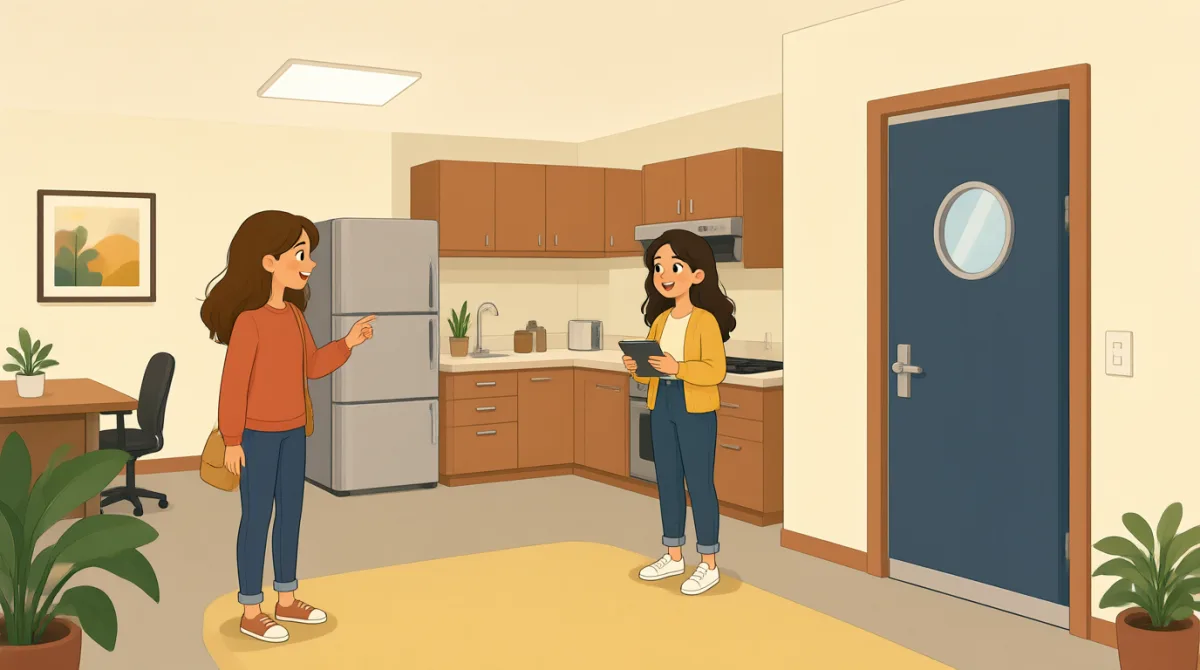

This is the kitchen. You can get water or make coffee here.
यह रसोई है। यहाँ तुम पानी ले सकती हो या कॉफ़ी बना सकती हो।

Great! Where can I find a cup?
बहुत बढ़िया! मुझे कप कहाँ मिलेगा?
The cups are in that cabinet, next to the coffee machine.
कप उस अलमारी में हैं, कॉफ़ी मशीन के पास।
Thanks. And where is the meeting room?
धन्यवाद। और मीटिंग रूम कहाँ है?
It’s down the hall, on your left. The restrooms are across from it.
गलियारे में थोड़ा आगे जाकर, तुम्हारी बाईं ओर। शौचालय उसके सामने हैं।
Got it. Is there a place to get paper and pens?
समझ गई। क्या कागज़ और पेन लेने की कोई जगह है?
Yes, there’s a supply room beside the meeting room. Help yourself.
हाँ, मीटिंग रूम के बगल में सामान रखने का कमरा है। बेझिझक ले लेना।
Thanks for showing me around. I think I know where everything is now.
मुझे ऑफिस दिखाने के लिए धन्यवाद। अब मुझे लगता है कि मुझे पता है कि सब कुछ कहाँ है।
शब्दावली8
- make coffeeकॉफ़ी बनाना
To prepare coffee to drink. You can say, “I make coffee in the kitchen.”
पीने के लिए कॉफ़ी तैयार करना। तुम कह सकती हो, “I make coffee in the kitchen.” (मैं रसोई में कॉफ़ी बनाती हूँ।)
- next toके पास
Beside something. Use it to say where one thing is in relation to another.
किसी चीज़ के बगल में। इसका इस्तेमाल यह बताने के लिए करो कि एक चीज़ दूसरी चीज़ के मुकाबले कहाँ है।
- down the hallगलियारे में आगे
Farther along the hallway. You can use it to give someone directions inside a building.
गलियारे में कुछ दूर आगे। इमारत के अंदर किसी को रास्ता बताने के लिए इसका इस्तेमाल कर सकते हो।
- on your leftतुम्हारी बाईं ओर
On the left side as you move forward. Use it when telling someone where to go.
आगे बढ़ते समय बाईं तरफ़। किसी को रास्ता बताते हुए इसका इस्तेमाल करो।
- across fromके सामने
On the opposite side of a space from something. Use it to describe where a place is.
किसी जगह या चीज़ के दूसरी तरफ़। किसी जगह की स्थिति बताने के लिए इसका इस्तेमाल करो।
- supply roomसामान रखने का कमरा
A room where items like paper and pens are kept. You can ask where to find the supply room at work.
ऐसा कमरा जहाँ कागज़ और पेन जैसी चीज़ें रखी जाती हैं। काम की जगह पर तुम पूछ सकती हो कि सामान रखने का कमरा कहाँ है।
- help yourselfबेझिझक ले लो
A friendly way to say that someone can take or use something. For example, you can say this when someone may take office supplies.
किसी को यह बताने का दोस्ताना तरीका कि वह कोई चीज़ ले या इस्तेमाल कर सकता है। जैसे, ऑफिस का सामान लेने की अनुमति देते समय यह कह सकते हो।
- showing me aroundमुझे जगह-जगह दिखाना
Taking someone to different places and explaining where things are. You can use this phrase to thank someone for a tour.
किसी को अलग-अलग जगहों पर ले जाकर यह बताना कि चीज़ें कहाँ हैं। किसी के ऑफिस का दौरा कराने के लिए धन्यवाद देते समय इस वाक्यांश का इस्तेमाल कर सकती हो।
मुख्य वाक्य8
- 1
You can get water or make coffee here.
तुम यहाँ पानी ले सकती हो या कॉफ़ी बना सकती हो।
This sentence tells someone what they can do in a place. Use “You can…” to explain what is available or allowed.
इस वाक्य से तुम किसी को बताती हो कि वह किसी जगह पर क्या कर सकता है। वहाँ क्या उपलब्ध है या क्या करने की अनुमति है, यह समझाने के लिए “You can…” (तुम कर सकती हो…) का इस्तेमाल करो।
- 2
Where can I find a cup?
मुझे कप कहाँ मिलेगा?
This is a polite, simple way to ask where something is. Replace “a cup” with another item you need.
किसी चीज़ की जगह पूछने का यह एक विनम्र और आसान तरीका है। “a cup” की जगह उस चीज़ का नाम रखो जिसकी तुम्हें ज़रूरत है।
- 3
The cups are in that cabinet, next to the coffee machine.
कप उस अलमारी में हैं, कॉफ़ी मशीन के पास।
This sentence gives the location of an item and uses “next to” to add a detail. Use the same pattern to explain where things are.
इस वाक्य में किसी चीज़ की जगह बताई गई है और अतिरिक्त जानकारी देने के लिए “next to” (के पास) का इस्तेमाल किया गया है। चीज़ों की जगह समझाने के लिए इसी ढाँचे का इस्तेमाल करो।
- 4
It’s down the hall, on your left.
गलियारे में थोड़ा आगे जाकर, तुम्हारी बाईं ओर।
This is a useful way to give directions in a building. You can replace “down the hall” or “on your left” with other directions.
इमारत के अंदर रास्ता बताने का यह एक उपयोगी तरीका है। तुम “down the hall” या “on your left” की जगह दिशा बताने वाले दूसरे वाक्यांश रख सकती हो।
- 5
The restrooms are across from it.
शौचालय उसके सामने हैं।
This sentence describes where a place is in relation to another place. Use “across from” to explain that two places are opposite each other.
इस वाक्य से पता चलता है कि एक जगह दूसरी जगह के मुकाबले कहाँ है। जब दो जगहें एक-दूसरे के सामने हों, तो यह बताने के लिए “across from” का इस्तेमाल करो।
- 6
Is there a place to get paper and pens?
क्या कागज़ और पेन लेने की कोई जगह है?
This is a polite way to ask whether you can find something in a particular place. Replace “paper and pens” with the items you need.
किसी खास जगह पर कोई चीज़ मिल सकती है या नहीं, यह पूछने का यह एक विनम्र तरीका है। “paper and pens” की जगह उन चीज़ों के नाम रखो जिनकी तुम्हें ज़रूरत है।
- 7
Help yourself.
बेझिझक ले लो।
This short phrase gives someone permission to take or use something. It is useful when offering food, supplies, or other shared items.
यह छोटा-सा वाक्य किसी को कोई चीज़ लेने या इस्तेमाल करने की इजाज़त देता है। खाना, सामान या साझा इस्तेमाल की दूसरी चीज़ें पेश करते समय यह काम आता है।
- 8
Thanks for showing me around.
मुझे जगह-जगह दिखाने के लिए धन्यवाद।
This is a friendly way to thank someone for giving you a tour. You can use it after someone shows you a workplace or a new area.
किसी के तुम्हें जगह का दौरा कराने के लिए धन्यवाद देने का यह दोस्ताना तरीका है। कोई तुम्हें काम की जगह या किसी नए इलाके का दौरा कराए, तो तुम बाद में यह कह सकती हो।