Knocking on the Door
दरवाज़ा खटखटाना
Emma visits her neighbor Jack to ask for a little help. Jack answers the door and asks what she needs.
एमा अपने पड़ोसी जैक से थोड़ी मदद माँगने जाती है। जैक दरवाज़ा खोलता है और पूछता है कि उसे क्या चाहिए।
संवाद8
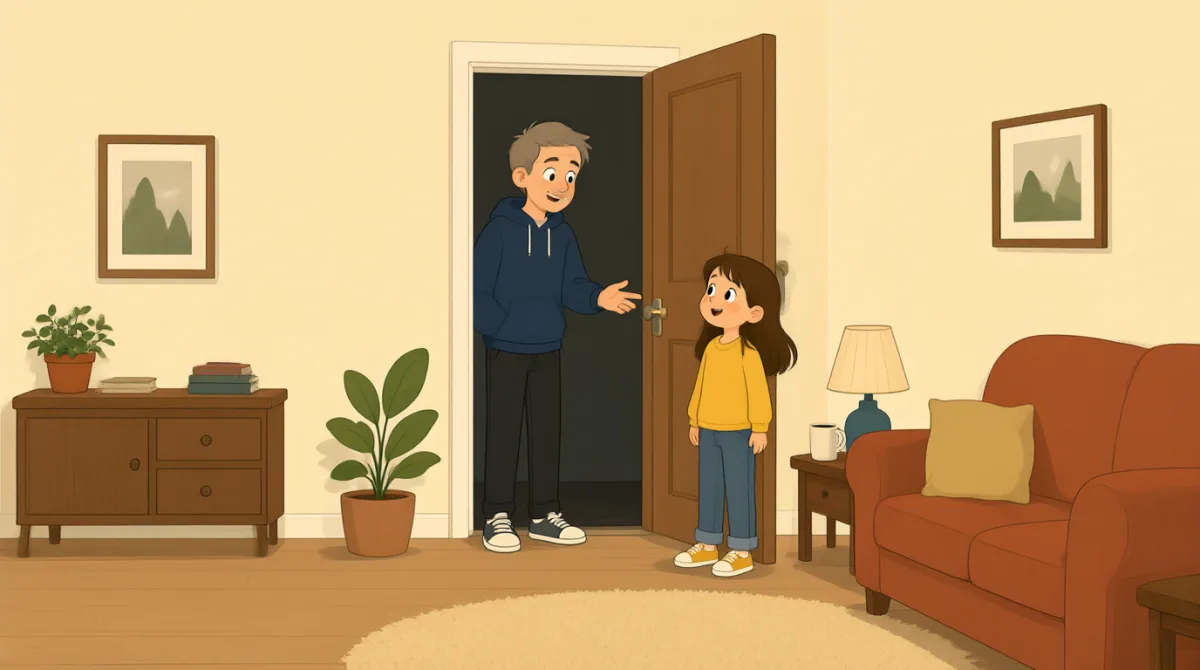

Hi, Jack. Sorry to bother you. Do you have a minute?
हाय, जैक। परेशान करने के लिए माफ़ करना। क्या तुम्हारे पास एक मिनट है?

Hi, Emma. Sure. What do you need?
हाय, एमा। हाँ, ज़रूर। तुम्हें क्या चाहिए?
I need a little help with something in my yard.
मुझे अपने आँगन में एक काम के लिए थोड़ी मदद चाहिए।
Okay. What are you trying to do?
अच्छा। तुम क्या करने की कोशिश कर रही हो?
I want to hang something up, but I need a ladder.
मैं कुछ टाँगना चाहती हूँ, लेकिन मुझे एक सीढ़ी चाहिए।
Sure. What are you going to hang?
ज़रूर। तुम क्या टाँगने वाली हो?
A small birdhouse. I bought it last week.
एक छोटा-सा पक्षीघर। मैंने इसे पिछले हफ़्ते खरीदा था।
That sounds nice. The ladder is in my garage. Give me a minute.
अच्छा लग रहा है। सीढ़ी मेरे गैराज में है। मुझे एक मिनट दो।
शब्दावली7
- Sorry to bother you.परेशान करने के लिए माफ़ करना।
This is a polite way to start a request when you think you may interrupt someone. You can also say it before asking a neighbor or coworker for help.
जब आपको लगता है कि आप किसी को बीच में टोक रहे हैं, तो अनुरोध शुरू करने का यह एक विनम्र तरीका है। पड़ोसी या सहकर्मी से मदद माँगने से पहले भी आप यह कह सकते हैं।
- Do you have a minute?क्या तुम्हारे पास एक मिनट है?
This asks if someone has a little time to talk. Use it before making a request or asking a question.
इससे आप पूछते हैं कि क्या किसी के पास थोड़ी देर बात करने का समय है। कोई अनुरोध करने या सवाल पूछने से पहले इसका इस्तेमाल करें।
- a little helpथोड़ी मदद
This means some help, but not a lot. You can say, “I need a little help with my homework.”
इसका मतलब है कुछ मदद, लेकिन बहुत ज़्यादा नहीं। आप कह सकते हैं, “I need a little help with my homework.” (मुझे अपना गृहकार्य करने में थोड़ी मदद चाहिए।)
- What are you trying to do?तुम क्या करने की कोशिश कर रहे हो?
This asks about someone’s goal or activity. Use it when you want to understand what a person is working on.
इससे आप किसी के लक्ष्य या गतिविधि के बारे में पूछते हैं। जब आप समझना चाहते हों कि कोई क्या काम कर रहा है, तब इसका इस्तेमाल करें।
- hang something upकुछ टाँगना
This means to put something on a wall or another high place. You can hang up a picture, a coat, or a birdhouse.
इसका मतलब है किसी चीज़ को दीवार पर या किसी ऊँची जगह पर लगाना। आप कोई तस्वीर, कोट या पक्षीघर टाँग सकते हैं।
- last weekपिछले हफ़्ते
This means the week before this one. Use it to talk about something that happened in the recent past.
इसका मतलब है इस हफ़्ते से पहले वाला हफ़्ता। हाल ही में हुई किसी बात के बारे में बताने के लिए इसका इस्तेमाल करें।
- Give me a minute.मुझे एक मिनट दो।
This asks someone to wait for a short time. You can say it when you need to get something before helping.
इससे आप किसी से थोड़ी देर इंतज़ार करने को कहते हैं। मदद करने से पहले कोई चीज़ लेने की ज़रूरत हो, तो आप यह कह सकते हैं।
मुख्य वाक्य7
- 1
Sorry to bother you.
परेशान करने के लिए माफ़ करना।
This is a polite way to begin when asking someone for help or interrupting them. You can use it with neighbors, coworkers, or other people you know.
किसी से मदद माँगते समय या उसे बीच में टोकते समय शुरुआत करने का यह एक विनम्र तरीका है। आप इसे पड़ोसियों, सहकर्मियों या अपने जान-पहचान के दूसरे लोगों से कह सकते हैं।
- 2
Do you have a minute?
क्या तुम्हारे पास एक मिनट है?
This is a friendly way to check if someone is free to talk. You can use it before making a request.
यह पूछने का एक दोस्ताना तरीका है कि क्या कोई बात करने के लिए खाली है। अनुरोध करने से पहले आप इसका इस्तेमाल कर सकते हैं।
- 3
I need a little help with something in my yard.
मुझे अपने आँगन में एक काम के लिए थोड़ी मदद चाहिए।
This sentence explains that you need some help and says where the task is. Replace “my yard” with another place, such as “my kitchen” or “my car.”
इस वाक्य से आप बताते हैं कि आपको थोड़ी मदद चाहिए और यह भी कि काम कहाँ करना है। “my yard” की जगह कोई दूसरी जगह, जैसे “my kitchen” या “my car,” रख सकते हैं।
- 4
What are you trying to do?
तुम क्या करने की कोशिश कर रहे हो?
This is a useful question when you want to understand someone’s plan or problem. You can use it when a person is doing a task.
किसी की योजना या समस्या समझने के लिए यह एक उपयोगी सवाल है। जब कोई कोई काम कर रहा हो, तब आप इसका इस्तेमाल कर सकते हैं।
- 5
I want to hang something up, but I need a ladder.
मैं कुछ टाँगना चाहती हूँ, लेकिन मुझे एक सीढ़ी चाहिए।
This sentence explains what you want to do and what you need for it. Use “I want to..., but I need...” to describe a goal and a problem.
इस वाक्य से आप बताते हैं कि आप क्या करना चाहते हैं और उसके लिए आपको किस चीज़ की ज़रूरत है। अपना लक्ष्य और समस्या बताने के लिए “I want to..., but I need...” का इस्तेमाल करें।
- 6
I bought it last week.
मैंने इसे पिछले हफ़्ते खरीदा था।
This is a simple way to say when you bought something. Replace “it” with the item if the listener does not know what you mean.
कोई चीज़ कब खरीदी, यह बताने का यह एक आसान तरीका है। अगर सुनने वाले को यह पता न हो कि आप किस चीज़ की बात कर रहे हैं, तो “it” की जगह उस चीज़ का नाम लें।
- 7
Give me a minute.
मुझे एक मिनट दो।
This is a natural way to ask someone to wait briefly. You can use it when you need time to find or prepare something.
किसी से थोड़ी देर इंतज़ार करने को कहने का यह एक स्वाभाविक तरीका है। कोई चीज़ ढूँढ़ने या तैयार करने के लिए समय चाहिए हो, तो आप इसका इस्तेमाल कर सकते हैं।