Playing a Game
खेल खेलना
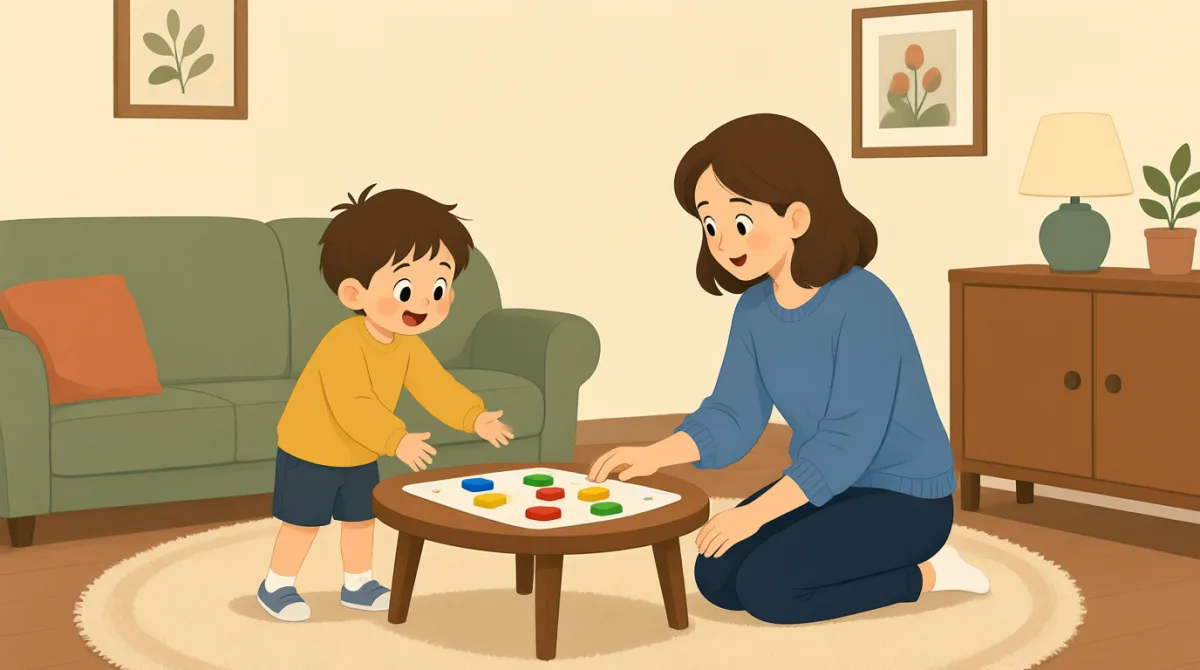
After dinner, Emma and the child play a simple game at home. The child gets excited, and Emma gently reminds them to take turns.
रात के खाने के बाद, एमा और बच्चा घर पर एक आसान-सा खेल खेलते हैं। बच्चा बहुत उत्साहित हो जाता है, तो एमा प्यार से याद दिलाती है कि बारी-बारी से खेलना है।
संवाद8

What should we play after dinner? I found a picture game.
रात के खाने के बाद हम क्या खेलें? मुझे तस्वीरों वाला एक खेल मिला है।

That sounds fun. Let’s take turns picking a card.
मज़ेदार लग रहा है। चलो, बारी-बारी से एक पत्ता चुनते हैं।
Great! I’ll go first. Oh, I got a picture of a dog.
बढ़िया! पहले मेरी बारी। अरे, मुझे कुत्ते की तस्वीर मिली।
I know that one! It says, “Find something red.”
वह तो मुझे पता है! इसमें लिखा है, “कुछ लाल ढूँढ़ो।”
You found the red ball! Now it’s my turn to pick a card.
तुमने लाल गेंद ढूँढ़ ली! अब मेरी बारी है एक पत्ता चुनने की।
Wait, I want another turn! This game is so exciting.
रुको, मुझे एक और बारी चाहिए! यह खेल कितना रोमांचक है।
I’m glad you like it. Let’s take turns, so we both get to play.
मुझे खुशी है कि तुम्हें यह पसंद आया। चलो, बारी-बारी से खेलते हैं, ताकि हम दोनों खेल सकें।
Okay, your turn. Then I can pick the next card.
ठीक है, अब तुम्हारी बारी। फिर मैं अगला पत्ता चुन सकती हूँ।
शब्दावली8
- take turnsबारी-बारी से करना
To take turns means to do something one at a time. Use it when people share an activity.
“take turns” का मतलब है किसी काम को एक-एक करके करना। जब लोग कोई गतिविधि साझा करते हैं, तब यह वाक्यांश इस्तेमाल करें।
- pick a cardएक पत्ता चुनना
To pick a card means to choose one from a group. You can use this phrase in card games.
“pick a card” का मतलब है किसी समूह में से एक पत्ता चुनना। यह वाक्यांश ताश या पत्तों वाले खेलों में काम आता है।
- go firstपहले करना
To go first means to do something before the other person. Use it to say who starts a game or activity.
“go first” का मतलब है दूसरे व्यक्ति से पहले कुछ करना। इसका इस्तेमाल यह बताने के लिए करें कि खेल या गतिविधि कौन शुरू करेगा।
- I got a picture of a dog.मुझे कुत्ते की तस्वीर मिली।
This tells someone what picture you found on a card. You can use “I got a picture of…” to describe a game card.
इससे आप किसी को बताते हैं कि आपको पत्ते पर कौन-सी तस्वीर मिली। खेल के पत्ते का वर्णन करने के लिए “I got a picture of…” कह सकते हैं।
- I know that one!मुझे वह पता है!
This means you recognize or understand something. Say it when you know the answer or have seen something before.
“I know that one!” का मतलब है कि आप किसी चीज़ को पहचानते हैं या समझते हैं। जवाब पता हो या आपने कोई चीज़ पहले देखी हो, तो यह कहें।
- another turnएक और बारी
Another turn means one more chance to do something in a game. You can ask for another turn when you want to play again.
“another turn” का मतलब है खेल में कुछ करने का एक और मौका। जब आप फिर से खेलना चाहें, तो एक और बारी माँग सकते हैं।
- I’m glad you like it.मुझे खुशी है कि तुम्हें यह पसंद आया।
Use this to show that you feel happy someone enjoys something. It works well when sharing a game, food, or activity.
किसी को कोई चीज़ पसंद आने पर अपनी खुशी जताने के लिए “I’m glad you like it.” कहें। खेल, खाना या कोई गतिविधि साझा करते समय यह अच्छा लगता है।
- your turnतुम्हारी बारी
This tells someone it is their time to play or do something. You can use it to pass an activity to another person.
“your turn” से आप किसी को बताते हैं कि अब खेलने या कुछ करने की उसकी बारी है। किसी गतिविधि की बारी दूसरे को देने के लिए यह कह सकते हैं।
मुख्य वाक्य8
- 1
What should we play after dinner?
रात के खाने के बाद हम क्या खेलें?
This is a friendly way to ask what activity someone wants to do. You can replace “play” with another activity, such as “watch” or “do.”
किसी से यह पूछने का यह दोस्ताना तरीका है कि वह कौन-सी गतिविधि करना चाहता है। “play” की जगह “watch” या “do” जैसी दूसरी गतिविधि रख सकते हैं।
- 2
Let’s take turns picking a card.
चलो, बारी-बारी से एक पत्ता चुनते हैं।
This suggests sharing a game fairly. You can use “Let’s take turns…” for other activities, such as choosing a song or using a toy.
इससे खेल में सबको बराबर मौका देने का सुझाव मिलता है। गाना चुनने या खिलौने से खेलने जैसी दूसरी गतिविधियों के लिए भी “Let’s take turns…” कह सकते हैं।
- 3
I’ll go first.
पहले मेरी बारी।
This is a simple way to say you want to start. Use “I’ll” plus an action to say what you will do first.
यह कहने का आसान तरीका है कि आप शुरुआत करना चाहते हैं। आप पहले क्या करेंगे, यह बताने के लिए “I’ll” के बाद कोई काम बताएं।
- 4
You found the red ball!
तुमने लाल गेंद ढूँढ़ ली!
This praises someone for finding the right thing. You can replace “the red ball” with the item they found.
सही चीज़ ढूँढ़ने पर किसी की तारीफ़ करने के लिए यह वाक्य कहें। “the red ball” की जगह उस चीज़ का नाम रख सकते हैं जो उसने ढूँढ़ी है।
- 5
Now it’s my turn to pick a card.
अब मेरी बारी है एक पत्ता चुनने की।
This tells someone that you are ready to take your turn. Use “It’s my turn to…” before an action in a game or shared activity.
इससे आप बताते हैं कि अब आपकी बारी है। खेल या साझा गतिविधि में कोई काम बताने से पहले “It’s my turn to…” कहें।
- 6
I’m glad you like it.
मुझे खुशी है कि तुम्हें यह पसंद आया।
This is a warm response when someone enjoys something you chose. You can use it for games, meals, or other activities.
आपकी चुनी हुई कोई चीज़ किसी को पसंद आए, तो यह एक प्यार भरा जवाब है। इसे खेल, खाने या दूसरी गतिविधियों के लिए इस्तेमाल कर सकते हैं।
- 7
Let’s take turns, so we both get to play.
चलो, बारी-बारी से खेलते हैं, ताकि हम दोनों खेल सकें।
This gently reminds someone to share the game. “So we both get to…” explains how taking turns helps everyone.
यह किसी को प्यार से याद दिलाता है कि खेल साझा करना है। “So we both get to…” बताता है कि बारी-बारी से खेलने से सबको खेलने का मौका कैसे मिलता है।
- 8
Okay, your turn.
ठीक है, अब तुम्हारी बारी।
This is a short, natural way to let someone know they can play next. Use it when passing a turn in a game.
किसी को यह बताने का यह छोटा और स्वाभाविक तरीका है कि अब वह खेल सकता है। खेल में बारी दूसरे को देते समय इसका इस्तेमाल करें।