Using an ATM for Cash Withdrawal
एटीएम से नकदी निकालना
A person needs to withdraw cash from an ATM and navigates the machine's interface, enters their PIN, and selects the amount.
एक व्यक्ति को एटीएम से नकदी निकालनी है। वह मशीन के विकल्पों में से रास्ता चुनता है, अपना पिन डालता है और रकम चुनता है।
संवाद8
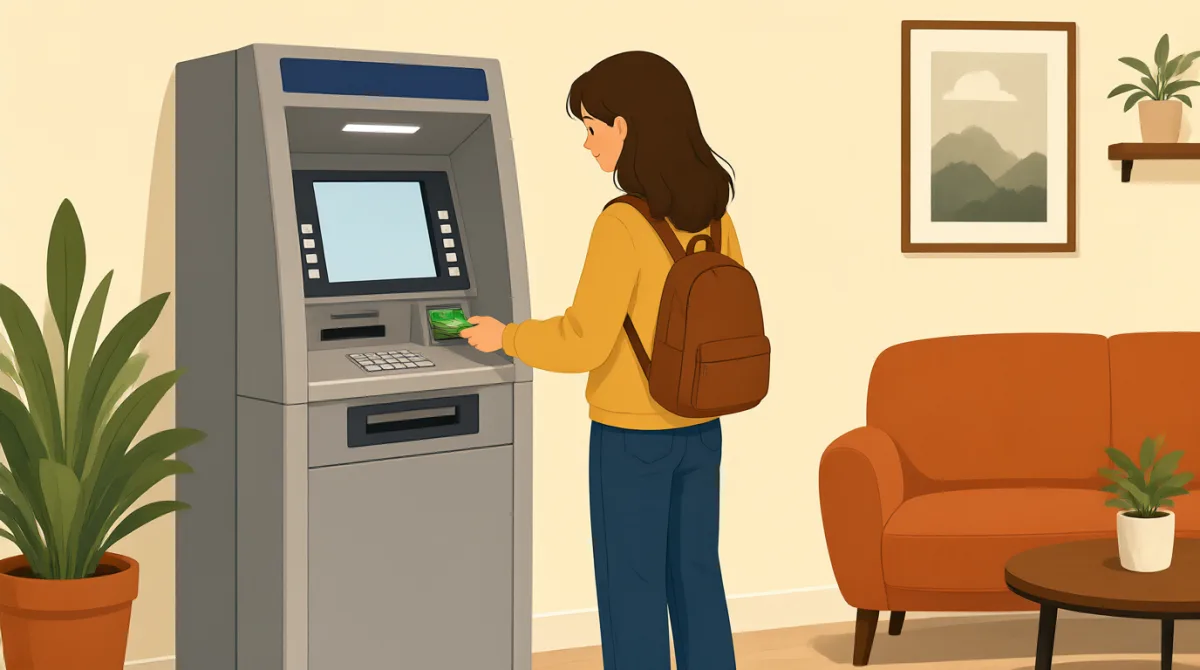

Okay, let's get some cash out. I need about $100 for groceries.
ठीक है, चलो कुछ नकदी निकाल लेते हैं। किराने के सामान के लिए मुझे करीब $100 चाहिए।

Is this ATM okay? Some of them have really high fees.
क्या यह एटीएम ठीक है? कुछ एटीएम पर बहुत ज़्यादा शुल्क लगता है।
It's my bank's ATM, so there shouldn't be any fees. Alright, inserting the card now.
यह मेरे बैंक का एटीएम है, इसलिए कोई शुल्क नहीं लगना चाहिए। अच्छा, अब कार्ड डाल रहा हूँ।
Looks like it's asking for your PIN.
लगता है यह तुम्हारा पिन माँग रहा है।
Yep, just entered it. Now, I need to select 'Withdrawal' and then the amount. Ah, there's an option for $100.
हाँ, अभी डाल दिया। अब मुझे 'Withdrawal' चुनना है और फिर रकम। अच्छा, यहाँ $100 का विकल्प है।
Great. Don't forget your card when you're done.
बढ़िया। काम हो जाने पर अपना कार्ड लेना मत भूलना।
Right. And the cash. It's dispensing now. Okay, here's my card, and here's the money.
हाँ। और नकदी भी। अभी निकल रही है। ठीक है, यह रहा मेरा कार्ड और यह रहे पैसे।
Perfect! That was quick and easy.
बढ़िया! यह तो जल्दी और आसानी से हो गया।
शब्दावली7
- cashनकदी
Physical money in the form of bills and coins, not digital. Use it when talking about withdrawing money from a bank or ATM for everyday spending.
कागज़ी नोटों और सिक्कों के रूप में मौजूद भौतिक पैसा, डिजिटल पैसा नहीं। बैंक या एटीएम से रोज़मर्रा के खर्च के लिए पैसे निकालने की बात करते समय इसका इस्तेमाल करें।
- ATMएटीएम
Stands for Automated Teller Machine; it's a machine where you can withdraw cash, check balances, or deposit money using your bank card. Common in banking scenarios.
इसका पूरा नाम Automated Teller Machine है। यह ऐसी मशीन है जिससे आप बैंक कार्ड का इस्तेमाल करके नकदी निकाल सकते हैं, खाते का बैलेंस देख सकते हैं या पैसे जमा कर सकते हैं। बैंक से जुड़े प्रसंगों में यह आम है।
- feesशुल्क
Charges or costs you pay for using a service, like a bank's fee for using another bank's ATM. Useful when discussing costs in financial transactions.
किसी सेवा का इस्तेमाल करने के लिए चुकाई जाने वाली रकम, जैसे किसी दूसरे बैंक के एटीएम का इस्तेमाल करने पर लगने वाला शुल्क। वित्तीय लेन-देन की लागत पर बात करते समय यह शब्द काम आता है।
- PINपिन
Personal Identification Number; a secret code you enter to access your bank account at an ATM or online. Always keep it private for security.
Personal Identification Number का संक्षिप्त रूप; यह एक गुप्त कोड है जिसे एटीएम या ऑनलाइन अपने बैंक खाते तक पहुँचने के लिए डालते हैं। सुरक्षा के लिए इसे हमेशा गोपनीय रखें।
- withdrawalपैसे निकालना
The act of taking money out of your bank account. Select this option on an ATM screen when you want cash.
अपने बैंक खाते से पैसे निकालने की क्रिया। नकदी चाहिए हो तो एटीएम की स्क्रीन पर यह विकल्प चुनें।
- insertingडालना
Putting something into a slot or opening, like inserting your bank card into the ATM. It's a common action in machine interactions.
किसी चीज़ को किसी खाँचे या खुली जगह में रखना, जैसे एटीएम में अपना बैंक कार्ड डालना। मशीनों का इस्तेमाल करते समय यह आम क्रिया है।
- dispensingबाहर निकालना
The process of a machine giving out something, like an ATM dispensing cash. Use this when describing how the money comes out.
मशीन द्वारा कोई चीज़ बाहर देने की प्रक्रिया, जैसे एटीएम से नकदी निकलना। पैसे बाहर आने का तरीका बताने के लिए इसका इस्तेमाल करें।
मुख्य वाक्य7
- 1
Okay, let's get some cash out.
ठीक है, चलो कुछ नकदी निकाल लेते हैं।
This is a casual suggestion to withdraw money. 'Get some cash out' is an informal idiom for withdrawing from an ATM. Useful for starting a conversation about needing money; simple present tense for immediate action.
यह पैसे निकालने का अनौपचारिक सुझाव है। 'Get some cash out' एटीएम से पैसे निकालने के लिए इस्तेमाल होने वाला बोलचाल का मुहावरा है। पैसे की ज़रूरत के बारे में बातचीत शुरू करने के लिए यह उपयोगी है; इसमें तुरंत की जाने वाली कार्रवाई के लिए सरल वर्तमान काल है।
- 2
Is this ATM okay? Some of them have really high fees.
क्या यह एटीएम ठीक है? कुछ एटीएम पर बहुत ज़्यादा शुल्क लगता है।
A question checking if the machine is suitable, followed by a reason. 'Some of them' refers to ATMs in general. Practical for asking about costs before using; uses present simple for facts and 'really high' for emphasis.
पहले पूछा जाता है कि मशीन इस्तेमाल करने लायक है या नहीं, फिर इसकी वजह बताई जाती है। 'Some of them' का मतलब है एटीएम में से कुछ। इस्तेमाल करने से पहले शुल्क के बारे में पूछने के लिए यह वाक्य उपयोगी है। इसमें तथ्यों के लिए सरल वर्तमान काल और ज़ोर देने के लिए 'really high' का इस्तेमाल है।
- 3
It's my bank's ATM, so there shouldn't be any fees.
यह मेरे बैंक का एटीएम है, इसलिए कोई शुल्क नहीं लगना चाहिए।
Explains why no charge applies, using 'so' for cause and effect. 'Shouldn't' expresses expectation. Useful in banking talks to avoid extra costs; conditional for polite certainty.
यह बताता है कि शुल्क क्यों नहीं लगना चाहिए; कारण और नतीजा जोड़ने के लिए 'so' का इस्तेमाल हुआ है। 'Shouldn't' से अपेक्षा व्यक्त होती है। अतिरिक्त खर्च से बचने के लिए बैंक से जुड़ी बातचीत में यह उपयोगी है; इसमें विनम्रता से यक़ीन जताया गया है।
- 4
Looks like it's asking for your PIN.
लगता है यह तुम्हारा पिन माँग रहा है।
Observes what the screen shows. 'Looks like' is a common way to describe appearances. Great for describing ATM steps; present continuous for ongoing action on the machine.
इसमें स्क्रीन पर दिख रही चीज़ के बारे में बताया गया है। 'Looks like' किसी चीज़ के दिखाई देने का तरीका बताने का आम मुहावरा है। एटीएम के चरणों के बारे में बताने के लिए यह उपयोगी है; मशीन पर जारी कार्रवाई के लिए इसमें वर्तमान निरंतर काल है।
- 5
Now, I need to select 'Withdrawal' and then the amount.
अब मुझे 'Withdrawal' चुनना है और फिर रकम।
Describes the next steps on the ATM menu. 'Select' means choose an option. Helpful for guiding through processes; uses 'need to' for necessity and sequence words like 'now' and 'then'.
इसमें एटीएम के मेनू पर अगला कदम बताया गया है। 'Select' का मतलब है कोई विकल्प चुनना। किसी प्रक्रिया के चरण समझाने में यह उपयोगी है; ज़रूरत के लिए 'need to' और क्रम बताने के लिए 'now' और 'then' जैसे शब्द इस्तेमाल हुए हैं।
- 6
Don't forget your card when you're done.
काम हो जाने पर अपना कार्ड लेना मत भूलना।
A reminder to take back the card. 'Don't forget' is imperative for advice; 'when you're done' uses future clause. Essential safety tip in ATMs; present simple in clauses for general time.
यह कार्ड वापस लेने की याद दिलाता है। 'Don't forget' सलाह देने के लिए इस्तेमाल होने वाला आदेशवाचक रूप है; 'when you're done' में भविष्य की बात बताने वाली उपवाक्य-रचना है। एटीएम इस्तेमाल करते समय यह ज़रूरी सुरक्षा सलाह है; समय बताने वाले उपवाक्य में सरल वर्तमान काल है।
- 7
Perfect! That was quick and easy.
बढ़िया! यह तो जल्दी और आसानी से हो गया।
Expresses satisfaction after completing a task. 'Quick and easy' describes the process positively. Use after simple transactions; past simple 'was' for completed action, exclamatory for enthusiasm.
यह काम पूरा होने के बाद संतोष व्यक्त करता है। 'Quick and easy' प्रक्रिया को सकारात्मक रूप से बताता है। साधारण लेन-देन के बाद इसका इस्तेमाल कर सकते हैं; पूरा हो चुके काम के लिए 'was' का भूतकाल और उत्साह जताने के लिए विस्मयादिबोधक शैली है।