Asking for Change or Breaking a Bill
छुट्टे पैसे माँगना या बड़ा नोट तुड़वाना
A person at a small shop or cafe asks the cashier if they can break a large denomination bill or provide specific change.
छोटी दुकान या कैफ़े में कोई व्यक्ति कैशियर से पूछता है कि क्या वे बड़ा नोट तुड़ा सकते हैं या मनचाहे छुट्टे पैसे दे सकते हैं।
संवाद8
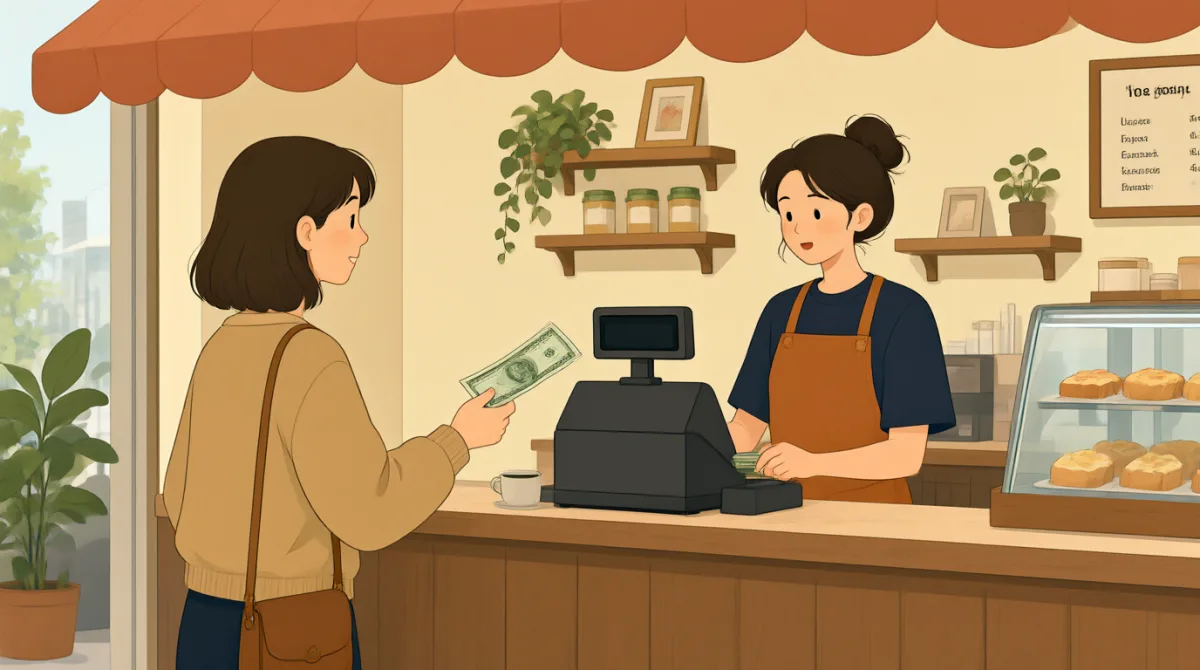

Excuse me, I just bought a coffee. Would it be possible to get some change for a larger bill?
माफ़ कीजिए, मैंने अभी एक कॉफ़ी खरीदी है। क्या बड़े नोट के बदले कुछ छुट्टे पैसे मिल सकते हैं?

Sure, no problem. What denomination is it? And how much change are you looking for?
ज़रूर, कोई समस्या नहीं। यह कितने मूल्य का नोट है? और आपको कितने छुट्टे पैसे चाहिए?
It's a fifty-dollar bill. I was hoping to get some smaller bills, maybe tens or twenties, if possible.
यह पचास डॉलर का नोट है। मैं कुछ छोटे नोट लेना चाहता था, अगर संभव हो तो दस या बीस डॉलर वाले।
Let me see... Yes, I can definitely do that for you. How about two twenties and a ten?
मैं देखती हूँ... हाँ, मैं आपके लिए यह ज़रूर कर सकती हूँ। दो बीस डॉलर के नोट और एक दस डॉलर का नोट कैसा रहेगा?
That would be perfect, thank you so much!
वह बिल्कुल ठीक रहेगा, बहुत-बहुत धन्यवाद!
Here you go. Anything else I can help you with today?
लीजिए। क्या आज मैं आपकी और किसी चीज़ में मदद कर सकती हूँ?
No, that's all. Thanks again!
नहीं, बस इतना ही। फिर से धन्यवाद!
You're welcome. Have a great day!
आपका स्वागत है। आपका दिन शुभ हो!
शब्दावली6
- changeछुट्टे पैसे
Money given back when you pay with more than the cost, or smaller coins and bills exchanged for a larger one. In this dialogue, it means breaking a large bill into smaller amounts.
जब आप कीमत से ज़्यादा पैसे देते हैं तो वापस मिलने वाली रकम, या बड़े नोट के बदले मिलने वाले छोटे सिक्के और नोट। इस संवाद में इसका अर्थ बड़े नोट को छोटे मूल्यों में तुड़वाना है।
- billनोट
A banknote or paper money, like a $50 bill. It's used to refer to currency notes in everyday transactions.
बैंक द्वारा जारी कागज़ी मुद्रा, जैसे 50 डॉलर का नोट। रोज़मर्रा के लेन-देन में मुद्रा के कागज़ी नोटों के लिए इसका इस्तेमाल किया जाता है।
- denominationमूल्यवर्ग
The value printed on a bill or coin, such as $10 or $20. It's a formal word often used in banking to ask about the amount of money.
किसी नोट या सिक्के पर लिखा हुआ मूल्य, जैसे 10 या 20 डॉलर। यह एक औपचारिक शब्द है, जिसका इस्तेमाल अक्सर बैंकिंग में रकम के बारे में पूछने के लिए किया जाता है।
- smaller billsछोटे नोट
Banknotes with lower values, like $10 or $20 instead of $50. Useful when you need easier-to-use money for small purchases.
कम मूल्य वाले नोट, जैसे 50 डॉलर के बजाय 10 या 20 डॉलर के नोट। छोटी खरीदारी के लिए आसानी से इस्तेमाल होने वाले पैसे चाहिए हों, तो यह शब्द उपयोगी है।
- twentiesबीस डॉलर वाले नोट
Informal way to say $20 bills. People often shorten denominations like 'tens' for $10 bills or 'fifties' for $50 bills in casual talk.
20 डॉलर के नोट कहने का अनौपचारिक तरीका। बोलचाल की भाषा में लोग अक्सर मूल्यवर्ग को छोटा करके कहते हैं, जैसे 10 डॉलर के नोटों के लिए 'tens' या 50 डॉलर के नोटों के लिए 'fifties'।
- perfectबिल्कुल ठीक
Means exactly right or ideal. In responses, it's a polite way to show satisfaction, like 'That would be perfect' to agree happily.
इसका अर्थ है बिल्कुल सही या आदर्श। जवाबों में यह संतुष्टि जताने का एक विनम्र तरीका है, जैसे 'That would be perfect' कहकर खुशी से सहमति जताना।
मुख्य वाक्य7
- 1
Excuse me, I just bought a coffee. Would it be possible to get some change for a larger bill?
माफ़ कीजिए, मैंने अभी एक कॉफ़ी खरीदी है। क्या बड़े नोट के बदले कुछ छुट्टे पैसे मिल सकते हैं?
This is a polite way to start a request. 'Would it be possible' is a soft, indirect question to ask for help without being demanding. Useful in shops when you need to exchange money after a purchase. Grammar: Conditional 'would' makes it courteous.
यह अनुरोध शुरू करने का एक विनम्र तरीका है। 'Would it be possible' किसी पर ज़ोर डाले बिना मदद माँगने वाला नरम और अप्रत्यक्ष सवाल है। खरीदारी के बाद पैसे बदलवाने की ज़रूरत हो, तो दुकानों में यह बहुत उपयोगी है। व्याकरण: शर्तिया 'would' बात को विनम्र बनाता है।
- 2
Sure, no problem. What denomination is it? And how much change are you looking for?
ज़रूर, कोई समस्या नहीं। यह कितने मूल्य का नोट है? और आपको कितने छुट्टे पैसे चाहिए?
A helpful response from service staff. 'Sure, no problem' shows willingness. 'What denomination is it?' asks for the bill's value. Useful for cashiers to clarify. The 'and' connects two questions naturally.
यह सेवा-कर्मचारी की मददगार प्रतिक्रिया है। 'Sure, no problem' मदद करने की इच्छा दिखाता है। 'What denomination is it?' नोट का मूल्य पूछता है। कैशियर के लिए यह जानकारी स्पष्ट करने में उपयोगी है। 'and' दोनों सवालों को स्वाभाविक ढंग से जोड़ता है।
- 3
It's a fifty-dollar bill. I was hoping to get some smaller bills, maybe tens or twenties, if possible.
यह पचास डॉलर का नोट है। मैं कुछ छोटे नोट लेना चाहता था, अगर संभव हो तो दस या बीस डॉलर वाले।
Explains the bill and specifies the desired change. 'I was hoping' softens the request politely. 'If possible' adds courtesy. Great for specifying preferences in money exchanges. Informal abbreviations like 'tens' and 'twenties' are common in spoken English.
इसमें नोट के बारे में बताया गया है और मनचाहे छुट्टे पैसे स्पष्ट किए गए हैं। 'I was hoping' अनुरोध को विनम्रता से नरम बनाता है। 'If possible' शिष्टाचार जोड़ता है। पैसे बदलते समय अपनी पसंद बताने के लिए यह बहुत उपयोगी है। बोलचाल की अंग्रेज़ी में 'tens' और 'twenties' जैसे अनौपचारिक संक्षिप्त रूप आम हैं।
- 4
Let me see... Yes, I can definitely do that for you. How about two twenties and a ten?
मैं देखती हूँ... हाँ, मैं आपके लिए यह ज़रूर कर सकती हूँ। दो बीस डॉलर के नोट और एक दस डॉलर का नोट कैसा रहेगा?
Shows checking availability then offering a solution. 'Let me see' means thinking or checking. 'How about' suggests an option politely. Useful when proposing alternatives in service situations. 'Definitely' emphasizes certainty.
इसमें पहले उपलब्धता जाँचने और फिर समाधान देने का भाव है। 'Let me see' का अर्थ है सोचने या जाँचने के लिए थोड़ा समय लेना। 'How about' विनम्रता से कोई विकल्प सुझाता है। सेवा-संबंधी स्थितियों में दूसरे विकल्प देने के लिए यह उपयोगी है। 'Definitely' निश्चितता पर ज़ोर देता है।
- 5
That would be perfect, thank you so much!
वह बिल्कुल ठीक रहेगा, बहुत-बहुत धन्यवाद!
Expresses strong agreement and gratitude. 'That would be' is conditional for hypothetical politeness. 'Thank you so much' intensifies thanks. Ideal for ending a positive interaction, showing appreciation in daily services.
इससे मज़बूत सहमति और आभार व्यक्त होता है। 'That would be' काल्पनिक या विनम्र स्थिति के लिए शर्तिया रूप है। 'Thank you so much' धन्यवाद को और ज़ोरदार बनाता है। रोज़मर्रा की सेवाओं में सकारात्मक बातचीत समाप्त करते समय, आभार दिखाने के लिए यह बहुत अच्छा वाक्य है।
- 6
Here you go. Anything else I can help you with today?
लीजिए। क्या आज मैं आपकी और किसी चीज़ में मदद कर सकती हूँ?
Hands over the change and offers more help. 'Here you go' is a casual way to give something. The question invites further needs. Common in customer service to ensure satisfaction and build rapport.
इसमें छुट्टे पैसे देने और आगे मदद की पेशकश करने का भाव है। 'Here you go' किसी चीज़ को देते समय कहने का अनौपचारिक तरीका है। यह सवाल पूछकर सामने वाले की किसी और ज़रूरत का पता लगाया जाता है। ग्राहक सेवा में संतुष्टि सुनिश्चित करने और अच्छा संबंध बनाने के लिए यह आम है।
- 7
You're welcome. Have a great day!
आपका स्वागत है। आपका दिन शुभ हो!
Standard polite response to thanks. 'You're welcome' acknowledges gratitude. 'Have a great day' is a friendly goodbye. Use this to end conversations positively in shops or cafes.
धन्यवाद के जवाब में कहा जाने वाला यह एक सामान्य विनम्र उत्तर है। 'You're welcome' आभार स्वीकार करता है। 'Have a great day' मित्रतापूर्ण विदाई है। दुकानों या कैफ़े में बातचीत को सकारात्मक ढंग से समाप्त करने के लिए इसका इस्तेमाल करें।