Asking a Store Employee
दुकान के कर्मचारी से पूछना
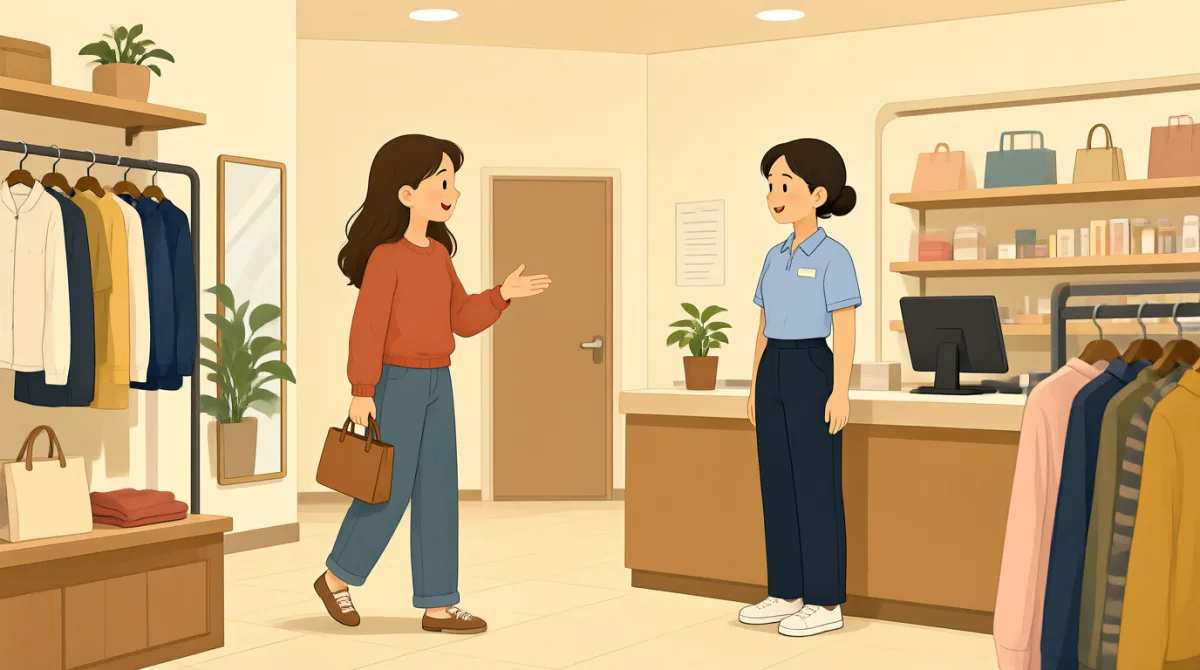
A customer is in a retail store and needs to find the restroom. They approach a store employee to ask for directions.
एक ग्राहक को दुकान में शौचालय ढूँढ़ना है। वह रास्ता पूछने के लिए दुकान के एक कर्मचारी के पास जाता है।
संवाद6

Excuse me, could you tell me where the restroom is?
माफ़ कीजिए, क्या आप मुझे बता सकते हैं कि शौचालय कहाँ है?

Certainly! The restrooms are located at the back of the store, past the fitting rooms.
ज़रूर! शौचालय दुकान के पीछे की ओर हैं, कपड़े बदलने के कमरों से आगे।
Okay, so past the fitting rooms. Is it on the left or right?
अच्छा, तो कपड़े बदलने के कमरों से आगे। वह बाईं तरफ़ है या दाईं तरफ़?
It's on your right, you'll see a sign. You can't miss it.
वह आपकी दाईं तरफ़ है। आपको एक संकेत-पट्ट दिखेगा। उसे ढूँढ़ना आसान है।
Great, thanks a lot for your help!
बहुत अच्छा, मदद के लिए आपका बहुत-बहुत धन्यवाद!
You're welcome! Let me know if you need anything else.
आपका स्वागत है! अगर आपको किसी और चीज़ की ज़रूरत हो, तो मुझे बताइएगा।
शब्दावली6
- restroomशौचालय
A polite word for bathroom or toilet, commonly used in public places like stores or restaurants in American English.
सार्वजनिक जगहों, जैसे दुकानों या रेस्तराँ, में बाथरूम या टॉयलेट के लिए इस्तेमाल होने वाला एक विनम्र शब्द। अमेरिकी अंग्रेज़ी में इसका आम इस्तेमाल होता है।
- excuse meमाफ़ कीजिए
A polite phrase to get someone's attention before asking a question, useful when approaching strangers.
किसी से सवाल पूछने से पहले उसका ध्यान आकर्षित करने का एक विनम्र तरीका। अनजान लोगों से बात शुरू करते समय यह काम आता है।
- certainlyज़रूर
Means 'of course' or 'sure', a polite way to agree to help or answer a question.
इसका मतलब है 'बिलकुल' या 'हाँ, अवश्य'। किसी की मदद करने या सवाल का जवाब देने के लिए विनम्रता से सहमति जताने का तरीका है।
- fitting roomsकपड़े बदलने के कमरे
Areas in clothing stores where customers can try on clothes privately before buying.
कपड़ों की दुकानों में बने वे कमरे जहाँ ग्राहक खरीदने से पहले निजी तौर पर कपड़े पहनकर देख सकते हैं।
- signसंकेत-पट्ट
A board or notice with words or symbols that gives directions or information, like 'Restroom' signs in public areas.
शब्दों या चिह्नों वाला एक बोर्ड या सूचना-पट्ट, जो रास्ता या जानकारी बताता है—जैसे सार्वजनिक जगहों पर शौचालय का संकेत-पट्ट।
- can't miss itढूँढ़ना आसान होना
An informal expression meaning something is very easy to find or notice, often used to reassure someone.
यह अनौपचारिक अभिव्यक्ति बताती है कि कोई चीज़ आसानी से मिल या दिखाई दे जाएगी। इसका इस्तेमाल अक्सर किसी को आश्वस्त करने के लिए किया जाता है।
मुख्य वाक्य6
- 1
Excuse me, could you tell me where the restroom is?
माफ़ कीजिए, क्या आप मुझे बता सकते हैं कि शौचालय कहाँ है?
This is a polite way to ask for directions using 'excuse me' for attention and 'could you tell me' for a request. It's useful in public places to sound courteous; the structure is question word + where + location.
यह रास्ता पूछने का एक विनम्र तरीका है। ध्यान आकर्षित करने के लिए 'Excuse me' और अनुरोध करने के लिए 'could you tell me' का इस्तेमाल होता है। सार्वजनिक जगहों पर शिष्टता से बात करने के लिए यह उपयोगी है। इसका ढाँचा है: प्रश्नवाचक शब्द + 'where' + जगह।
- 2
Certainly! The restrooms are located at the back of the store, past the fitting rooms.
ज़रूर! शौचालय दुकान के पीछे की ओर हैं, कपड़े बदलने के कमरों से आगे।
A helpful response to give directions, starting with 'certainly' to agree politely. 'Located at' means the position; 'past' means going beyond something. Useful for describing locations in stores.
रास्ता बताने का यह एक मददगार जवाब है, जो विनम्र सहमति जताने के लिए 'certainly' से शुरू होता है। 'located at' का मतलब है किसी जगह पर स्थित होना, और 'past' का मतलब है किसी चीज़ से आगे जाना। दुकानों में जगह बताने के लिए ये उपयोगी हैं।
- 3
Okay, so past the fitting rooms. Is it on the left or right?
अच्छा, तो कपड़े बदलने के कमरों से आगे। वह बाईं तरफ़ है या दाईं तरफ़?
This confirms understanding with 'okay, so' and asks for clarification using a yes/no question with 'or'. It's practical for getting more details in directions; practice the intonation for questions.
'Okay, so' से आप अपनी समझ की पुष्टि करते हैं, और 'or' वाले सवाल से बात स्पष्ट करते हैं। रास्ते के बारे में और जानकारी लेने के लिए यह व्यावहारिक तरीका है। सवाल पूछते समय आवाज़ के उतार-चढ़ाव का अभ्यास करें।
- 4
It's on your right, you'll see a sign. You can't miss it.
वह आपकी दाईं तरफ़ है। आपको एक संकेत-पट्ट दिखेगा। उसे ढूँढ़ना आसान है।
Clear direction-giving with prepositions like 'on your right' and future 'you'll see'. 'You can't miss it' reassures ease. Useful pattern for simple instructions; note the contraction 'you'll' for 'you will'.
'on your right' जैसे पूर्वसर्गों और भविष्यकाल के 'you'll see' का इस्तेमाल करके साफ़-साफ़ रास्ता बताया गया है। 'You can't miss it' कहकर आश्वस्त किया जाता है कि जगह आसानी से मिल जाएगी। आसान निर्देश देने के लिए यह उपयोगी ढाँचा है। ध्यान दें कि 'you'll', 'you will' का संक्षिप्त रूप है।
- 5
Great, thanks a lot for your help!
बहुत अच्छा, मदद के लिए आपका बहुत-बहुत धन्यवाद!
An enthusiastic way to say thank you after receiving help, with 'great' showing appreciation. 'Thanks a lot' emphasizes gratitude. Use this to end conversations politely in service situations.
मदद मिलने के बाद धन्यवाद कहने का यह उत्साहपूर्ण तरीका है। 'great' से आप अपनी खुशी और आभार जताते हैं, जबकि 'Thanks a lot' धन्यवाद पर ज़ोर देता है। सेवा-संबंधी बातचीत को विनम्रता से समाप्त करने के लिए इसका इस्तेमाल करें।
- 6
You're welcome! Let me know if you need anything else.
आपका स्वागत है! अगर आपको किसी और चीज़ की ज़रूरत हो, तो मुझे बताइएगा।
Standard polite reply to thanks, with 'you're welcome' meaning no problem. 'Let me know' offers more help using conditional 'if'. Common in customer service to keep the interaction friendly.
धन्यवाद के जवाब में दिया जाने वाला एक आम विनम्र उत्तर। 'you're welcome' का मतलब है कि कोई बात नहीं। 'Let me know' में शर्तसूचक 'if' का इस्तेमाल करके आगे मदद की पेशकश की जाती है। बातचीत को खुशनुमा बनाए रखने के लिए ग्राहक सेवा में यह आम है।