Asking in a Shopping Mall/Large Venue
शॉपिंग मॉल या बड़े परिसर में पूछना
Someone is in a large public space like a shopping mall, airport, or museum and needs directions to the restroom. They approach an information desk attendant or security guard.
कोई व्यक्ति शॉपिंग मॉल, हवाई अड्डे या संग्रहालय जैसी बड़ी सार्वजनिक जगह पर है और उसे शौचालय का रास्ता जानना है। वह जानकारी डेस्क के कर्मचारी या सुरक्षा गार्ड से पूछता है।
संवाद6
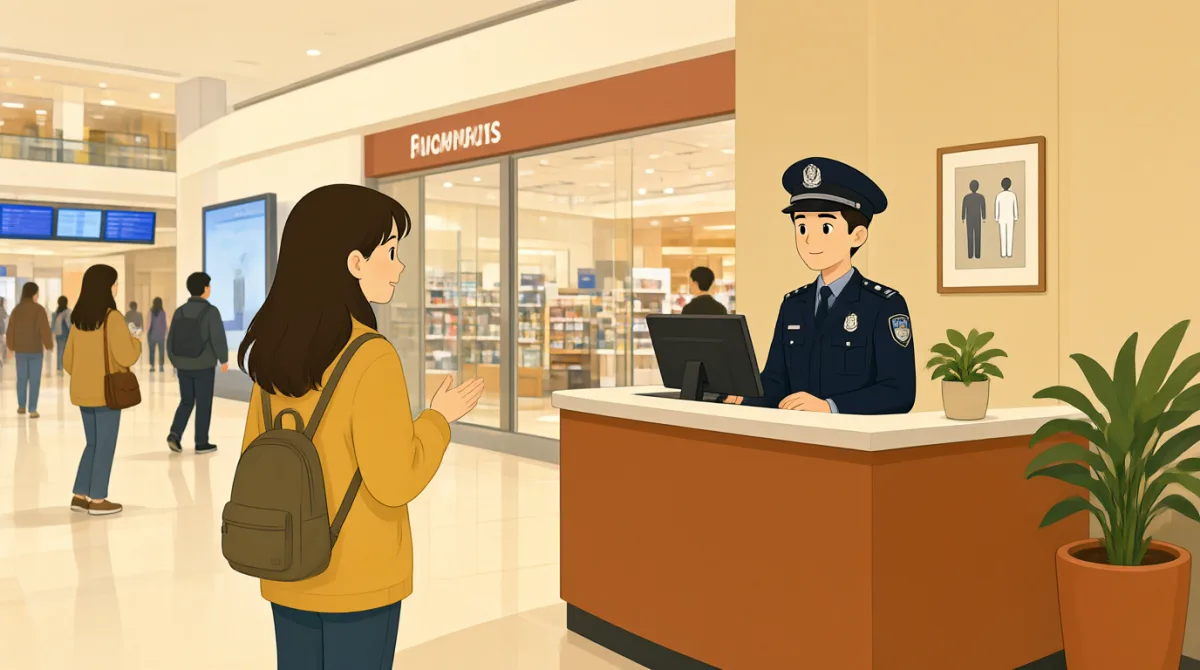

Excuse me, I'm a bit lost. Could you tell me where the restrooms are?
माफ़ कीजिए, मैं थोड़ा रास्ता भटक गई हूँ। क्या आप बता सकते हैं कि शौचालय कहाँ हैं?

Certainly! The closest restrooms are on this floor. Go straight down this main aisle, and you'll see them on your left, just past the food court.
ज़रूर! सबसे नज़दीकी शौचालय इसी मंज़िल पर हैं। इस मुख्य गलियारे में सीधे आगे जाइए। फ़ूड कोर्ट से थोड़ा आगे, आपको वे बाईं ओर दिख जाएँगे।
Straight down, past the food court, on my left. Got it. Thank you so much!
सीधे आगे, फ़ूड कोर्ट के बाद, मेरी बाईं ओर। समझ गई। आपका बहुत-बहुत धन्यवाद!
You're welcome! Is there anything else I can help you with today?
आपका स्वागत है! क्या आज मैं आपकी किसी और चीज़ में मदद कर सकता हूँ?
No, that's all for now. Thanks again!
नहीं, अभी के लिए बस इतना ही। फिर से धन्यवाद!
My pleasure. Have a great day!
मुझे खुशी हुई। आपका दिन अच्छा रहे!
शब्दावली7
- restroomsसार्वजनिक शौचालय
A polite word for bathrooms or toilets in public places, commonly used in American English instead of 'bathroom' or 'toilet'.
सार्वजनिक जगहों पर बाथरूम या शौचालय के लिए इस्तेमाल होने वाला एक विनम्र शब्द। अमेरिकी अंग्रेज़ी में इसका इस्तेमाल आम तौर पर 'bathroom' या 'toilet' की जगह किया जाता है।
- lostरास्ता भटका हुआ
Feeling confused about your location or direction; here, it means not knowing where to go in a building.
अपनी जगह या दिशा को लेकर उलझन में होना; यहाँ इसका मतलब है कि किसी इमारत में आपको पता नहीं है कि कहाँ जाना है।
- certainlyज़रूर
A polite way to say 'yes' or 'of course' when agreeing to help someone.
किसी की मदद करने के लिए सहमति जताते समय 'हाँ' या 'बिल्कुल' कहने का एक विनम्र तरीका।
- straightसीधे
Going directly forward without turning; used in directions like 'go straight ahead'.
बिना मुड़े आगे की ओर जाना; रास्ता बताते समय 'go straight ahead' जैसे वाक्यांशों में इसका इस्तेमाल होता है।
- aisleगलियारा
A walkway or passage between rows, like in a store or mall, where you walk to get from one place to another.
दुकान या मॉल में कतारों के बीच का रास्ता, जहाँ से आप एक जगह से दूसरी जगह जाते हैं।
- food courtफ़ूड कोर्ट
An area in a mall or venue with multiple food stalls or restaurants where people eat.
मॉल या बड़े परिसर का वह इलाका जहाँ खाने के कई स्टॉल या रेस्तराँ होते हैं और लोग खाना खाते हैं।
- my pleasureमुझे खुशी हुई
A polite response to 'thank you', meaning 'I'm happy to help' or 'you're welcome'.
'धन्यवाद' के जवाब में कहे जाने वाला विनम्र वाक्यांश, जिसका मतलब है 'मदद करके खुशी हुई' या 'आपका स्वागत है'।
मुख्य वाक्य6
- 1
Excuse me, I'm a bit lost. Could you tell me where the restrooms are?
माफ़ कीजिए, मैं थोड़ा रास्ता भटक गई हूँ। क्या आप बता सकते हैं कि शौचालय कहाँ हैं?
This is a polite way to start asking for directions. 'Excuse me' gets attention, 'I'm a bit lost' explains the situation softly, and 'Could you tell me...' is a polite request using 'could' for possibility. Useful for approaching strangers in public.
रास्ता पूछने की शुरुआत करने का यह एक विनम्र तरीका है। 'Excuse me' से आप सामने वाले का ध्यान खींचते हैं, 'I'm a bit lost' कहकर नरमी से अपनी परेशानी बताते हैं, और 'Could you tell me...' में 'could' का इस्तेमाल करके विनम्रता से पूछते हैं। सार्वजनिक जगहों पर अनजान लोगों से पूछने के लिए यह उपयोगी है।
- 2
Certainly! The closest restrooms are on this floor.
ज़रूर! सबसे नज़दीकी शौचालय इसी मंज़िल पर हैं।
A helpful response starting with 'Certainly!' to agree eagerly. 'Closest' means nearest, and 'on this floor' specifies location. This pattern is useful for giving simple directions in buildings.
'Certainly!' से शुरू होने वाला यह मददगार जवाब उत्सुकता से सहमति जताता है। 'Closest' का मतलब है सबसे नज़दीक, और 'on this floor' जगह बताता है। इमारत में सीधे-सादे निर्देश देने के लिए यह वाक्य-रचना काम आती है।
- 3
Go straight down this main aisle, and you'll see them on your left, just past the food court.
इस मुख्य गलियारे में सीधे आगे जाइए। फ़ूड कोर्ट से थोड़ा आगे, आपको वे बाईं ओर दिख जाएँगे।
This gives clear directions using action words like 'go straight' and prepositions like 'on your left' and 'past'. 'You'll see' predicts what happens next. Great for describing paths in large spaces; practice with landmarks like 'food court'.
यह 'go straight' जैसे काम बताने वाले शब्दों और 'on your left' तथा 'past' जैसे संबंधसूचक शब्दों से साफ़ निर्देश देता है। 'You'll see' बताता है कि आगे क्या दिखाई देगा। बड़ी जगहों में रास्ता बताने के लिए यह बहुत उपयोगी है; 'food court' जैसे पहचान के स्थानों का इस्तेमाल करके अभ्यास करें।
- 4
Straight down, past the food court, on my left. Got it. Thank you so much!
सीधे आगे, फ़ूड कोर्ट के बाद, मेरी बाईं ओर। समझ गई। आपका बहुत-बहुत धन्यवाद!
Repeating directions shows understanding ('Got it' means 'I understand'). 'Thank you so much' expresses strong gratitude. Useful to confirm info and end politely; repetition helps memory in conversations.
निर्देशों को दोहराने से पता चलता है कि आपने उन्हें समझ लिया है ('Got it' का मतलब है 'मैं समझ गई')। 'Thank you so much' से आप बहुत आभार जताते हैं। जानकारी की पुष्टि करके बातचीत को विनम्रता से खत्म करने का यह अच्छा तरीका है; दोहराने से बातें याद रखने में भी मदद मिलती है।
- 5
You're welcome! Is there anything else I can help you with today?
आपका स्वागत है! क्या आज मैं आपकी किसी और चीज़ में मदद कर सकता हूँ?
Standard polite reply to thanks ('You're welcome'), followed by an offer for more help using 'Is there anything else...' This shows good customer service; use it when assisting others to keep the conversation open.
'You're welcome' धन्यवाद का आम और विनम्र जवाब है। इसके बाद 'Is there anything else...' कहकर और मदद की पेशकश की जाती है। इससे अच्छी ग्राहक सेवा का भाव झलकता है; बातचीत को आगे बढ़ाने के लिए दूसरों की मदद करते समय इसका इस्तेमाल करें।
- 6
My pleasure. Have a great day!
मुझे खुशी हुई। आपका दिन अच्छा रहे!
A friendly way to end the interaction. 'My pleasure' means 'happy to help', and 'Have a great day' is a common positive goodbye. Useful in service situations to leave a good impression.
बातचीत खत्म करने का यह एक दोस्ताना तरीका है। 'My pleasure' का मतलब है 'मदद करके खुशी हुई', और 'Have a great day' विदा कहने का एक आम, सकारात्मक तरीका है। अच्छी छाप छोड़ने के लिए सेवा-संबंधी बातचीत में इसका इस्तेमाल करें।