Asking in a Restaurant/Cafe
रेस्तरां/कैफ़े में पूछना
A patron is dining or having coffee and needs to use the restroom. They ask a waiter/waitress or barista for the location.
एक ग्राहक खाना खा रहा है या कॉफ़ी पी रहा है और उसे शौचालय जाना है। वह वेटर, वेट्रेस या बरिस्ता से उसका रास्ता पूछता है।
संवाद4
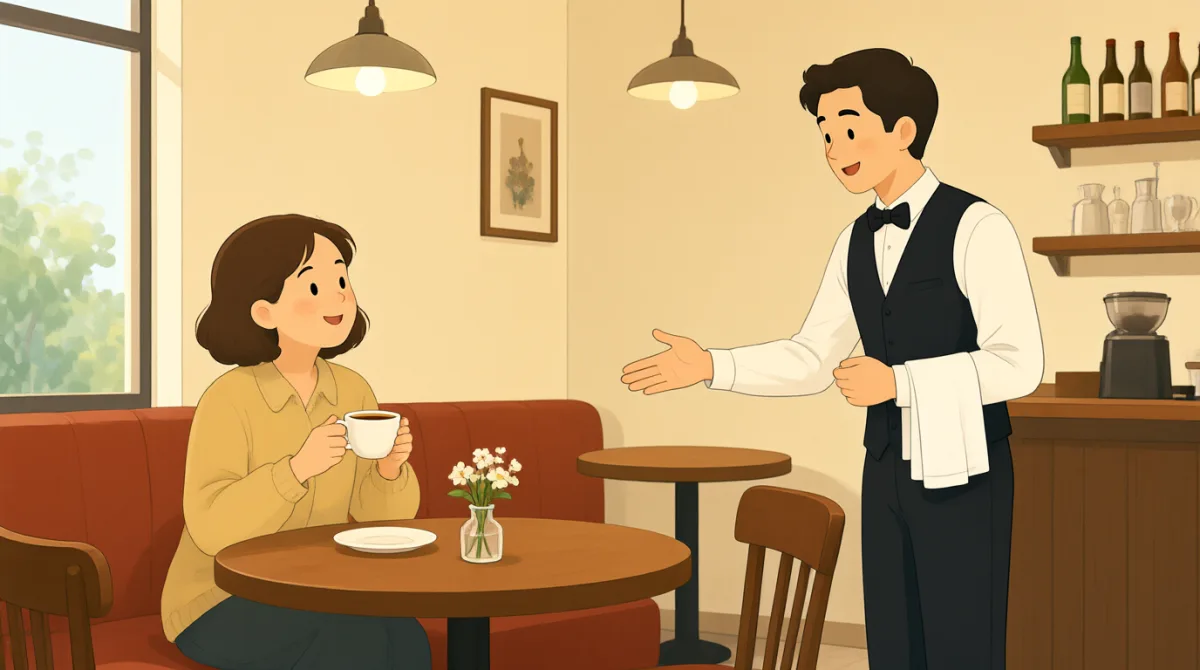

Excuse me, could you tell me where the restroom is?
माफ़ कीजिए, क्या आप मुझे बता सकते हैं कि शौचालय कहाँ है?

Certainly! The restroom is just past the counter, to your left. You'll see a sign.
ज़रूर! शौचालय काउंटर से थोड़ा आगे, आपकी बाईं ओर है। आपको एक संकेत दिख जाएगा।
Past the counter and to the left, got it. Thank you!
काउंटर से आगे और बाईं ओर, समझ गया। धन्यवाद!
You're welcome! Let me know if you need anything else.
कोई बात नहीं! अगर आपको किसी और चीज़ की ज़रूरत हो, तो मुझे बताइएगा।
शब्दावली6
- restroomशौचालय
A polite word for bathroom or toilet, commonly used in American English in public places like restaurants.
सार्वजनिक जगहों, जैसे रेस्तरां में, बाथरूम या टॉयलेट के लिए इस्तेमाल होने वाला एक विनम्र शब्द।
- counterकाउंटर
A long table or surface in a restaurant or cafe where customers order or pay, like the bar area.
रेस्तरां या कैफ़े में वह लंबी मेज़ या सतह जहाँ ग्राहक ऑर्डर देते या भुगतान करते हैं; जैसे बार वाला हिस्सा।
- pastसे आगे
Means beyond or after something in location, like going further than a point; here, it means 'beyond the counter'.
किसी जगह से आगे या उसके पार। यहाँ इसका मतलब है ‘काउंटर के पार’।
- leftबायाँ
The direction on your left side when facing forward; used to give directions clearly.
सामने की ओर देखते समय आपके बाएँ हाथ की दिशा। रास्ता बताने के लिए इसका इस्तेमाल किया जाता है।
- signसंकेत
A notice or symbol that shows information, like a restroom sign with a picture of a person.
ऐसी सूचना या निशानी जो कुछ बताती है, जैसे किसी व्यक्ति की तस्वीर वाला शौचालय का संकेत।
- certainlyज़रूर
A polite way to say 'yes' or 'of course' when agreeing to help someone.
किसी की मदद करने के लिए सहमति देते समय ‘हाँ’ या ‘बिल्कुल’ कहने का विनम्र तरीका।
मुख्य वाक्य4
- 1
Excuse me, could you tell me where the restroom is?
माफ़ कीजिए, क्या आप मुझे बता सकते हैं कि शौचालय कहाँ है?
This is a polite way to ask for directions or information. 'Excuse me' gets attention, and 'could you tell me' is a polite request using 'could' for possibility. Useful when interrupting someone nicely in public.
दिशा या जानकारी पूछने का यह एक विनम्र तरीका है। 'Excuse me' (माफ़ कीजिए) से आप सामने वाले का ध्यान खींचते हैं और 'could you tell me' (क्या आप मुझे बता सकते हैं) में 'could' का इस्तेमाल करके विनम्रता से अनुरोध करते हैं। सार्वजनिक जगह पर किसी को शिष्टता से बीच में रोकते समय यह वाक्य काम आता है।
- 2
Certainly! The restroom is just past the counter, to your left. You'll see a sign.
ज़रूर! शौचालय काउंटर से थोड़ा आगे, आपकी बाईं ओर है। आपको एक संकेत दिख जाएगा।
A helpful response giving directions. 'Certainly' means 'yes, happily.' 'Just past' means a short distance beyond, and 'to your left' specifies direction. 'You'll see' predicts what the listener will notice. Great for service workers to use clearly.
यह रास्ता बताने वाला एक मददगार जवाब है। 'Certainly' का मतलब है ‘हाँ, खुशी से’। 'Just past' का मतलब है थोड़ी ही दूरी आगे, और 'to your left' दिशा बताता है। 'You'll see' से अनुमान जताया जाता है कि सामने वाले को क्या दिखाई देगा। सेवा-कर्मियों के लिए रास्ता साफ़-साफ़ बताने का यह अच्छा तरीका है।
- 3
Past the counter and to the left, got it. Thank you!
काउंटर से आगे और बाईं ओर, समझ गया। धन्यवाद!
This repeats directions to confirm understanding. 'Got it' is informal for 'I understand.' 'Thank you' shows gratitude. Useful for learners to repeat back and thank, making conversations smoother.
इसमें बात समझ आने की पुष्टि के लिए रास्ता दोहराया जाता है। 'Got it' अनौपचारिक ढंग से ‘मैं समझ गया’ कहने का तरीका है। 'Thank you' आभार जताता है। बात दोहराकर धन्यवाद देने से बातचीत सहज होती है।
- 4
You're welcome! Let me know if you need anything else.
कोई बात नहीं! अगर आपको किसी और चीज़ की ज़रूरत हो, तो मुझे बताइएगा।
A standard polite reply to 'thank you.' 'You're welcome' means 'no problem.' 'Let me know' invites more questions using the imperative 'let' for permission. Essential in customer service to offer more help.
'Thank you' के जवाब में यह एक आम विनम्र प्रतिक्रिया है। 'You're welcome' का मतलब है ‘कोई बात नहीं’। 'Let me know' में 'let' के साथ आज्ञार्थक रूप इस्तेमाल करके सामने वाले को और सवाल पूछने या मदद माँगने के लिए आमंत्रित किया जाता है। ग्राहक-सेवा में आगे मदद की पेशकश करने के लिए यह बहुत उपयोगी है।