Brief Farewells Upon Exiting
उतरते समय संक्षिप्त विदाई
As one or both individuals exit the elevator, they exchange quick, polite farewells like 'Have a good one!' or 'See you around!'
लिफ्ट से उतरते समय एक या दोनों लोग जल्दी से शिष्टतापूर्वक विदा लेते हैं, जैसे 'Have a good one!' या 'See you around!'।
संवाद5
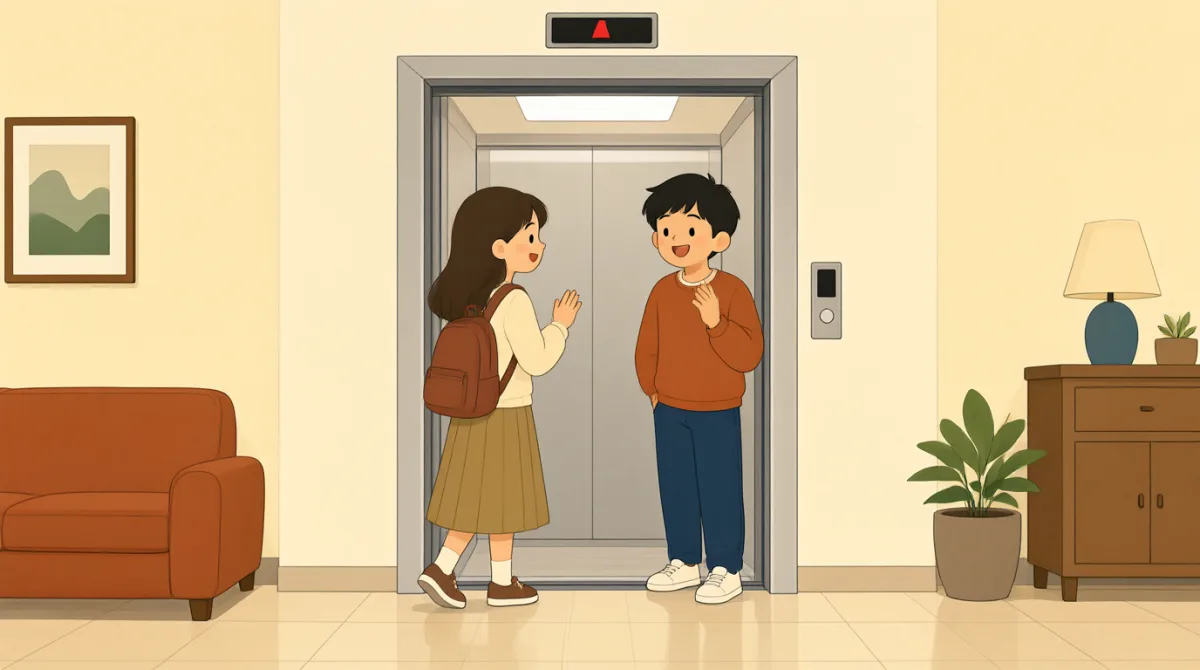

Going down, right?
नीचे जा रहे हैं, है ना?

Yes, please. Thanks!
जी, कृपया। धन्यवाद!
No problem.
कोई बात नहीं।
Oh, this is my floor. Have a good one!
ओह, मेरी मंज़िल आ गई। आपका दिन अच्छा रहे!
You too! See you around!
आपका भी! फिर कभी मिलते हैं!
शब्दावली7
- downनीचे
In this context, 'down' means going to a lower floor in a building, like in an elevator. It's a common direction word used in everyday situations.
इस संदर्भ में, 'down' का मतलब है इमारत की किसी निचली मंज़िल पर जाना, जैसे लिफ्ट से। रोज़मर्रा की बातचीत में दिशा बताने के लिए यह शब्द आम तौर पर इस्तेमाल होता है।
- right?है ना?
This is a tag question added to the end of a sentence to check if something is correct. It makes the speaker sound polite and seeking confirmation, like '对吧?' in Chinese.
'right?' वाक्य के अंत में लगने वाला प्रश्नांश है, जिसका इस्तेमाल यह पुष्टि करने के लिए होता है कि कोई बात सही है या नहीं। इससे बोलने वाला विनम्रता से पुष्टि माँगता है।
- pleaseकृपया
Used to make a request more polite. For example, 'Yes, please' means agreeing to something kindly. It's a basic politeness word in English conversations.
किसी अनुरोध को अधिक विनम्र बनाने के लिए इसका इस्तेमाल होता है। उदाहरण के लिए, 'Yes, please' का मतलब है विनम्रता से किसी बात के लिए हाँ कहना। अंग्रेज़ी बातचीत में यह शिष्टाचार जताने वाला बुनियादी शब्द है।
- no problemकोई बात नहीं
A casual way to say 'you're welcome' or 'it's okay' after someone thanks you. It's very common in informal English to respond to thanks.
किसी के धन्यवाद कहने पर 'you're welcome' या 'it's okay' कहने का यह एक अनौपचारिक तरीका है। धन्यवाद के जवाब में अंग्रेज़ी की आम बातचीत में इसका बहुत इस्तेमाल होता है।
- floorमंज़िल
Refers to a level in a building, like the first floor or fifth floor. In elevators, people say 'my floor' to mean the level they need to get off at.
इसका मतलब इमारत का कोई तल या मंज़िल है, जैसे पहली या पाँचवीं मंज़िल। लिफ्ट में लोग 'my floor' कहकर उस मंज़िल की बात करते हैं जहाँ उन्हें उतरना है।
- have a good oneआपका दिन अच्छा रहे
A friendly, informal farewell meaning 'have a good day' or 'enjoy the rest of your time.' It's short and used in quick goodbyes with strangers.
'have a good one' दोस्ताना और अनौपचारिक विदाई है। इसका मतलब है 'आपका दिन अच्छा रहे' या 'बाकी समय अच्छा बिताइए'। अजनबियों से जल्दी विदा लेते समय यह छोटा-सा वाक्यांश इस्तेमाल होता है।
- see you aroundफिर कभी मिलते हैं
An casual way to say goodbye, implying you might meet again by chance. It's common in informal settings like with neighbors, not for close friends.
'see you around' विदा कहने का अनौपचारिक तरीका है और इसका संकेत है कि शायद आप फिर कभी संयोग से मिलें। पड़ोसियों जैसे परिचित लोगों के साथ अनौपचारिक माहौल में यह आम है; करीबी दोस्तों के लिए नहीं।
मुख्य वाक्य5
- 1
Going down, right?
नीचे जा रहे हैं, है ना?
This is a polite question to confirm direction in an elevator. It uses a statement plus 'right?' as a tag question for confirmation. Useful for starting small talk with strangers in shared spaces.
लिफ्ट में दिशा की पुष्टि करने के लिए यह एक विनम्र सवाल है। इसमें एक कथन के बाद पुष्टि माँगने के लिए 'right?' लगाया गया है। साझा जगहों पर अजनबियों से हल्की-फुल्की बातचीत शुरू करने के लिए यह उपयोगी है।
- 2
Yes, please. Thanks!
जी, कृपया। धन्यवाद!
A simple, polite response to a question or offer. 'Please' adds courtesy, and 'Thanks!' shows gratitude. It's a common pattern for agreeing and thanking quickly in daily interactions.
किसी सवाल या पेशकश का यह एक सरल और विनम्र जवाब है। 'Please' शिष्टता जोड़ता है और 'Thanks!' आभार जताता है। रोज़मर्रा की बातचीत में सहमति देने और जल्दी से धन्यवाद कहने के लिए यह आम तरीका है।
- 3
No problem.
कोई बात नहीं।
This is a casual reply to 'thank you,' meaning it's not a bother. It's very useful in informal English to acknowledge thanks without formality. No complex grammar, just idiomatic usage.
'thank you' के जवाब में यह अनौपचारिक प्रतिक्रिया है, जिसका मतलब है कि आपको कोई परेशानी नहीं हुई। बिना औपचारिकता के धन्यवाद स्वीकार करने के लिए यह अंग्रेज़ी में बहुत उपयोगी है। इसमें कोई जटिल व्याकरण नहीं है; यह एक मुहावरेदार प्रयोग है।
- 4
Oh, this is my floor. Have a good one!
ओह, मेरी मंज़िल आ गई। आपका दिन अच्छा रहे!
Announces arriving at your stop and says goodbye. 'Oh' shows mild surprise, and 'Have a good one' is a friendly idiom for 'have a nice day.' Perfect for brief farewells when leaving a conversation.
इससे आप बताते हैं कि आप अपनी मंज़िल पर पहुँच गए हैं और फिर विदा कहते हैं। 'Oh' हल्का-सा आश्चर्य जताता है, जबकि 'Have a good one' दिन अच्छा बिताने की दोस्ताना शुभकामना है। बातचीत से विदा लेते समय यह संक्षिप्त शुभकामना बहुत काम आती है।
- 5
You too! See you around!
आपका भी! फिर कभी मिलते हैं!
Returns a wish like 'have a good one' with 'You too!' and adds a casual goodbye. It's reciprocal and informal, ideal for ending short talks with acquaintances. Shows how to mirror politeness.
'You too!' कहकर आप 'have a good one' जैसी शुभकामना का जवाब देते हैं और फिर अनौपचारिक ढंग से विदा लेते हैं। यह जवाबी और अनौपचारिक तरीका परिचित लोगों के साथ छोटी बातचीत खत्म करने के लिए बढ़िया है। इससे आप सामने वाले की विनम्रता का उसी तरह जवाब देते हैं।