Asking a Pedestrian Outdoors
राह चलते व्यक्ति से रास्ता पूछना
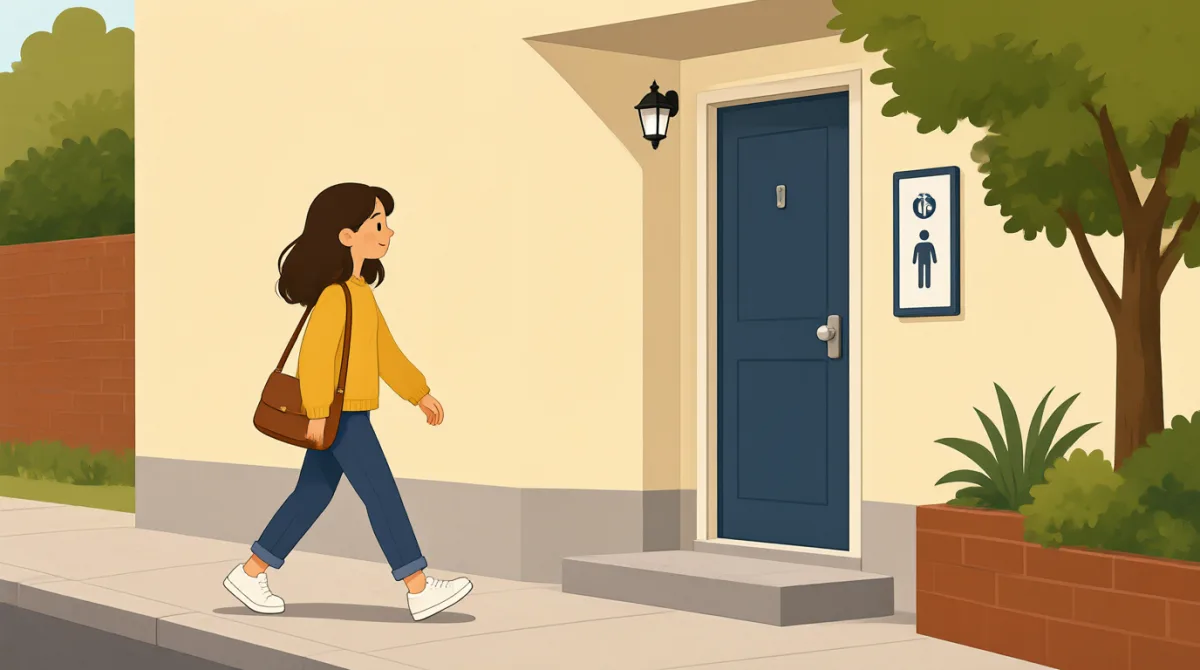
A person is walking outdoors in an unfamiliar area and needs to find a public restroom. They ask a local pedestrian for help.
एक व्यक्ति किसी अनजान इलाके में बाहर टहल रहा है और उसे सार्वजनिक शौचालय ढूँढ़ना है। वह मदद के लिए वहाँ से गुजर रहे एक स्थानीय व्यक्ति से पूछता है।
संवाद6

Excuse me, I'm a bit lost and really need to find a restroom. Do you know if there's one nearby?
माफ़ कीजिए, मैं थोड़ा रास्ता भटक गई हूँ और मुझे सचमुच शौचालय ढूँढ़ना है। क्या आपको पता है कि यहाँ पास में कोई है?

Sure, no problem. The closest public restroom is in the park, just a couple of blocks down that way.
ज़रूर, कोई बात नहीं। सबसे नज़दीकी सार्वजनिक शौचालय पार्क में है, उस तरफ़ बस दो-एक ब्लॉक आगे।
In the park? Okay. Is it easy to spot, or is it tucked away somewhere?
पार्क में? अच्छा। क्या वह आसानी से दिख जाएगा, या कहीं छिपा हुआ है?
It's pretty easy. Once you get to the park entrance, you'll see a small building to your left. That's it.
उसे ढूँढ़ना काफ़ी आसान है। पार्क के प्रवेश द्वार पर पहुँचते ही आपको अपनी बाईं ओर एक छोटी-सी इमारत दिखेगी। वही है।
Got it. So, just straight down this street, and then look for the park entrance. Perfect. Thank you so much!
समझ गई। तो बस इस सड़क पर सीधे आगे जाना है, फिर पार्क का प्रवेश द्वार देखना है। बढ़िया। आपका बहुत-बहुत धन्यवाद!
You're welcome! Hope you find it quickly.
कोई बात नहीं! उम्मीद है, आपको वह जल्दी मिल जाएगा।
शब्दावली7
- Excuse meमाफ़ कीजिए
A polite way to get someone's attention when you need to ask a question, like starting a conversation with a stranger.
किसी से सवाल पूछने के लिए उसका ध्यान खींचने का यह एक विनम्र तरीका है। किसी अनजान व्यक्ति से बातचीत शुरू करते समय इसका इस्तेमाल कर सकते हैं।
- lostरास्ता भटका हुआ
Means you don't know where you are or how to get to a place; useful when asking for directions in new areas.
इसका मतलब है कि आपको पता नहीं है कि आप कहाँ हैं या किसी जगह तक कैसे पहुँचना है। नए इलाके में रास्ता पूछते समय यह काम आता है।
- restroomशौचालय
Another word for bathroom or toilet, especially in American English; polite term used in public places.
इसका अर्थ है बाथरूम या टॉयलेट। अमेरिकी अंग्रेज़ी में यह इसका एक और शब्द है और सार्वजनिक जगहों पर इस्तेमाल होने वाला विनम्र शब्द है।
- nearbyपास में
Means close by or not far away; helps when asking about locations that are convenient.
इसका मतलब है नज़दीक या बहुत दूर नहीं। सुविधाजनक जगहों के बारे में पूछते समय यह शब्द काम आता है।
- public restroomसार्वजनिक शौचालय
A bathroom available for anyone to use, like in parks or malls; important for travelers in public spaces.
ऐसा शौचालय जिसे कोई भी इस्तेमाल कर सकता है, जैसे पार्क या मॉल में। सार्वजनिक जगहों पर घूमने वाले लोगों के लिए यह शब्द उपयोगी है।
- tucked awayछिपा हुआ
Means hidden or not easily seen; describes something in a quiet or less obvious spot.
इसका मतलब है कि कोई चीज़ छिपी हुई है या आसानी से दिखाई नहीं देती। यह किसी शांत या कम नज़र आने वाली जगह पर रखी चीज़ का वर्णन करता है।
- entranceप्रवेश द्वार
The door or gate where you enter a place, like a park; key for giving or following directions.
वह दरवाज़ा या फाटक जहाँ से किसी जगह में प्रवेश करते हैं, जैसे किसी पार्क में। रास्ता बताने या समझने में यह शब्द काम आता है।
मुख्य वाक्य6
- 1
Excuse me, I'm a bit lost and really need to find a restroom. Do you know if there's one nearby?
माफ़ कीजिए, मैं थोड़ा रास्ता भटक गई हूँ और मुझे सचमुच शौचालय ढूँढ़ना है। क्या आपको पता है कि यहाँ पास में कोई है?
This is a polite way to ask for directions. 'Excuse me' gets attention, 'a bit lost' softens the request, and the question uses 'Do you know if...' for indirect politeness. Useful for starting conversations when needing help urgently.
रास्ता पूछने का यह एक विनम्र तरीका है। 'Excuse me' से आप सामने वाले का ध्यान खींचते हैं, 'a bit lost' कहने से अनुरोध थोड़ा नरम लगता है, और 'Do you know if...' वाला सवाल अप्रत्यक्ष और विनम्र है। तुरंत मदद की ज़रूरत होने पर बातचीत शुरू करने के लिए यह उपयोगी है।
- 2
Sure, no problem. The closest public restroom is in the park, just a couple of blocks down that way.
ज़रूर, कोई बात नहीं। सबसे नज़दीकी सार्वजनिक शौचालय पार्क में है, उस तरफ़ बस दो-एक ब्लॉक आगे।
A helpful response to a direction request. 'Sure, no problem' shows willingness, and 'just a couple of blocks down that way' gives simple directions using distance and direction. Great for everyday navigation talks.
रास्ता पूछने पर यह एक मददगार जवाब है। 'Sure, no problem' से आप मदद करने की इच्छा जताते हैं, जबकि 'just a couple of blocks down that way' दूरी और दिशा बताकर सरल रास्ता समझाता है। रोज़मर्रा में रास्ता बताने के लिए यह अच्छा वाक्य है।
- 3
In the park? Okay. Is it easy to spot, or is it tucked away somewhere?
पार्क में? अच्छा। क्या वह आसानी से दिख जाएगा, या कहीं छिपा हुआ है?
This confirms information and asks for more details. 'Okay' acknowledges, and the question contrasts 'easy to spot' vs. 'tucked away' using 'or' for alternatives. Useful to clarify locations and avoid confusion.
इस वाक्य से आप मिली हुई जानकारी की पुष्टि करते हैं और कुछ और जानना चाहते हैं। 'Okay' से आप बात को स्वीकार करते हैं, और सवाल में 'or' का इस्तेमाल करके 'easy to spot' और 'tucked away' के बीच विकल्प रखा गया है। जगह की जानकारी स्पष्ट करने और भ्रम से बचने के लिए यह उपयोगी है।
- 4
It's pretty easy. Once you get to the park entrance, you'll see a small building to your left. That's it.
उसे ढूँढ़ना काफ़ी आसान है। पार्क के प्रवेश द्वार पर पहुँचते ही आपको अपनी बाईं ओर एक छोटी-सी इमारत दिखेगी। वही है।
Provides clear instructions. 'Once you get to...' uses a time clause for sequence, and 'to your left' specifies position. 'That's it' means that's the place. Ideal for giving step-by-step directions.
इसमें रास्ता साफ़-साफ़ बताया गया है। 'Once you get to...' का इस्तेमाल यह बताने के लिए होता है कि एक काम के बाद क्या होगा, जबकि 'to your left' जगह की दिशा बताता है। 'That's it' का मतलब है कि वही जगह है। एक-एक कदम करके रास्ता बताने के लिए यह ढाँचा बहुत अच्छा है।
- 5
Got it. So, just straight down this street, and then look for the park entrance. Perfect. Thank you so much!
समझ गई। तो बस इस सड़क पर सीधे आगे जाना है, फिर पार्क का प्रवेश द्वार देखना है। बढ़िया। आपका बहुत-बहुत धन्यवाद!
Shows understanding and repeats for confirmation. 'Got it' means I understand, 'just straight down' simplifies directions with 'and then' for steps. Ends with thanks. Helpful for confirming and expressing gratitude.
इससे पता चलता है कि आपको बात समझ आ गई है और आप पुष्टि के लिए निर्देश दोहरा रहे हैं। 'Got it' का मतलब है कि आप समझ गए, जबकि 'just straight down' रास्ते को आसान बनाता है और 'and then' अगले कदम को बताता है। अंत में धन्यवाद दिया गया है। बात पक्की करने और आभार जताने के लिए यह उपयोगी है।
- 6
You're welcome! Hope you find it quickly.
कोई बात नहीं! उम्मीद है, आपको वह जल्दी मिल जाएगा।
A standard polite reply to thanks. 'You're welcome' responds to gratitude, and 'Hope you...' expresses a wish. Use this to end helpful conversations positively.
धन्यवाद के जवाब में यह एक आम और विनम्र वाक्य है। 'You're welcome' आभार का जवाब है, और 'Hope you...' से आप अपनी शुभकामना जताते हैं। मददगार बातचीत को अच्छे ढंग से खत्म करने के लिए इसका इस्तेमाल करें।