Interpreting Directions Given
दिशा-निर्देश समझना
After asking for the restroom location, the person receives verbal directions and needs to understand them, potentially asking for clarification.
शौचालय का रास्ता पूछने के बाद व्यक्ति मौखिक दिशा-निर्देश सुनता है और उन्हें समझने की कोशिश करता है। ज़रूरत पड़ने पर वह स्पष्टीकरण भी माँग सकता है।
संवाद6
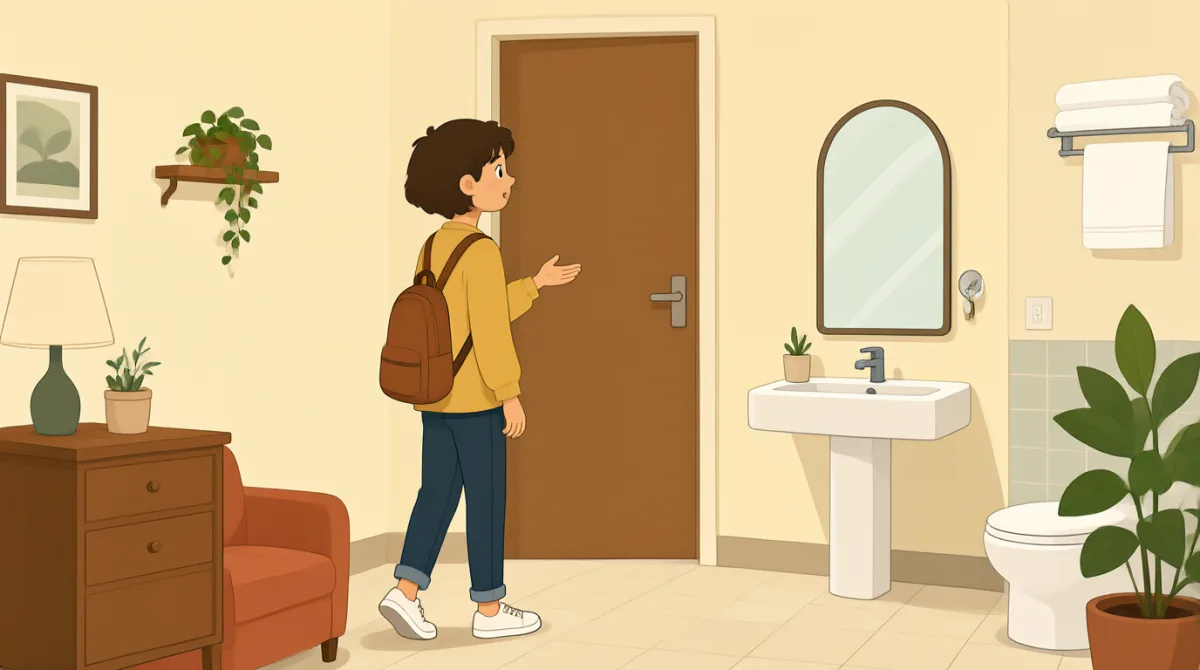

Excuse me, I'm looking for the restroom. Could you tell me where it is?
माफ़ कीजिए, मुझे शौचालय ढूँढ़ना है। क्या आप बता सकते हैं कि वह कहाँ है?

Certainly! Go straight down this hallway, past the reception desk, and then make a left. It'll be on your right.
ज़रूर! इस गलियारे में सीधे जाइए, स्वागत कक्ष से आगे निकलकर बाएँ मुड़िए। वह आपकी दाईं ओर होगा।
Okay, so straight down the hallway, past the reception, and then a left... Got it. Is it far?
ठीक है, तो गलियारे में सीधे, स्वागत कक्ष से आगे और फिर बाएँ... समझ गया। क्या वह दूर है?
Not at all, it's just a short walk, maybe thirty seconds or so from here. You can't miss it.
बिल्कुल नहीं, बस थोड़ी-सी दूर है। यहाँ से शायद तीस सेकंड या इतने में पहुँच जाएँगे। आपको आसानी से दिख जाएगा।
Great, thank you so much for the clear directions!
बहुत बढ़िया, साफ़-साफ़ रास्ता बताने के लिए आपका बहुत-बहुत धन्यवाद!
You're welcome! Have a good day.
कोई बात नहीं! आपका दिन अच्छा रहे।
शब्दावली7
- restroomशौचालय
A polite word for a bathroom or toilet, commonly used in public places like hotels or offices in American English.
सार्वजनिक जगहों, जैसे होटल या दफ़्तर, में शौचालय के लिए इस्तेमाल होने वाला एक विनम्र शब्द। अमेरिकी अंग्रेज़ी में इसका आम इस्तेमाल होता है।
- hallwayगलियारा
A long passage or corridor inside a building that connects different rooms or areas.
इमारत के अंदर का लंबा रास्ता, जो अलग-अलग कमरों या जगहों को जोड़ता है।
- reception deskस्वागत कक्ष का काउंटर
The front counter in a hotel, office, or building where visitors check in or get information.
होटल, दफ़्तर या इमारत का सामने वाला काउंटर, जहाँ आगंतुक अपना नाम दर्ज कराते हैं या जानकारी लेते हैं।
- make a leftबाएँ मुड़ना
To turn left when walking or driving; a common phrase in giving directions.
चलते या गाड़ी चलाते समय बाईं ओर मुड़ना। दिशा बताने में यह आम तौर पर इस्तेमाल होने वाला वाक्यांश है।
- on your rightआपकी दाईं ओर
Located to the right side from your perspective; used to describe the position of something.
आपकी नज़र से दाहिनी तरफ़ मौजूद। किसी चीज़ की जगह बताने के लिए इस्तेमाल होता है।
- got itसमझ गया
An informal way to say 'I understand' or 'Okay, clear'; useful in conversations to confirm comprehension.
'मुझे समझ आ गया' या 'ठीक है, बात साफ़ है' कहने का अनौपचारिक तरीका। बातचीत में यह बताने के लिए उपयोगी है कि आपने बात समझ ली है।
- can't miss itआपको आसानी से दिख जाएगा
Means it's very easy to find and you won't overlook it; reassures the listener when giving directions.
इसका मतलब है कि जगह आसानी से मिल जाएगी और आपकी नज़र से नहीं छूटेगी। दिशा बताते समय इससे सामने वाले को भरोसा मिलता है।
मुख्य वाक्य6
- 1
Excuse me, I'm looking for the restroom. Could you tell me where it is?
माफ़ कीजिए, मुझे शौचालय ढूँढ़ना है। क्या आप बता सकते हैं कि वह कहाँ है?
This is a polite way to ask for directions to the bathroom. Use 'Excuse me' to get attention politely, and 'Could you tell me' makes the request courteous. Great for starting conversations in public places.
शौचालय का रास्ता पूछने का यह एक विनम्र तरीका है। किसी का ध्यान विनम्रता से खींचने के लिए 'Excuse me' (माफ़ कीजिए) और अनुरोध को शिष्ट बनाने के लिए 'Could you tell me' (क्या आप मुझे बता सकते हैं) कहें। सार्वजनिक जगहों पर बातचीत शुरू करने के लिए यह अच्छा वाक्य है।
- 2
Go straight down this hallway, past the reception desk, and then make a left.
इस गलियारे में सीधे जाइए, स्वागत कक्ष से आगे निकलकर बाएँ मुड़िए।
A common pattern for giving directions: use action verbs like 'go straight,' 'past,' and 'make a left' to describe steps clearly. Useful when helping someone navigate a building.
रास्ता बताने का यह एक आम ढाँचा है। कदम साफ़-साफ़ बताने के लिए 'go straight,' 'past,' और 'make a left' जैसे क्रिया-वाक्यांश इस्तेमाल करें। किसी को इमारत के भीतर रास्ता बताने में यह उपयोगी है।
- 3
Okay, so straight down the hallway, past the reception, and then a left... Got it.
ठीक है, तो गलियारे में सीधे, स्वागत कक्ष से आगे और फिर बाएँ... समझ गया।
This repeats the directions to confirm understanding, using 'so' to summarize. 'Got it' is informal confirmation. Practice this to show active listening and avoid mistakes.
यह बात समझने की पुष्टि करने के लिए दिशा-निर्देश दोहराता है। यहाँ 'so' का इस्तेमाल बात का सार बताने के लिए किया गया है। 'Got it' अनौपचारिक रूप से यह बताता है कि आपको बात समझ आ गई है। ध्यान से सुनने और गलती से बचने के लिए इसका अभ्यास करें।
- 4
Is it far?
क्या वह दूर है?
A simple question to ask about distance after getting directions. 'Far' means a long way; use this in travel or public situations to plan your time.
दिशा-निर्देश मिलने के बाद दूरी पूछने का यह एक आसान सवाल है। 'Far' का मतलब है दूर। यात्रा करते समय या सार्वजनिक जगहों पर समय का अंदाज़ा लगाने के लिए यह सवाल पूछें।
- 5
Not at all, it's just a short walk, maybe thirty seconds or so from here.
बिल्कुल नहीं, बस थोड़ी-सी दूर है। यहाँ से शायद तीस सेकंड या इतने में पहुँच जाएँगे।
Responds to a distance question politely with 'Not at all' (meaning no, it's not far). 'Or so' softens estimates. Helpful for reassuring someone when giving info.
दूरी के सवाल का विनम्र जवाब देने के लिए 'Not at all' कहा जाता है, जिसका मतलब है कि वह दूर नहीं है। 'Or so' अंदाज़े को थोड़ा नरम बनाता है। किसी को जानकारी देते समय उसे आश्वस्त करने के लिए यह उपयोगी है।
- 6
Great, thank you so much for the clear directions!
बहुत बढ़िया, साफ़-साफ़ रास्ता बताने के लिए आपका बहुत-बहुत धन्यवाद!
Expresses thanks after receiving help, using 'so much' for emphasis and 'clear' to compliment. Use this to end interactions politely and build positive rapport.
मदद मिलने के बाद धन्यवाद देने का यह एक तरीका है। 'So much' ज़ोर देने के लिए और 'clear' तारीफ़ करने के लिए इस्तेमाल होता है। बातचीत को विनम्रता से समाप्त करने और अच्छा संबंध बनाने के लिए यह कहें।