Dealing with a Large Spill
बड़ी मात्रा में गिरा हुआ पेय साफ़ करना
A large amount of coffee is spilled on the floor, posing a slip hazard. You need to quickly alert staff and perhaps help cordon off the area.
फर्श पर बहुत सारी कॉफ़ी गिर गई है, जिससे फिसलने का खतरा है। आपको तुरंत कर्मचारियों को बताना होगा और शायद लोगों को उस जगह से दूर रखने में मदद करनी होगी।
संवाद7
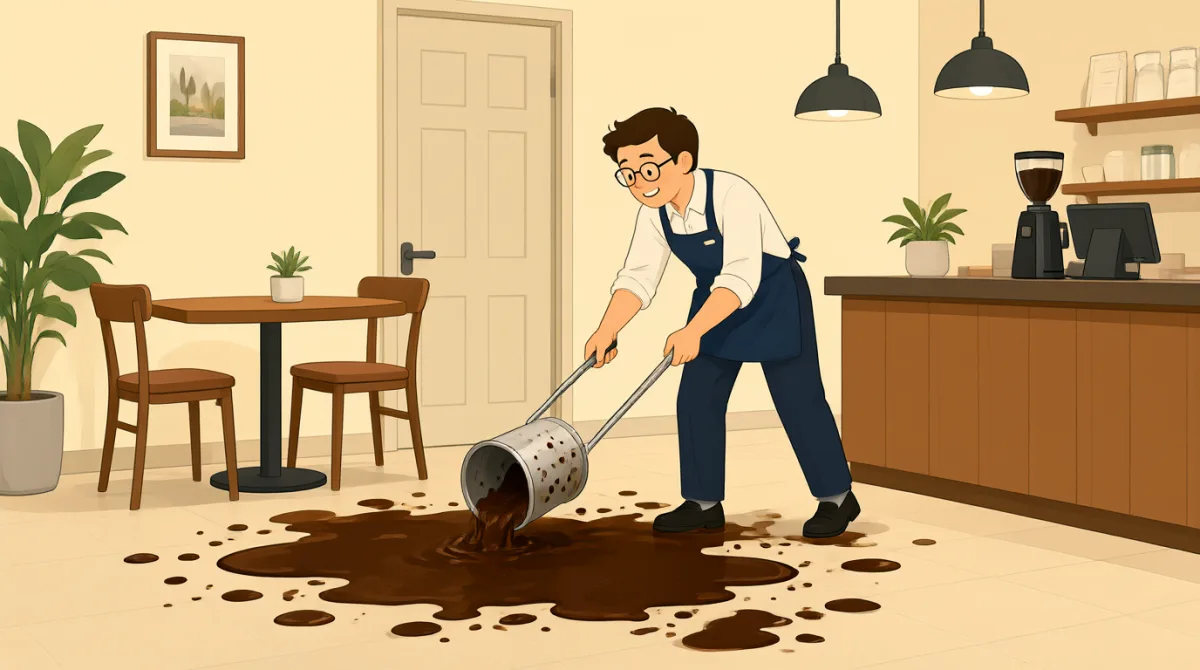

Oh no! I've spilled my whole coffee. It's everywhere!
अरे नहीं! मेरी सारी कॉफ़ी गिर गई। हर जगह फैल गई है!

Whoa, that's a big one. Are you okay, Emma?
अरे वाह, काफ़ी ज़्यादा गिर गई। एमा, तुम ठीक हो?
Yeah, I'm fine, just a bit startled. But this is a huge mess, and it's really slippery.
हाँ, मैं ठीक हूँ, बस थोड़ा चौंक गई। लेकिन यहाँ बहुत गंदगी हो गई है और फर्श सचमुच फिसलन भरा है।
You're right. We should probably get someone from staff to help clean this up immediately. It's a slip hazard.
तुम सही कह रही हो। हमें शायद तुरंत कर्मचारियों में से किसी को बुलाकर इसे साफ़ करवाना चाहिए। यहाँ फिसलने का खतरा है।
I’ll go find someone. Can you stand here for a moment and maybe guard it so no one slips?
मैं किसी को ढूँढ़कर लाती हूँ। क्या तुम एक पल यहाँ खड़े होकर इस जगह पर नज़र रख सकते हो, ताकि कोई फिसले नहीं?
No problem. I'll make sure no one walks into it. Hurry back!
कोई बात नहीं। मैं ध्यान रखूँगा कि कोई इसमें न फिसले। जल्दी लौटना!
Will do! Thanks for your help, David.
ज़रूर! मदद के लिए शुक्रिया, डेविड।
शब्दावली8
- spilledगिरा दिया
Past tense of 'spill', meaning to accidentally pour liquid out of a container, like coffee on the floor. Use it when describing an accident with drinks.
'Spill' का भूतकाल है। इसका मतलब है किसी बर्तन से गलती से तरल पदार्थ गिरा देना, जैसे फर्श पर कॉफ़ी। पेय पदार्थ गिरने की दुर्घटना का ज़िक्र करते समय इसका इस्तेमाल करें।
- startledचौंका हुआ
Feeling suddenly surprised or shocked, often by an unexpected event. It's useful for expressing emotions after a small accident.
अचानक किसी अप्रत्याशित घटना से हैरान या घबरा जाना। किसी छोटी दुर्घटना के बाद अपनी भावना बताने के लिए यह उपयोगी शब्द है।
- slipperyफिसलन भरा
Describes a surface that is wet or smooth, making it easy to slip and fall. Common in situations involving spills to warn others.
ऐसी सतह के लिए कहते हैं जो गीली या चिकनी हो और जिस पर फिसलकर गिरना आसान हो। कुछ गिर जाने पर दूसरों को सावधान करने के लिए यह आम तौर पर इस्तेमाल होता है।
- messगंदगी
A dirty or disordered situation, like spilled coffee creating a big mess. Use it to describe chaos from accidents.
गंदी या अस्त-व्यस्त स्थिति, जैसे कॉफ़ी गिरने से फैली गंदगी। दुर्घटना से हुई अव्यवस्था बताने के लिए इस शब्द का इस्तेमाल करें।
- slip hazardफिसलने का खतरा
A danger where someone might slip and fall, often due to wet floors. It's a practical term for safety warnings in public places.
ऐसा खतरा जिसमें कोई फिसलकर गिर सकता है, अक्सर गीले फर्श की वजह से। सार्वजनिक जगहों पर सुरक्षा की चेतावनी देने के लिए यह उपयोगी शब्द है।
- staffकर्मचारी
The employees or workers in a place like a cafe. Use it when you need to ask for help from workers.
किसी जगह, जैसे कैफ़े, में काम करने वाले लोग। कर्मचारियों से मदद माँगते समय इस शब्द का इस्तेमाल करें।
- guardनज़र रखना
To watch or protect something to prevent accidents. In this context, it means standing by the spill to keep people away.
दुर्घटना रोकने के लिए किसी चीज़ पर नज़र रखना या उसकी हिफ़ाज़त करना। यहाँ इसका मतलब है गिरी हुई चीज़ के पास खड़े रहना, ताकि लोग उससे दूर रहें।
- hurry backजल्दी लौटना
A phrase meaning to return quickly. It's polite and urgent, used when asking someone to come back soon after leaving.
इसका मतलब है जल्दी वापस आना। किसी के कहीं जाने के बाद उससे जल्द लौटने के लिए कहने का यह विनम्र, लेकिन ज़रूरी तरीका है।
मुख्य वाक्य8
- 1
Oh no! I've spilled my whole coffee. It's everywhere!
अरे नहीं! मेरी सारी कॉफ़ी गिर गई। हर जगह फैल गई है!
This expresses surprise and regret after an accident. 'Oh no!' is an exclamation for bad situations, and 'I've spilled' uses present perfect for recent actions. Useful for apologizing or reacting to spills.
यह दुर्घटना के बाद हैरानी और अफ़सोस जताता है। 'Oh no!' बुरी स्थिति में कही जाने वाली विस्मयादिबोधक अभिव्यक्ति है, और 'I've spilled' हाल ही में हुई घटना बताने के लिए present perfect का इस्तेमाल करता है। कुछ गिर जाने पर माफ़ी माँगने या प्रतिक्रिया देने में यह उपयोगी है।
- 2
Whoa, that's a big one. Are you okay?
अरे वाह, काफ़ी ज़्यादा गिर गई। तुम ठीक हो?
'Whoa' shows surprise, and 'that's a big one' means a large amount spilled. 'Are you okay?' checks if someone is hurt. Use this to show concern kindly after someone else's accident.
'Whoa' हैरानी दिखाता है, और 'that's a big one' का मतलब है कि बहुत सारा तरल गिरा है। 'Are you okay?' पूछकर पता करते हैं कि किसी को चोट तो नहीं लगी। किसी की दुर्घटना के बाद प्यार से चिंता जताने के लिए यह कहें।
- 3
Yeah, I'm fine, just a bit startled.
हाँ, मैं ठीक हूँ, बस थोड़ा चौंक गई।
This reassures others you're not hurt but surprised. 'Just a bit' softens the emotion. It's a natural response to show you're okay in minor incidents.
इससे आप दूसरों को भरोसा दिलाते हैं कि आपको चोट नहीं लगी, हालाँकि आप चौंक गए हैं। 'Just a bit' भावना को हल्का करके व्यक्त करता है। छोटी-मोटी दुर्घटना के बाद यह बताने का स्वाभाविक तरीका है कि आप ठीक हैं।
- 4
We should probably get someone from staff to help clean this up immediately.
हमें शायद तुरंत कर्मचारियों में से किसी को बुलाकर इसे साफ़ करवाना चाहिए।
Suggests action using 'should probably' for polite advice, and 'immediately' adds urgency. Useful for handling hazards by involving help quickly.
'Should probably' का इस्तेमाल करके विनम्रता से कोई कदम उठाने का सुझाव दिया जाता है, जबकि 'immediately' से तात्कालिकता ज़ाहिर होती है। खतरे से निपटने के लिए तुरंत मदद लेने के बारे में बात करते समय यह उपयोगी है।
- 5
It's a slip hazard.
यहाँ फिसलने का खतरा है।
A short warning about danger. 'Slip hazard' is a key safety term. Use it to explain why a spill is problematic and needs attention.
यह खतरे के बारे में छोटी-सी चेतावनी है। 'Slip hazard' सुरक्षा से जुड़ा अहम शब्द है। किसी को यह बताने के लिए इसका इस्तेमाल करें कि गिरा हुआ पेय समस्या क्यों है और इस पर ध्यान देना ज़रूरी क्यों है।
- 6
Can you stand here for a moment and maybe guard it so no one slips?
क्या तुम एक पल यहाँ खड़े होकर इस जगह पर नज़र रख सकते हो, ताकि कोई फिसले नहीं?
This politely asks for help with 'can you' and 'maybe' to soften the request. 'So no one slips' explains the purpose. Great for coordinating help in accidents.
'Can you' और बात को नरम बनाने के लिए 'maybe' का इस्तेमाल करके विनम्रता से मदद माँगी जाती है। 'So no one slips' बताता है कि ऐसा करने का मकसद क्या है। दुर्घटना के समय मिलकर मदद करने के लिए यह बढ़िया वाक्य है।
- 7
No problem. I'll make sure no one walks into it. Hurry back!
कोई बात नहीं। मैं ध्यान रखूँगा कि कोई इसमें न फिसले। जल्दी लौटना!
'No problem' agrees to help casually. 'I'll make sure' promises action, and 'hurry back' urges quick return. Use this to respond positively and supportively.
'No problem' अनौपचारिक ढंग से मदद के लिए हामी भरता है। 'I'll make sure' कुछ करने का भरोसा देता है, और 'hurry back' जल्दी लौटने के लिए कहता है। मदद के लिए सकारात्मक और सहयोगी जवाब देने में इनका इस्तेमाल करें।
- 8
Will do! Thanks for your help.
ज़रूर! मदद के लिए शुक्रिया।
'Will do' means 'okay, I will' informally. It's a quick way to agree and thank someone. Useful for ending conversations politely after receiving assistance.
'Will do' का अनौपचारिक मतलब है 'ठीक है, मैं करूँगा/करूँगी'। हामी भरने और किसी को धन्यवाद देने का यह छोटा तरीका है। मदद मिलने के बाद बातचीत को विनम्रता से खत्म करने के लिए यह उपयोगी है।