Offering Help to Someone Else
किसी की मदद की पेशकश करना
You witness someone else spilling coffee. You want to offer practical help, such as getting napkins or alerting staff, without being intrusive.
आप किसी को कॉफ़ी गिराते हुए देखते हैं। आप बिना दखल दिए व्यावहारिक मदद की पेशकश करना चाहते हैं, जैसे नैपकिन लाना या कर्मचारियों को बताना।
संवाद8
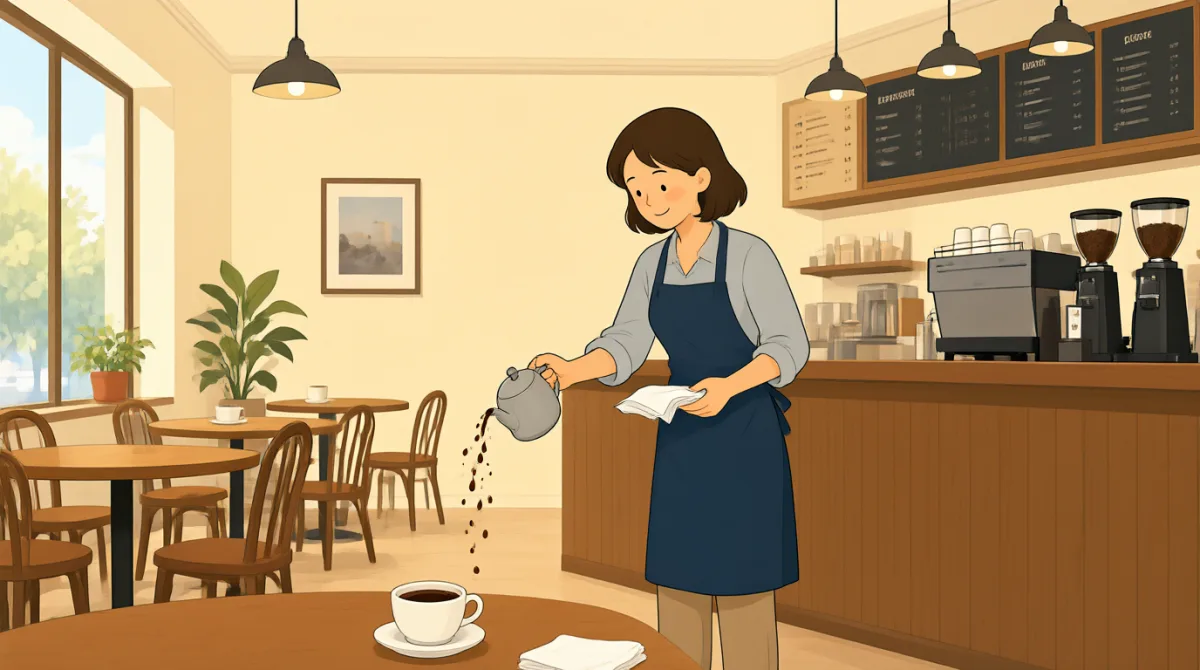

Oh, no! Are you okay? Looks like you've spilled your coffee!
अरे नहीं! आप ठीक हैं? लगता है आपकी कॉफ़ी गिर गई!

Ugh, yeah, completely soaked it. My hand just slipped. What a mess!
उफ़, हाँ, सब कुछ पूरी तरह भीग गया। मेरा हाथ फिसल गया। कितनी गड़बड़ हो गई!
Don't worry about it. Happens to the best of us. Do you need a hand with anything? I could grab some napkins, or maybe alert the staff if you want?
कोई बात नहीं। ऐसा हम सबके साथ होता है। क्या मैं किसी चीज़ में आपकी मदद कर सकता हूँ? मैं कुछ नैपकिन ले आऊँ, या चाहें तो कर्मचारियों को बता दूँ?
That would be so helpful, thank you! If you could just point me to where the napkins are, I can probably manage. Don't want to bother the staff too much.
इससे बहुत मदद मिलेगी, शुक्रिया! अगर आप बस मुझे बता दें कि नैपकिन कहाँ हैं, तो मैं शायद खुद संभाल लूँगी। कर्मचारियों को ज़्यादा परेशान नहीं करना चाहती।
No bother at all. They're usually by the counter, right next to the sugar station. I'll go fetch them for you. Don't move, I'll be right back.
कोई परेशानी नहीं। वे आम तौर पर काउंटर के पास, चीनी रखने की जगह के ठीक बगल में होते हैं। मैं आपके लिए ले आता हूँ। आप यहीं रुकिए, मैं अभी आया।
Oh, you don't have to! I can go.
अरे, आपको ऐसा करने की ज़रूरत नहीं है! मैं जा सकती हूँ।
It's no trouble, really. You stay put and deal with the immediate spill. I'll be quick.
सच में, कोई बात नहीं। आप यहीं रुककर अभी गिरी हुई कॉफ़ी संभालिए। मैं जल्दी लौटता हूँ।
Okay, thank you so much! That's really kind of you.
ठीक है, आपका बहुत-बहुत शुक्रिया! आप सच में बहुत अच्छे हैं।
शब्दावली10
- spilledगिरा दिया
Past tense of 'spill', meaning to accidentally pour liquid out of a container, like coffee on the floor or clothes. Use it to describe accidents: 'I spilled my drink.'
'Spill' का भूतकाल 'spilled' है। इसका मतलब है किसी बर्तन से गलती से तरल पदार्थ बाहर गिरा देना, जैसे फ़र्श या कपड़ों पर कॉफ़ी गिरा देना। हादसे के बारे में बताने के लिए कहें: 'I spilled my drink.' (मुझसे मेरा पेय गिर गया।)
- soakedपूरी तरह भीगा हुआ
Covered or filled with liquid, often completely wet. In this context, it describes clothes or items after spilling: 'My shirt is soaked with water.' It's useful for everyday accidents.
इसका मतलब है तरल से ढका हुआ या उसमें भीगा हुआ, अक्सर पूरी तरह गीला। यहाँ यह कपड़ों या किसी चीज़ के कॉफ़ी गिरने के बाद भीग जाने को बताता है: 'My shirt is soaked with water.' (मेरी कमीज़ पानी से पूरी तरह भीग गई है।) रोज़मर्रा के छोटे-मोटे हादसों के लिए यह काम का शब्द है।
- slippedफिसल गया
Past tense of 'slip', meaning to slide or lose control accidentally. Common in accidents: 'The cup slipped from my hand.' Helps explain why something fell.
'Slip' का भूतकाल 'slipped' है। इसका मतलब है अनजाने में फिसल जाना या नियंत्रण खो देना। यह हादसों के बारे में आम तौर पर इस्तेमाल होता है: 'The cup slipped from my hand.' (प्याला मेरे हाथ से फिसल गया।) इससे बताया जा सकता है कि कोई चीज़ क्यों गिर गई।
- messगड़बड़
A dirty or disordered situation, often from an accident. Use it to express frustration: 'What a mess!' It's casual and common in informal English.
इसका मतलब है गंदी या अस्त-व्यस्त स्थिति, जो अक्सर किसी हादसे से होती है। झुंझलाहट जताने के लिए कहें: 'What a mess!' (कितनी गड़बड़ है!) यह अनौपचारिक अंग्रेज़ी में आम और बोलचाल का शब्द है।
- grabजल्दी से ले लेना
To quickly take or get something. Informal and practical: 'Grab some napkins' means to fetch them fast. Good for offering quick help in daily life.
किसी चीज़ को जल्दी से लेना या लाना। 'Grab some napkins' का मतलब है जल्दी से कुछ नैपकिन ले आना। रोज़मर्रा की ज़िंदगी में तुरंत मदद की पेशकश करते समय यह अनौपचारिक और काम का शब्द है।
- alertसूचित करना
To warn or inform someone about a problem. Here, 'alert the staff' means to tell workers about the spill. Useful in public places like cafes.
किसी को किसी समस्या के बारे में बताना या आगाह करना। यहाँ 'alert the staff' का मतलब है कर्मचारियों को गिरी हुई कॉफ़ी के बारे में बताना। कैफ़े जैसी सार्वजनिक जगहों पर यह काम का है।
- botherपरेशान करना
To cause trouble or inconvenience. 'No bother' means it's not a problem at all. Polite way to reassure someone when helping: 'It's no bother to help you.'
किसी के लिए परेशानी या असुविधा पैदा करना। 'No bother' का मतलब है कि कोई परेशानी नहीं है। मदद करते समय किसी को आश्वस्त करने का यह विनम्र तरीका है: 'It's no bother to help you.' (आपकी मदद करने में मुझे कोई परेशानी नहीं है।)
- fetchजाकर ले आना
To go and bring back something. Similar to 'get', but implies going to retrieve: 'I'll fetch the napkins.' Kind and helpful in offering assistance.
कहीं जाकर कोई चीज़ लाना। इसका अर्थ 'get' जैसा है, लेकिन इसमें चीज़ लेने के लिए जाकर लौटने का भाव भी शामिल है: 'I'll fetch the napkins.' (मैं नैपकिन ले आता हूँ।) मदद की पेशकश करते समय यह अपनापन और तत्परता दिखाता है।
- stay putयहीं रुको
An idiom meaning to remain in place, don't move. Casual advice: 'Stay put and I'll help.' Useful for keeping someone safe during cleanup.
यह मुहावरा अपनी जगह पर बने रहने और न हिलने के लिए कहा जाता है। अनौपचारिक सलाह: 'Stay put and I'll help.' (यहीं रुको, मैं मदद करता हूँ।) सफ़ाई करते समय किसी को सुरक्षित रखने के लिए यह उपयोगी है।
- kindदयालु
Nice or helpful in a gentle way. 'That's really kind of you' expresses gratitude for someone's help. Common in polite responses to favors.
कोमलता से मददगार या अच्छा होना। 'That's really kind of you' कहकर किसी की मदद के लिए आभार जताया जाता है। किसी एहसान के जवाब में विनम्रता से कहने के लिए यह आम वाक्यांश है।
मुख्य वाक्य7
- 1
Oh, no! Are you okay? Looks like you've spilled your coffee!
अरे नहीं! आप ठीक हैं? लगता है आपकी कॉफ़ी गिर गई!
This is a concerned reaction to an accident. 'Oh, no!' shows surprise and worry. 'Are you okay?' checks for injury first. Useful for starting a helpful conversation; the present perfect 'you've spilled' describes a recent action.
यह किसी हादसे पर चिंता जताने वाली प्रतिक्रिया है। 'Oh, no!' से हैरानी और फ़िक्र झलकती है। 'Are you okay?' पहले यह पूछता है कि कहीं चोट तो नहीं लगी। मददगार बातचीत शुरू करने के लिए यह उपयोगी है; वर्तमान पूर्ण काल वाला 'you've spilled' बताता है कि यह घटना अभी-अभी हुई है।
- 2
Don't worry about it. Happens to the best of us.
कोई बात नहीं। ऐसा हम सबके साथ होता है।
Reassures someone after a mistake. 'Don't worry about it' means no need to feel bad. 'Happens to the best of us' is an idiom saying accidents happen to everyone, even good people. Great for comforting friends casually.
यह किसी की गलती के बाद उसे दिलासा देता है। 'Don't worry about it' का मतलब है कि बुरा महसूस करने की ज़रूरत नहीं है। 'Happens to the best of us' एक मुहावरा है, जिसका मतलब है कि हादसे हर किसी से होते हैं, अच्छे लोगों से भी। दोस्तों को अनौपचारिक ढंग से दिलासा देने के लिए यह बढ़िया है।
- 3
Do you need a hand with anything? I could grab some napkins, or maybe alert the staff if you want?
क्या मैं किसी चीज़ में आपकी मदद कर सकता हूँ? मैं कुछ नैपकिन ले आऊँ, या चाहें तो कर्मचारियों को बता दूँ?
Offers help politely. 'Need a hand' is an idiom for assistance. The conditional 'I could' suggests options without pressure. Useful pattern for volunteering help in situations like spills; shows specific actions.
यह विनम्रता से मदद की पेशकश करता है। 'Need a hand' मदद की ज़रूरत होने का मुहावरा है। 'I could' बिना दबाव डाले विकल्प सुझाता है। कुछ गिरने जैसी स्थिति में मदद की पेशकश करने के लिए यह उपयोगी ढाँचा है; इसमें मदद के ठोस तरीके बताए गए हैं।
- 4
That would be so helpful, thank you!
इससे बहुत मदद मिलेगी, शुक्रिया!
Accepts an offer gratefully. 'That would be' is conditional for future help. Adds 'so' for emphasis on helpfulness. Essential for polite responses when someone assists you; builds positive interactions.
इससे किसी की पेशकश को कृतज्ञता के साथ स्वीकार किया जाता है। 'That would be' भविष्य में मिलने वाली मदद के बारे में सशर्त ढंग से कहता है। मदद कितनी काम आएगी, इस पर ज़ोर देने के लिए 'so' जोड़ा गया है। किसी की मदद स्वीकार करते समय विनम्र जवाब देने के लिए यह ज़रूरी वाक्यांश है और बातचीत को अच्छा बनाता है।
- 5
No bother at all. They're usually by the counter, right next to the sugar station.
कोई परेशानी नहीं। वे आम तौर पर काउंटर के पास, चीनी रखने की जगह के ठीक बगल में होते हैं।
Downplays the effort of helping. 'No bother at all' reassures it's easy. Gives directions with 'by' and 'next to' for location. Practical for guiding someone in a cafe; uses simple prepositions for everyday navigation.
इससे मदद करने की मेहनत को मामूली बताया जाता है। 'No bother at all' आश्वस्त करता है कि इसमें कोई परेशानी नहीं है। 'by' और 'next to' का इस्तेमाल जगह बताने के लिए होता है। कैफ़े में किसी को रास्ता बताने के लिए यह काम का है; इसमें रोज़मर्रा की जगहों के बारे में बताने वाले सरल संबंधसूचक शब्द हैं।
- 6
You stay put and deal with the immediate spill. I'll be quick.
आप यहीं रुककर अभी गिरी हुई कॉफ़ी संभालिए। मैं जल्दी लौटता हूँ।
Instructs someone to stay still while offering to act. 'Stay put' is an idiom for not moving. 'Immediate' means right now. 'I'll be quick' promises speed. Useful for managing accidents safely; imperative form for directions.
मदद के लिए खुद आगे आते हुए यह किसी को स्थिर रहने के लिए कहता है। 'Stay put' का मुहावरेदार अर्थ है अपनी जगह से न हिलना। 'Immediate' का मतलब है अभी, इसी वक्त। 'I'll be quick' जल्दी लौटने का भरोसा देता है। हादसे को सुरक्षित ढंग से संभालने के लिए यह उपयोगी है; निर्देश देने के लिए आज्ञार्थक रूप इस्तेमाल किया गया है।
- 7
Okay, thank you so much! That's really kind of you.
ठीक है, आपका बहुत-बहुत शुक्रिया! आप सच में बहुत अच्छे हैं।
Shows appreciation. 'Thank you so much' emphasizes gratitude. 'That's really kind of you' compliments the helper. Perfect ending phrase for accepting favors; 'so much' and 'really' intensify politeness in English.
यह आभार जताता है। 'Thank you so much' शुक्रिया कहने पर ज़ोर देता है। 'That's really kind of you' मदद करने वाले की तारीफ़ करता है। एहसान स्वीकार करते समय बातचीत खत्म करने के लिए यह बढ़िया वाक्यांश है; 'so much' और 'really' अंग्रेज़ी में विनम्रता और आभार को और गहरा करते हैं।