Holding for Multiple People
कई लोगों के लिए दरवाज़ा पकड़े रखना
You hold the elevator door for one person, and then realize there are more people behind them also coming. You continue to hold the door, and multiple 'thank yous' might be exchanged.
आप एक व्यक्ति के लिए लिफ्ट का दरवाज़ा पकड़े रखते हैं, फिर देखते हैं कि उनके पीछे और लोग भी आ रहे हैं। आप दरवाज़ा पकड़े रहते हैं और कई बार एक-दूसरे को धन्यवाद कहते हैं।
संवाद8
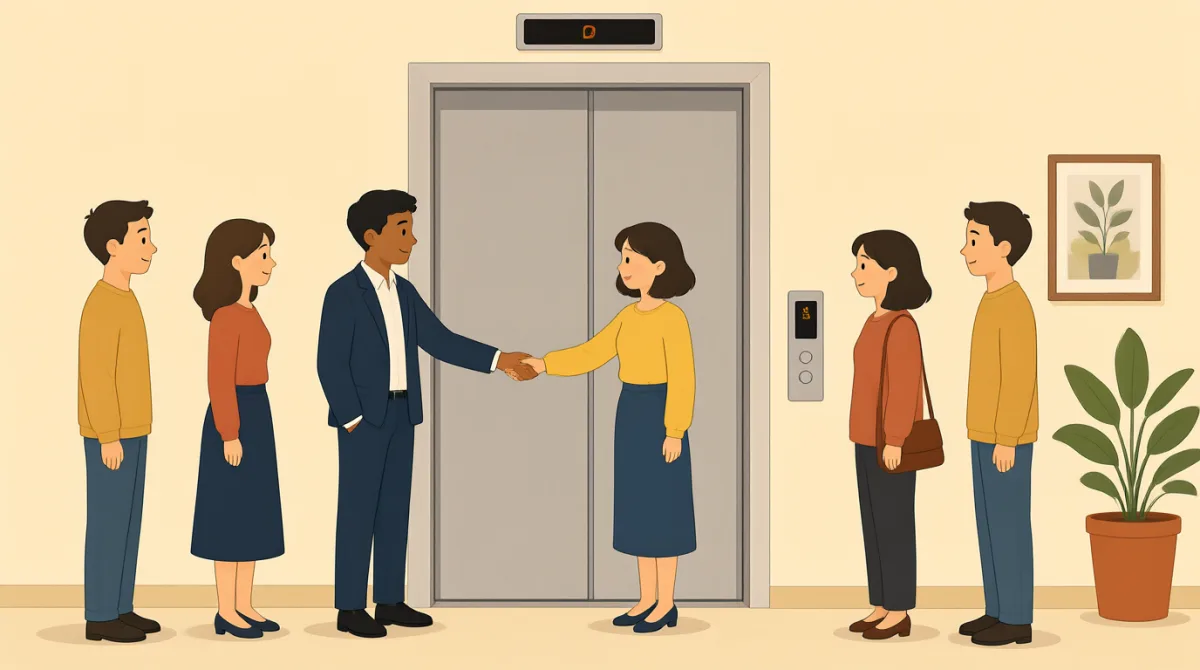

Oh, looks like someone's coming. I'll hold it.
ओह, लगता है कोई आ रहा है। मैं दरवाज़ा पकड़े रखता हूँ।

Thank you so much!
बहुत-बहुत धन्यवाद!
No problem! Oh, more coming too. I'll just keep it open for a sec.
कोई बात नहीं! ओह, और लोग भी आ रहे हैं। मैं बस इसे एक पल खुला रखता हूँ।

Appreciate it!
बहुत मेहरबानी!
Yes, really, thank you for waiting.
हाँ, सच में, इंतज़ार करने के लिए धन्यवाद।
No worries at all. Everyone make it in?
अरे, कोई बात नहीं। सब लोग अंदर आ गए?
Yep, we're all good. Which floor are you going to?
हाँ, सब आ गए। आप किस मंज़िल पर जा रहे हैं?
Just 5, but I can hit whatever you need.
बस पाँचवीं पर, लेकिन आपको जिस मंज़िल पर जाना है, उसका बटन मैं दबा सकता हूँ।
शब्दावली6
- holdपकड़कर रखना
To hold something means to keep it in position, like holding an elevator door open so others can enter. It's a polite action in public spaces.
'hold' का मतलब है किसी चीज़ को अपनी जगह पर बनाए रखना, जैसे दूसरों को अंदर आने देने के लिए लिफ्ट का दरवाज़ा खुला रखना। सार्वजनिक जगहों पर ऐसा करना शिष्टता मानी जाती है।
- comingआ रहा
Coming is the present participle of 'come,' used here to mean approaching or arriving soon, like someone walking towards the elevator.
'coming', 'come' का वर्तमान कृदंत रूप है। यहाँ इसका मतलब है कि कोई पास आ रहा है या जल्द पहुँचने वाला है, जैसे कोई लिफ्ट की ओर चलकर आ रहा हो।
- No problemकोई बात नहीं
A casual way to say 'you're welcome' or 'it's okay,' showing it's not a bother. Common in friendly, everyday responses.
'No problem' कहने का अनौपचारिक तरीका है। इसका मतलब है कि कोई परेशानी नहीं हुई या आपका स्वागत है। रोज़मर्रा की बातचीत में धन्यवाद के जवाब में यह आम तौर पर कहा जाता है।
- appreciateआभारी होना
To appreciate means to feel grateful for something. 'Appreciate it!' is a quick way to thank someone for their help.
'appreciate' का मतलब है किसी चीज़ के लिए आभारी महसूस करना। 'Appreciate it!' किसी की मदद के लिए धन्यवाद कहने का छोटा-सा तरीका है।
- No worriesकोई चिंता नहीं
An informal expression meaning 'don't worry' or 'it's fine,' often used to reassure someone that everything is okay.
'No worries' एक अनौपचारिक मुहावरा है, जिसका अर्थ है कि चिंता की कोई बात नहीं या सब ठीक है। इसका इस्तेमाल अक्सर किसी को यह भरोसा दिलाने के लिए किया जाता है कि सब ठीक है।
- hitदबाना
In this context, 'hit' means to press a button, like hitting the floor button in an elevator. It's slang for activating something quickly.
इस संदर्भ में 'hit' का मतलब है कोई बटन दबाना, जैसे लिफ्ट में मंज़िल का बटन दबाना। बोलचाल में इसका इस्तेमाल किसी चीज़ को जल्दी सक्रिय करने के अर्थ में होता है।
मुख्य वाक्य7
- 1
Oh, looks like someone's coming. I'll hold it.
ओह, लगता है कोई आ रहा है। मैं दरवाज़ा पकड़े रखता हूँ।
This sentence uses 'looks like' to express an observation, and 'I'll hold it' is a future action for politeness. Useful for offering help in public, like holding doors; practice the contraction 'I'll' for natural speech.
इस वाक्य में 'looks like' का इस्तेमाल देखकर कोई बात कहने के लिए किया गया है, और 'I'll hold it' भविष्य में कुछ करने की पेशकश करता है। सार्वजनिक जगहों पर मदद की पेशकश करने के लिए यह उपयोगी है, जैसे किसी के लिए दरवाज़ा पकड़े रखना। स्वाभाविक बोलचाल के लिए 'I'll' के संक्षिप्त रूप का अभ्यास करें।
- 2
Thank you so much!
बहुत-बहुत धन्यवाद!
A strong expression of gratitude, emphasizing thanks with 'so much.' It's very common in quick polite exchanges and shows enthusiasm; use it when someone does a small favor for you.
'Thank you so much!' आभार जताने का एक ज़ोरदार तरीका है, जिसमें 'so much' धन्यवाद को और अधिक प्रभावी बनाता है। छोटी-सी मदद के लिए यह आम और उत्साहपूर्ण जवाब है।
- 3
No problem! Oh, more coming too. I'll just keep it open for a sec.
कोई बात नहीं! ओह, और लोग भी आ रहे हैं। मैं बस इसे एक पल खुला रखता हूँ।
Starts with a casual response to thanks, then observes more people with 'more coming too.' 'For a sec' means for a second (short time). Useful for continuing courtesy; note the informal 'sec' for everyday talk.
इस वाक्य की शुरुआत धन्यवाद के अनौपचारिक जवाब से होती है, फिर 'more coming too' कहकर बताया जाता है कि और लोग आ रहे हैं। 'For a sec' का मतलब है थोड़ी देर के लिए। शिष्टता जारी रखने के लिए यह उपयोगी है। ध्यान दें कि 'sec' रोज़मर्रा की बातचीत में इस्तेमाल होने वाला अनौपचारिक रूप है।
- 4
Appreciate it!
बहुत मेहरबानी!
A short, informal thank you meaning 'I appreciate your help.' It's practical for busy situations like elevators; use it to sound natural and friendly without full sentences.
'Appreciate it!' मदद के लिए आभार जताने का छोटा और अनौपचारिक तरीका है। लिफ्ट जैसी व्यस्त जगहों पर यह पूरा वाक्य बोले बिना स्वाभाविक और दोस्ताना लगने के लिए उपयोगी है।
- 5
Yes, really, thank you for waiting.
हाँ, सच में, इंतज़ार करने के लिए धन्यवाद।
Emphasizes thanks with 'really' and specifies the action 'for waiting.' Good for reinforcing gratitude in groups; the structure 'thank you for + verb-ing' explains the reason, which is a common pattern.
इस वाक्य में 'really' से धन्यवाद पर ज़ोर दिया गया है और 'for waiting' से बताया गया है कि किस बात के लिए धन्यवाद कह रहे हैं। समूह में आभार जताने के लिए यह अच्छा तरीका है। 'thank you for + verb-ing' में क्रिया के कारण का उल्लेख होता है; यह एक आम ढाँचा है।
- 6
No worries at all. Everyone make it in?
अरे, कोई बात नहीं। सब लोग अंदर आ गए?
Reassures with 'no worries at all,' then asks a question using 'make it in' for entering successfully. Useful to check on others politely; note the question form without 'did' for informal speech.
'No worries at all' कहकर सामने वाले को भरोसा दिलाया जाता है कि कोई परेशानी नहीं हुई। फिर 'make it in' का इस्तेमाल यह पूछने के लिए होता है कि सब लोग अंदर आ पाए या नहीं। दूसरों का हाल जानने के लिए यह विनम्र तरीका है। ध्यान दें कि अनौपचारिक बोलचाल में सवाल बिना 'did' के भी बनाया जा सकता है।
- 7
Just 5, but I can hit whatever you need.
बस पाँचवीं पर, लेकिन आपको जिस मंज़िल पर जाना है, उसका बटन मैं दबा सकता हूँ।
Answers a question simply with 'just' meaning 'only,' and offers help with 'I can hit whatever you need' using 'hit' for pressing buttons. Practical for elevator small talk; shows courtesy by prioritizing others.
यहाँ 'just' का मतलब 'सिर्फ़' है। 'I can hit whatever you need' में 'hit' का इस्तेमाल बटन दबाने के अर्थ में हुआ है। लिफ्ट में छोटी-मोटी बातचीत के लिए यह वाक्य उपयोगी है और दूसरों को पहले सुविधा देने का शिष्ट भाव दिखाता है।