Initial Hold & First Thanks
दरवाज़ा रोकना और पहली बार धन्यवाद देना
You are inside the elevator, see someone approaching, and press the 'door open' button. The person sees you holding it and offers a quick 'thanks'.
आप लिफ्ट के अंदर हैं और किसी को आते देखकर ‘दरवाज़ा खुला रखें’ बटन दबाते हैं। वह व्यक्ति आपको दरवाज़ा खुला रखते देखता है और झट से ‘धन्यवाद’ कहता है।
संवाद4
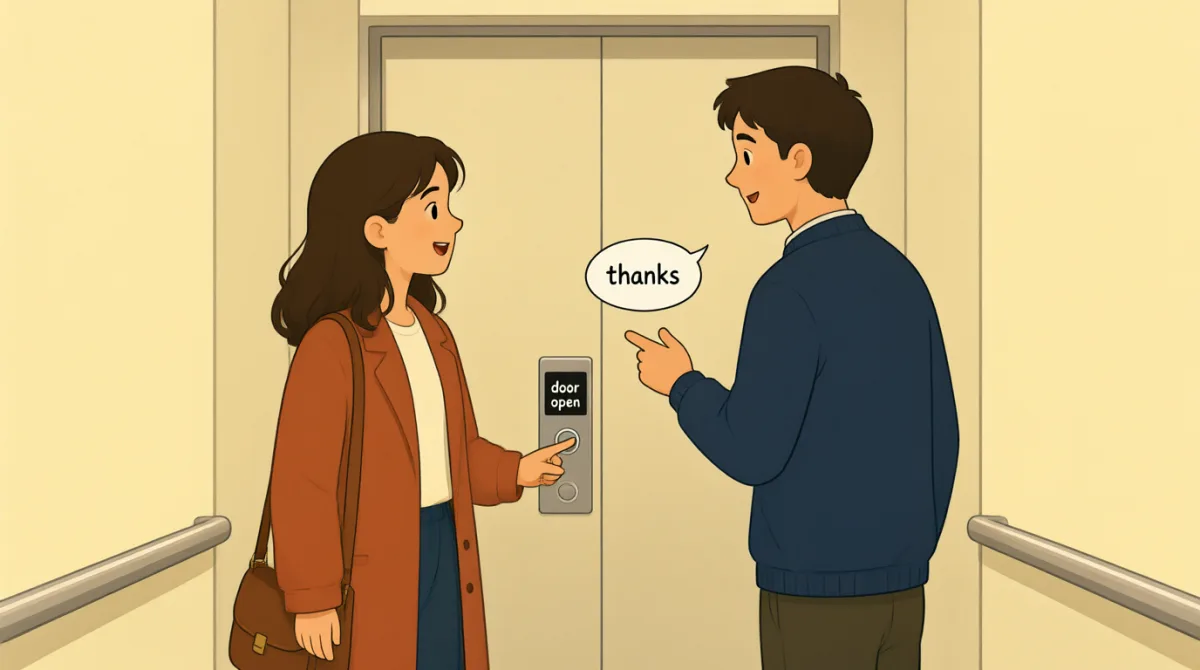

(From inside the elevator, seeing someone approach) Oh, just a second!
(लिफ्ट के अंदर से, किसी को आते देखकर) अरे, एक सेकंड!

(Approaching the elevator) Oh, thanks! You didn't have to.
(लिफ्ट की ओर आते हुए) अरे, शुक्रिया! आपको ऐसा करने की ज़रूरत नहीं थी।
No problem at all! Glad I caught you.
कोई बात नहीं! अच्छा हुआ, मैं आपको रोक पाया।
Appreciate it. Just made it.
बहुत एहसान हुआ। बस पहुँच ही गया था।
शब्दावली7
- secondएक सेकंड
Here, 'a second' means a very short time, like 'wait a moment'. Use it to politely ask someone to wait briefly, e.g., 'Hold on a second!'
यहाँ, 'a second' का मतलब है बहुत थोड़ी देर, जैसे ‘एक पल रुकिए’। किसी से थोड़ी देर इंतज़ार करने के लिए विनम्रता से कहने के लिए इसका इस्तेमाल करें, जैसे 'Hold on a second!' (एक सेकंड रुकिए!)
- thanksशुक्रिया
A casual way to say 'thank you'. It's very common in quick, everyday situations to show appreciation.
'धन्यवाद' कहने का अनौपचारिक तरीका। रोज़मर्रा की छोटी-मोटी स्थितियों में आभार जताने के लिए इसका इस्तेमाल बहुत आम है।
- didn't have toज़रूरत नहीं थी
This phrase politely downplays someone's help, meaning 'you weren't obligated to do that'. It's a modest response to thanks, showing humility.
यह वाक्यांश किसी की मदद को विनम्रता से छोटा करके बताता है। इसका मतलब है, ‘आपको ऐसा करने की कोई बाध्यता नहीं थी।’ धन्यवाद के जवाब में विनम्रता दिखाने के लिए कहा जाता है।
- no problemकोई बात नहीं
Means 'it's not difficult' or 'happy to help'. Use it to respond to thanks in a friendly, casual way.
इसका मतलब है, ‘यह मुश्किल नहीं है’ या ‘मदद करके खुशी हुई।’ दोस्ताना और अनौपचारिक ढंग से धन्यवाद का जवाब देने के लिए इसका इस्तेमाल करें।
- appreciateआभारी होना
To feel grateful for something. 'Appreciate it' is a common, slightly more formal way to say thanks than 'thanks'.
किसी चीज़ के लिए कृतज्ञ महसूस करना। 'Appreciate it' धन्यवाद कहने का एक आम, 'thanks' से थोड़ा अधिक औपचारिक तरीका है।
- caughtरोक पाना
In this context, 'caught you' means 'saw you in time' or 'managed to wait for you'. It's idiomatic for arriving just before something happens, like an elevator closing.
इस संदर्भ में, 'caught you' का मतलब है ‘समय रहते आपको देख लेना’ या ‘आपके लिए इंतज़ार कर पाना’। यह मुहावरेदार प्रयोग तब होता है जब कोई चीज़ होने से ठीक पहले कोई पहुँच जाए, जैसे लिफ्ट का दरवाज़ा बंद होने से पहले।
- made itसमय पर पहुँच जाना
Means 'arrived in time' or 'just succeeded'. Use it when you barely catch something, like a bus or elevator.
इसका मतलब है ‘समय रहते पहुँच जाना’ या ‘बस सफल हो जाना’। बस या लिफ्ट जैसी किसी चीज़ को मुश्किल से पकड़ पाने पर इसका इस्तेमाल करें।
मुख्य वाक्य5
- 1
Oh, just a second!
अरे, एक सेकंड!
This is a polite way to ask someone to wait a moment. It's useful for quick interruptions in daily life. The 'Oh' adds a natural, surprised tone; no special grammar, just casual spoken English.
किसी से एक पल रुकने के लिए कहने का यह विनम्र तरीका है। रोज़मर्रा की ज़िंदगी में किसी को झट से रोकने के लिए यह काम आता है। 'Oh' से बात में स्वाभाविक हैरानी का भाव जुड़ता है; इसमें कोई खास व्याकरण नहीं, बस बोलचाल की अंग्रेज़ी है।
- 2
Oh, thanks! You didn't have to.
अरे, शुक्रिया! आपको ऐसा करने की ज़रूरत नहीं थी।
A quick thank you followed by a modest comment. Useful when someone helps you unexpectedly. 'Didn't have to' uses past tense to soften the thanks; practice this for polite social interactions.
पहले झट से धन्यवाद दिया जाता है, फिर विनम्रता से कहा जाता है कि सामने वाले को ऐसा करने की ज़रूरत नहीं थी। जब कोई अचानक आपकी मदद करे, तब यह काम आता है। 'Didn't have to' में past tense का इस्तेमाल धन्यवाद को नरम बनाने के लिए होता है; विनम्र सामाजिक बातचीत में इसका अभ्यास करें।
- 3
No problem at all!
बिल्कुल कोई बात नहीं!
Responds to thanks by saying it's easy to help. Very common in American English for casual courtesy. 'At all' emphasizes it's no trouble; great for building friendly conversations.
धन्यवाद के जवाब में कहा जाता है कि मदद करना आसान है। अनौपचारिक शिष्टाचार के लिए अमेरिकी अंग्रेज़ी में यह बहुत आम है। 'At all' इस बात पर ज़ोर देता है कि मदद करने में ज़रा भी परेशानी नहीं हुई; दोस्ताना बातचीत शुरू करने के लिए यह बढ़िया है।
- 4
Glad I caught you.
अच्छा हुआ, मैं आपको रोक पाया।
Means happy to have waited in time. Useful after helping someone enter quickly. 'Caught' is an idiom; the sentence uses present perfect 'I caught' for a recent action, showing relief.
इसका मतलब है कि आपको समय रहते इंतज़ार करने का मौका मिला, इसकी खुशी है। किसी को जल्दी से अंदर आने में मदद करने के बाद यह कहना उपयोगी है। 'Caught' एक मुहावरा है; यहाँ 'I caught' हाल ही में पूरी हुई क्रिया के लिए simple past में है और इससे राहत का भाव आता है।
- 5
Appreciate it. Just made it.
बहुत एहसान हुआ। बस पहुँच ही गया था।
Short thanks plus confirmation of arriving in time. Practical for rushed situations. 'Appreciate it' is informal; 'just made it' uses simple past for a completed action; combine for efficient politeness.
संक्षेप में धन्यवाद देने के बाद बताया जाता है कि आप समय रहते पहुँच गए। जल्दबाज़ी वाली स्थितियों में यह काम आता है। 'Appreciate it' अनौपचारिक है; 'just made it' में पूरी हो चुकी क्रिया के लिए simple past है। दोनों को साथ कहने से कम शब्दों में विनम्रता जताई जा सकती है।