Acknowledging & Entering
आभार जताना और अंदर जाना
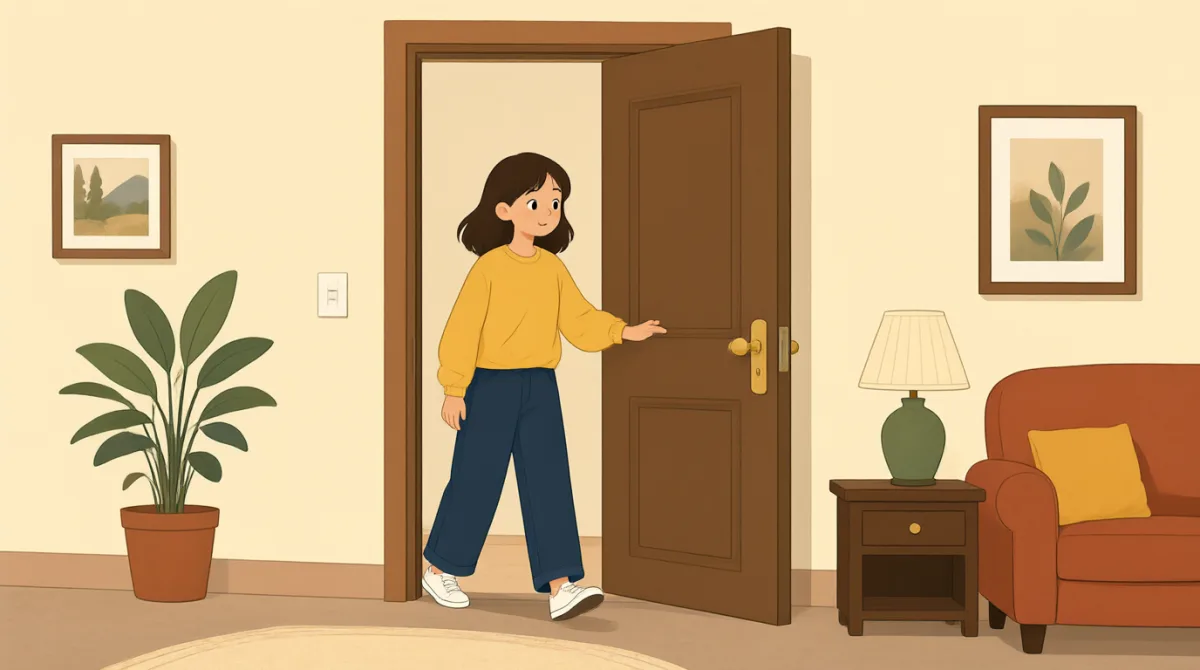
You are the person being waited for. After someone holds the door, you quickly step in, offering a more immediate or slightly more elaborate 'thank you' upon entering.
आप वह व्यक्ति हैं जिसका इंतज़ार किया जा रहा है। कोई दरवाज़ा खुला रखता है, तो आप जल्दी से अंदर आते हैं और आते ही तुरंत या थोड़े विस्तार से धन्यवाद कहते हैं।
संवाद6

Hold on! It's closing.
रुकिए! दरवाज़ा बंद हो रहा है।

Oh, thank you so much! I really appreciate that.
ओह, आपका बहुत-बहुत धन्यवाद! मैं सचमुच आपका एहसान मानती हूँ।
No problem at all. Just made it!
कोई बात नहीं। आप बस पहुँच ही गईं!
You're a lifesaver. I thought I was going to miss it.
आपने तो मेरी जान बचा ली। मुझे लगा था कि मेरी लिफ्ट छूट जाएगी।
Glad I could help. Which floor are you heading to?
मदद करके खुशी हुई। आपको किस मंज़िल पर जाना है?
The third, please. Thanks again!
तीसरी मंज़िल, कृपया। एक बार फिर धन्यवाद!
शब्दावली6
- hold onज़रा रुकिए
A polite way to say 'wait a moment' or 'don't close yet', often used when you need someone to pause an action like closing an elevator door.
किसी से एक पल रुकने या कोई काम अभी न करने के लिए कहने का विनम्र तरीका। अक्सर तब कहते हैं जब आप चाहते हैं कि कोई लिफ्ट का दरवाज़ा बंद करने जैसी कार्रवाई रोक दे।
- appreciateएहसान मानना
To feel grateful for someone's help or kindness; it's a more formal way to express thanks than just 'thank you'.
किसी की मदद या नेकदिली के लिए आभारी महसूस करना। सिर्फ़ 'thank you' कहने के मुकाबले यह धन्यवाद जताने का थोड़ा औपचारिक तरीका है।
- no problemकोई बात नहीं
A casual response to 'thank you', meaning it's not a big deal or you're welcome; very common in everyday conversations.
'Thank you' के जवाब में कहने वाला अनौपचारिक वाक्यांश, जिसका मतलब है कि इसमें कोई बड़ी बात नहीं या आपका स्वागत है। रोज़मर्रा की बातचीत में इसका खूब इस्तेमाल होता है।
- lifesaverमुसीबत से बचाने वाला
An informal expression for someone who helps you out of a difficult situation, like saving time by holding a door; used to show strong gratitude.
किसी ऐसे व्यक्ति के लिए अनौपचारिक अभिव्यक्ति जो आपको मुश्किल स्थिति से निकालने में मदद करे, जैसे दरवाज़ा खुला रखकर आपका समय बचाना। इससे बहुत आभार जताया जाता है।
- heading toकिसी जगह जा रहे होना
Means 'going to' or 'on the way to' a place; useful for asking about someone's destination in polite small talk.
इसका अर्थ है किसी जगह जाना या वहाँ की ओर बढ़ना। विनम्र छोटी-मोटी बातचीत में किसी से उसकी मंज़िल पूछने के लिए यह उपयोगी है।
- floorमंज़िल
A level or story in a building, like the ground floor or third floor; essential for directions in elevators or buildings.
इमारत का कोई तल, जैसे भूतल या तीसरी मंज़िल। लिफ्ट या इमारत में रास्ता बताने के लिए यह शब्द बहुत ज़रूरी है।
मुख्य वाक्य6
- 1
Hold on! It's closing.
रुकिए! दरवाज़ा बंद हो रहा है।
This is a quick, urgent request to stop something from happening, like a door closing. 'Hold on' is an imperative for 'wait', and 'it's closing' describes the present continuous action. Use it in situations where you need immediate help to catch something.
दरवाज़ा बंद होने जैसी किसी कार्रवाई को रोकने के लिए यह तुरंत और ज़रूरी अनुरोध है। 'Hold on' का इस्तेमाल किसी को रुकने के लिए कहने में होता है, और 'it's closing' बताता है कि काम अभी जारी है। जब आपको किसी चीज़ को रोकने के लिए तुरंत मदद चाहिए, तब यह कहें।
- 2
Oh, thank you so much! I really appreciate that.
ओह, आपका बहुत-बहुत धन्यवाद! मैं सचमुच आपका एहसान मानती हूँ।
A polite and enthusiastic way to express gratitude. 'Thank you so much' intensifies thanks, and 'I really appreciate that' adds sincerity using the verb 'appreciate' in simple present. Useful after someone does a small favor to make the interaction warmer.
आभार जताने का यह विनम्र और उत्साहपूर्ण तरीका है। 'Thank you so much' धन्यवाद को ज़ोर देकर कहता है, और 'I really appreciate that' 'appreciate' क्रिया के साधारण वर्तमान रूप से सच्चा आभार जताता है। किसी के छोटा-सा एहसान करने पर बातचीत को अपनापन देने के लिए यह उपयोगी है।
- 3
No problem at all. Just made it!
कोई बात नहीं। आप बस पहुँच ही गईं!
A friendly response to thanks, meaning it's easy and no trouble. 'No problem at all' is idiomatic for 'you're welcome', and 'just made it' uses past tense to describe narrowly succeeding. Great for casual, reassuring replies in daily encounters.
धन्यवाद के जवाब में यह दोस्ताना ढंग से कहता है कि मदद करने में कोई परेशानी नहीं हुई। 'No problem at all' 'you're welcome' कहने का मुहावरेदार तरीका है, और 'just made it' भूतकाल में बताता है कि आप किसी काम में बस समय रहते सफल हुए। रोज़मर्रा की मुलाकातों में सहज और दिलासा देने वाले जवाब के रूप में यह बढ़िया है।
- 4
You're a lifesaver. I thought I was going to miss it.
आपने तो मेरी जान बचा ली। मुझे लगा था कि मेरी लिफ्ट छूट जाएगी।
An exaggerated compliment for help that avoids inconvenience. 'You're a lifesaver' is a fixed expression, and 'I thought I was going to miss it' uses past continuous for unrealized expectation with 'going to' for future in the past. Use it to show relief and build rapport.
किसी की मदद के लिए बढ़ा-चढ़ाकर की गई यह तारीफ़ है, जब उसकी मदद से आपको परेशानी से बचने में मदद मिली हो। 'You're a lifesaver' एक तय मुहावरा है, और 'I thought I was going to miss it' बीती हुई उस आशंका को बताता है जो सच नहीं हुई; इसमें 'going to' का इस्तेमाल भूतकाल के नज़रिए से भविष्य बताने के लिए हुआ है। राहत जताने और अपनापन बढ़ाने के लिए यह कहें।
- 5
Glad I could help. Which floor are you heading to?
मदद करके खुशी हुई। आपको किस मंज़िल पर जाना है?
Shows happiness in assisting and shifts to practical help. 'Glad I could help' uses 'glad' with modal 'could' for ability, and the question uses 'which' for choices and 'heading to' preposition phrase. Ideal for continuing polite conversation in shared spaces like elevators.
इससे आप बताते हैं कि मदद करके आपको खुशी हुई और बातचीत को काम की बात की ओर ले जाते हैं। 'Glad I could help' में 'glad' के साथ 'could' मदद कर पाने की क्षमता जताता है, और सवाल में 'which' से विकल्पों में से पूछा जाता है। 'heading to' वाली अभिव्यक्ति मंज़िल के बारे में पूछती है। लिफ्ट जैसी साझा जगहों में विनम्र बातचीत आगे बढ़ाने के लिए यह बढ़िया है।
- 6
The third, please. Thanks again!
तीसरी मंज़िल, कृपया। एक बार फिर धन्यवाद!
A direct request for a specific floor with politeness. 'The third' specifies using ordinal number, 'please' softens the request, and 'thanks again' reinforces gratitude. Commonly used when entering elevators to ask for button pressing.
किसी खास मंज़िल के लिए यह सीधा और विनम्र अनुरोध है। 'The third' क्रमवाचक संख्या से मंज़िल बताता है, 'please' अनुरोध को विनम्र बनाता है और 'thanks again' दोबारा आभार जताता है। लिफ्ट में चढ़कर किसी से बटन दबाने का अनुरोध करते समय यह आम तौर पर कहा जाता है।