Helping in the Garden
Aider au jardin
Emma joins her grandparents in the garden and helps them pull weeds and water the plants. They talk about what to grow next.
Emma rejoint ses grands-parents au jardin et les aide à arracher les mauvaises herbes et à arroser les plantes. Ils discutent de ce qu’ils pourraient planter ensuite.
Dialogue8
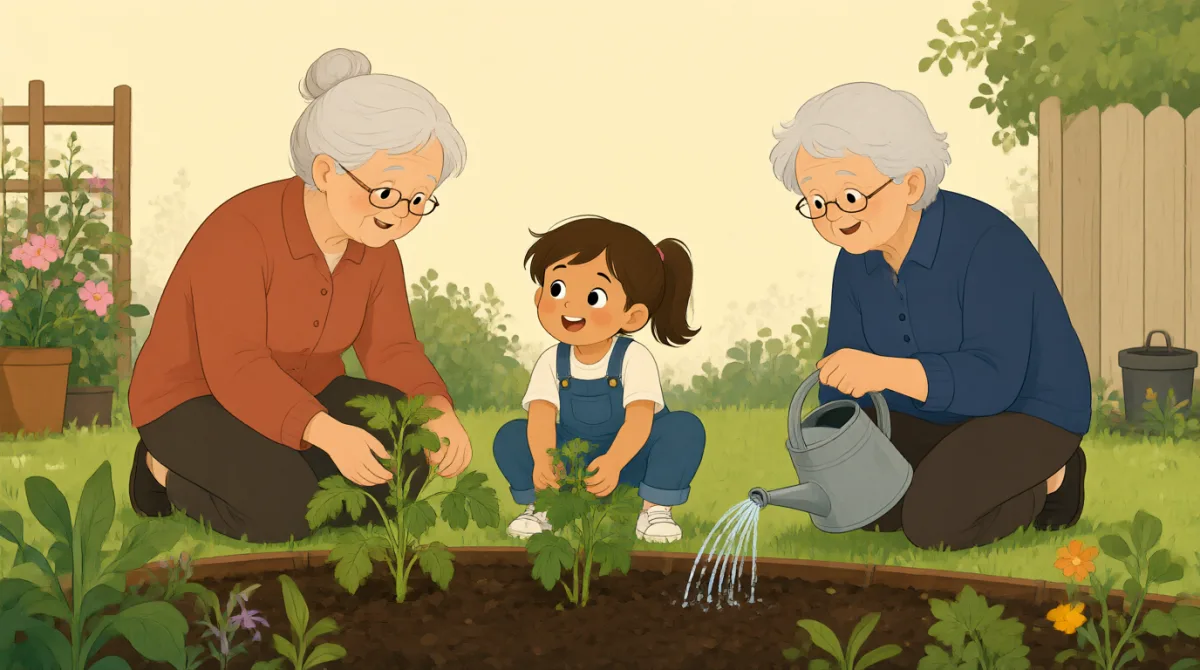

What should I do first? I can help with the garden.
Qu’est-ce que je dois faire d’abord ? Je peux vous aider au jardin.

Thanks, Emma. Please pull the weeds near those small plants.
Merci, Emma. Tu peux arracher les mauvaises herbes près de ces petites plantes, s’il te plaît ?

Be careful with the flowers. They’re growing well this year.
Fais attention aux fleurs. Elles poussent bien cette année.
I’ll be careful. Should I water them after I pull the weeds?
Je ferai attention. Est-ce que je dois les arroser après avoir arraché les mauvaises herbes ?
Yes, please. The soil is dry, and the plants need a good drink.
Oui, s’il te plaît. La terre est sèche et les plantes ont bien besoin d’eau.
We could grow tomatoes next. We use them in many meals.
On pourrait planter des tomates ensuite. On en utilise dans beaucoup de plats.
That sounds fun! Can I help you plant them next weekend?
Ça a l’air sympa ! Je peux vous aider à les planter le week-end prochain ?
Of course. Bring your gardening gloves, and we’ll find a sunny spot.
Bien sûr. Apporte tes gants de jardinage, et on trouvera un endroit ensoleillé.
Vocabulaire8
- pull the weedsarracher les mauvaises herbes
To pull the weeds means to remove unwanted plants from a garden by pulling them out. You can say, “Please pull the weeds near the flowers.”
« Pull the weeds » signifie enlever les plantes indésirables d’un jardin en les arrachant. Tu peux dire : “Please pull the weeds near the flowers.” (S’il te plaît, arrache les mauvaises herbes près des fleurs.)
- Be carefulfaire attention
This is a way to remind someone to act safely and avoid causing a problem. Use it before someone handles something delicate or dangerous.
C’est une façon de rappeler à quelqu’un d’agir prudemment et d’éviter les problèmes. Utilise “Be careful” avant que quelqu’un manipule quelque chose de fragile ou de dangereux.
- growing wellbien pousser
This means that a plant is healthy and getting bigger. You can use it to describe plants or other things that are developing successfully.
“Growing well” signifie qu’une plante est en bonne santé et grandit. Tu peux employer cette expression pour parler de plantes ou d’autres choses qui se développent bien.
- water themles arroser
To water plants means to give them water. Use “water them” when the people you are talking about already know which plants you mean.
“To water plants” signifie donner de l’eau aux plantes. Utilise “water them” quand les personnes à qui tu parles savent déjà de quelles plantes il s’agit.
- The soil is dryLa terre est sèche
Soil is the earth in which plants grow. This sentence explains that the plants need water.
“Soil” désigne la terre dans laquelle poussent les plantes. Cette phrase explique que les plantes ont besoin d’eau.
- grow tomatoesfaire pousser des tomates
To grow tomatoes means to plant and care for tomato plants. You can replace “tomatoes” with another plant or vegetable.
“To grow tomatoes” signifie planter des tomates et en prendre soin. Tu peux remplacer “tomatoes” par le nom d’une autre plante ou d’un autre légume.
- next weekendle week-end prochain
This means the weekend that is coming soon. Use it to talk about a plan for the near future.
“Next weekend” désigne le week-end qui arrive bientôt. Utilise cette expression pour parler d’un projet dans un avenir proche.
- find a sunny spottrouver un endroit ensoleillé
A sunny spot is a place that gets a lot of sunlight. This phrase is useful when choosing a good place for plants.
“A sunny spot” est un endroit qui reçoit beaucoup de soleil. Cette expression est utile pour choisir un bon emplacement pour des plantes.
Phrases clés7
- 1
What should I do first?
Qu’est-ce que je dois faire d’abord ?
Use this to ask what task to do before the others. You can replace “do” with another action, such as “What should I bring first?”
Utilise cette phrase pour demander quelle tâche faire en premier. Tu peux remplacer “do” par une autre action, par exemple : “What should I bring first?” (Qu’est-ce que je dois apporter d’abord ?)
- 2
I can help with the garden.
Je peux vous aider au jardin.
This is a friendly way to offer help. Replace “the garden” with another task or place, such as “I can help with dinner.”
C’est une façon sympathique de proposer ton aide. Remplace “the garden” par une autre tâche ou un autre endroit, par exemple : “I can help with dinner.” (Je peux aider à préparer le dîner.)
- 3
Please pull the weeds near those small plants.
Tu peux arracher les mauvaises herbes près de ces petites plantes, s’il te plaît ?
This is a polite way to ask someone to remove weeds and say where to do it. You can change the action and location to give other simple instructions.
C’est une façon polie de demander à quelqu’un d’arracher les mauvaises herbes et de préciser où le faire. Tu peux changer l’action et le lieu pour donner d’autres consignes simples.
- 4
Should I water them after I pull the weeds?
Est-ce que je dois les arroser après avoir arraché les mauvaises herbes ?
Use “Should I…?” to ask if an action is the right thing to do. “After” helps you check the order of two tasks.
Utilise “Should I…?” pour demander si tu dois faire quelque chose. “After” t’aide à vérifier l’ordre de deux tâches.
- 5
The soil is dry, and the plants need a good drink.
La terre est sèche et les plantes ont bien besoin d’eau.
This explains why the plants need water. “The plants need a good drink” is a friendly, everyday way to say they need watering.
Cette phrase explique pourquoi les plantes ont besoin d’eau. “The plants need a good drink” est une façon courante et imagée de dire qu’il faut arroser les plantes.
- 6
Can I help you plant them next weekend?
Je peux vous aider à les planter le week-end prochain ?
Use this to offer help with a future activity and ask for permission. You can change “plant them” and “next weekend” to fit your plans.
Utilise cette phrase pour proposer ton aide pour une activité à venir et demander la permission. Tu peux modifier “plant them” et “next weekend” selon tes projets.
- 7
Bring your gardening gloves, and we’ll find a sunny spot.
Apporte tes gants de jardinage, et on trouvera un endroit ensoleillé.
This sentence gives a simple instruction and describes what you will do together. Use “Bring your…” to remind someone to take something they need.
Cette phrase donne une consigne simple et explique ce que vous ferez ensemble. Utilise “Bring your…” pour rappeler à quelqu’un d’emporter quelque chose dont il a besoin.