Helping in the Garden
Pomoc w ogrodzie
Emma joins her grandparents in the garden and helps them pull weeds and water the plants. They talk about what to grow next.
Emma dołącza do dziadków w ogrodzie i pomaga im wyrywać chwasty oraz podlewać rośliny. Rozmawiają o tym, co posadzić następnym razem.
Dialog8
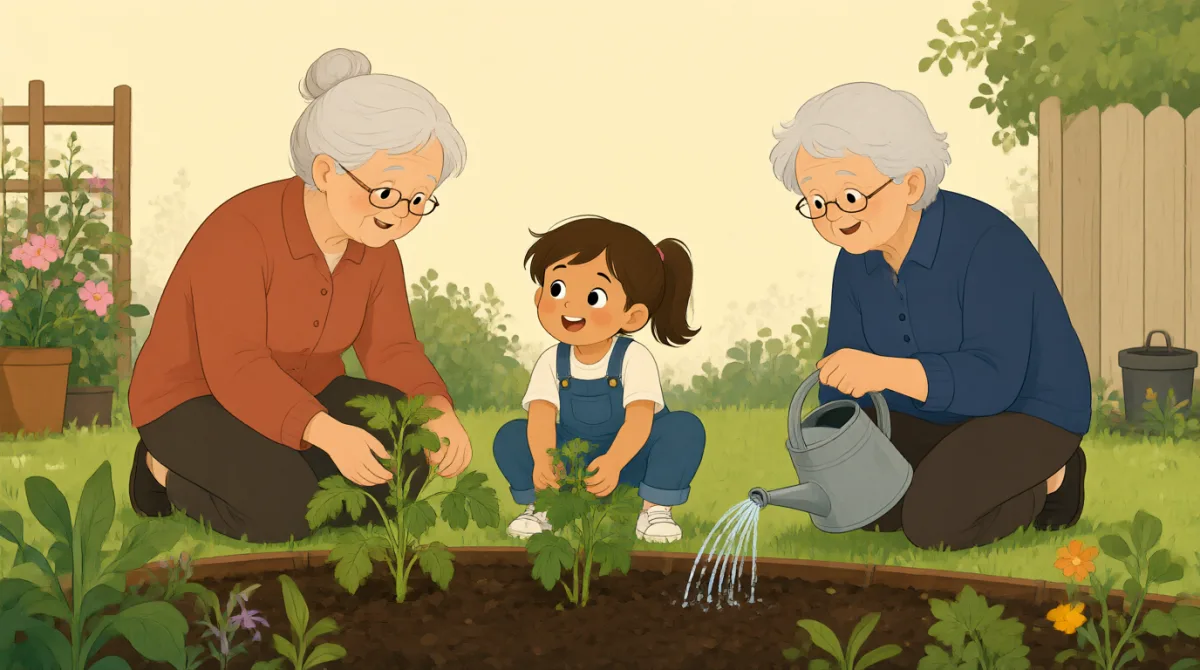

What should I do first? I can help with the garden.
Co mam najpierw zrobić? Mogę pomóc w ogrodzie.

Thanks, Emma. Please pull the weeds near those small plants.
Dzięki, Emma. Proszę, powyrywaj chwasty przy tych małych roślinach.

Be careful with the flowers. They’re growing well this year.
Uważaj na kwiaty. W tym roku dobrze rosną.
I’ll be careful. Should I water them after I pull the weeds?
Będę uważać. Podlać je, jak już powyrywam chwasty?
Yes, please. The soil is dry, and the plants need a good drink.
Tak, proszę. Ziemia jest sucha, a rośliny porządnie spragnione.
We could grow tomatoes next. We use them in many meals.
Możemy teraz posadzić pomidory. Dodajemy je do wielu potraw.
That sounds fun! Can I help you plant them next weekend?
Ale fajnie! Mogę pomóc wam je posadzić w przyszły weekend?
Of course. Bring your gardening gloves, and we’ll find a sunny spot.
Oczywiście. Weź rękawice ogrodowe, a znajdziemy słoneczne miejsce.
Słownictwo8
- pull the weedswyrywać chwasty
To pull the weeds means to remove unwanted plants from a garden by pulling them out. You can say, “Please pull the weeds near the flowers.”
„Pull the weeds” oznacza usuwanie niechcianych roślin z ogrodu przez wyrywanie ich. Możesz powiedzieć: “Please pull the weeds near the flowers.”
- Be carefuluważaj
This is a way to remind someone to act safely and avoid causing a problem. Use it before someone handles something delicate or dangerous.
To sposób, by przypomnieć komuś, żeby zachował ostrożność i niczego nie zepsuł. Użyj tego zwrotu, zanim ktoś zajmie się czymś delikatnym lub niebezpiecznym.
- growing welldobrze rosnący
This means that a plant is healthy and getting bigger. You can use it to describe plants or other things that are developing successfully.
To znaczy, że roślina jest zdrowa i rośnie. Możesz użyć tego zwrotu, mówiąc o roślinach lub innych rzeczach, które dobrze się rozwijają.
- water thempodlać je
To water plants means to give them water. Use “water them” when the people you are talking about already know which plants you mean.
„Water plants” oznacza dostarczyć roślinom wody. Użyj “water them”, gdy rozmówcy wiedzą już, o które rośliny chodzi.
- The soil is dryZiemia jest sucha
Soil is the earth in which plants grow. This sentence explains that the plants need water.
„Soil” to ziemia, w której rosną rośliny. To zdanie wyjaśnia, że rośliny potrzebują wody.
- grow tomatoesuprawiać pomidory
To grow tomatoes means to plant and care for tomato plants. You can replace “tomatoes” with another plant or vegetable.
„Grow tomatoes” oznacza sadzić pomidory i dbać o ich rośliny. Zamiast “tomatoes” możesz wstawić nazwę innej rośliny lub warzywa.
- next weekendw przyszły weekend
This means the weekend that is coming soon. Use it to talk about a plan for the near future.
To znaczy w najbliższy nadchodzący weekend. Użyj tego wyrażenia, gdy mówisz o planie na niedaleką przyszłość.
- find a sunny spotznaleźć słoneczne miejsce
A sunny spot is a place that gets a lot of sunlight. This phrase is useful when choosing a good place for plants.
„A sunny spot” to miejsce, do którego dociera dużo światła słonecznego. Ten zwrot przydaje się, gdy wybierasz dobre miejsce dla roślin.
Kluczowe zdania7
- 1
What should I do first?
Co mam najpierw zrobić?
Use this to ask what task to do before the others. You can replace “do” with another action, such as “What should I bring first?”
Użyj tego pytania, by dowiedzieć się, jakie zadanie wykonać najpierw. Możesz zastąpić “do” inną czynnością, na przykład: “What should I bring first?”
- 2
I can help with the garden.
Mogę pomóc w ogrodzie.
This is a friendly way to offer help. Replace “the garden” with another task or place, such as “I can help with dinner.”
To przyjazny sposób, by zaoferować pomoc. Zamiast “the garden” możesz podać inne zadanie lub miejsce, na przykład: “I can help with dinner.”
- 3
Please pull the weeds near those small plants.
Proszę, powyrywaj chwasty przy tych małych roślinach.
This is a polite way to ask someone to remove weeds and say where to do it. You can change the action and location to give other simple instructions.
To uprzejma prośba o usunięcie chwastów, która wskazuje też, gdzie to zrobić. Możesz zmienić czynność i miejsce, by przekazać inne proste instrukcje.
- 4
Should I water them after I pull the weeds?
Podlać je, jak już powyrywam chwasty?
Use “Should I…?” to ask if an action is the right thing to do. “After” helps you check the order of two tasks.
Użyj “Should I…?”, by zapytać, czy dana czynność będzie właściwa. “After” pomaga ustalić kolejność dwóch zadań.
- 5
The soil is dry, and the plants need a good drink.
Ziemia jest sucha, a rośliny porządnie spragnione.
This explains why the plants need water. “The plants need a good drink” is a friendly, everyday way to say they need watering.
To wyjaśnia, dlaczego rośliny potrzebują wody. “The plants need a good drink” to swobodny, codzienny sposób na powiedzenie, że trzeba je podlać.
- 6
Can I help you plant them next weekend?
Mogę pomóc wam je posadzić w przyszły weekend?
Use this to offer help with a future activity and ask for permission. You can change “plant them” and “next weekend” to fit your plans.
Użyj tego pytania, by zaoferować pomoc przy przyszłej czynności i poprosić o pozwolenie. Możesz zmienić “plant them” i “next weekend”, by dopasować zdanie do swoich planów.
- 7
Bring your gardening gloves, and we’ll find a sunny spot.
Weź rękawice ogrodowe, a znajdziemy słoneczne miejsce.
This sentence gives a simple instruction and describes what you will do together. Use “Bring your…” to remind someone to take something they need.
To zdanie zawiera prostą instrukcję i mówi, co zrobicie razem. Użyj “Bring your…”, by przypomnieć komuś, żeby zabrał potrzebną rzecz.