Getting the Bag Delivered
La livraison de la valise
Grace calls Emma with an update: the suitcase has been found and will be delivered to her hotel. Emma checks the delivery details and thanks her.
Grace appelle Emma pour lui annoncer que sa valise a été retrouvée et qu’elle sera livrée à son hôtel. Emma vérifie les détails de la livraison et la remercie.
Dialogue8
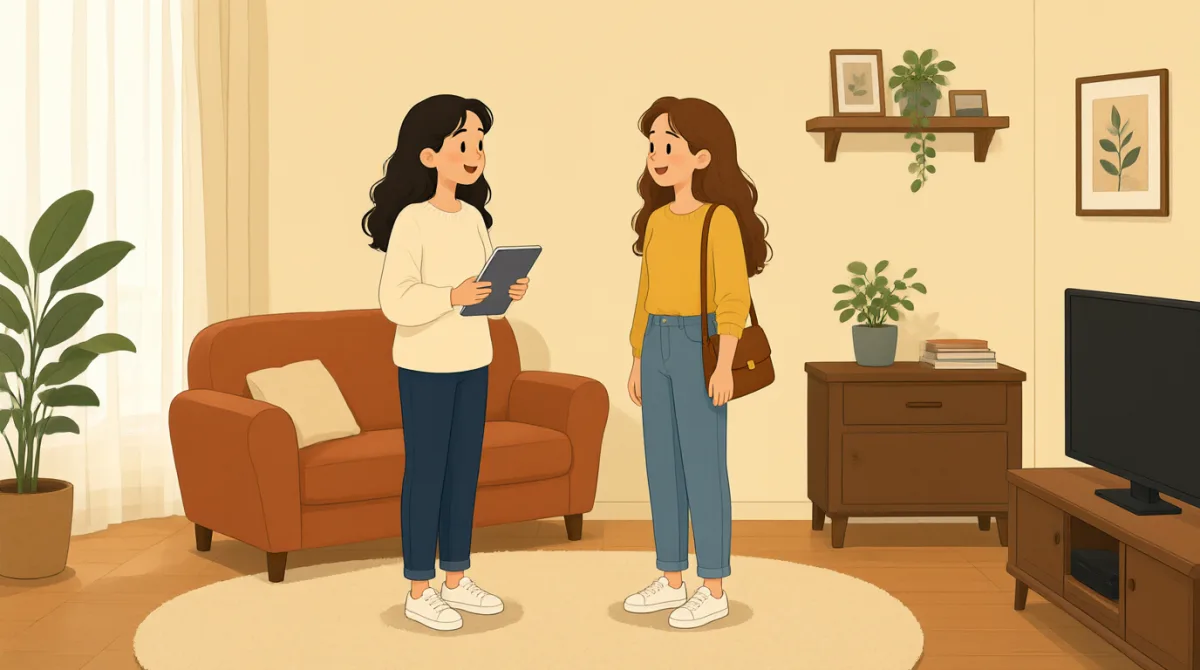

Hi, Emma. I’m calling with good news. We found your suitcase.
Bonjour, Emma. Je vous appelle pour vous annoncer une bonne nouvelle. Nous avons retrouvé votre valise.

That’s great! Thank you for letting me know.
C’est super ! Merci de m’avoir prévenue.
We’ll deliver it to your hotel this evening. Will you be there?
Nous vous la livrerons à votre hôtel ce soir. Vous serez là ?
Yes, I’ll be there after six. Is that okay?
Oui, j’y serai après six heures. Ça vous convient ?
That works. We have your hotel address and phone number.
Ça marche. Nous avons l’adresse de votre hôtel et votre numéro de téléphone.
Great. Will the driver call me when the bag arrives?
Très bien. Le livreur m’appellera quand la valise arrivera ?
Yes, the driver will call you before delivery. Please keep your phone on.
Oui, le livreur vous appellera avant la livraison. Veuillez garder votre téléphone allumé.
I will. Thanks so much for your help, Grace.
Je le ferai. Merci beaucoup pour votre aide, Grace.
Vocabulaire7
- good newsune bonne nouvelle
This means something positive has happened. You can use it when you want to share happy information.
Cela signifie qu’il s’est passé quelque chose de positif. Vous pouvez employer cette expression pour annoncer une information réjouissante.
- We found your suitcase.Nous avons retrouvé votre valise.
This means the lost suitcase has been located. Use “We found your...” to tell someone that a missing item has been found.
Cela signifie que la valise perdue a été localisée. Utilisez “We found your...” pour annoncer à quelqu’un qu’un objet égaré a été retrouvé.
- deliver it to your hotella livrer à votre hôtel
This means to bring the suitcase to the hotel. Use “deliver it to...” to say where something will be brought.
Cela signifie apporter la valise à l’hôtel. Utilisez “deliver it to...” pour préciser où quelque chose sera apporté.
- Will you be there?Vous serez là ?
This asks if someone will be at a place at a future time. You can change “there” to a place, such as “Will you be at the hotel?”
Cette question demande si quelqu’un sera à un endroit à un moment donné. Vous pouvez remplacer “there” par un lieu, par exemple “Will you be at the hotel?”
- That works.Ça marche.
This means that a plan or time is okay. It is a simple way to agree with a suggestion.
Cela signifie qu’un plan ou un horaire convient. C’est une façon simple d’accepter une proposition.
- keep your phone ongarder votre téléphone allumé
This means to leave your phone turned on. You can use this when someone may need to call you.
Cela signifie laisser son téléphone allumé. Vous pouvez employer cette expression quand quelqu’un risque de devoir vous appeler.
- Thanks so much for your help.Merci beaucoup pour votre aide.
This is a warm way to thank someone. You can use it when someone has helped you with a problem.
C’est une façon chaleureuse de remercier quelqu’un. Vous pouvez l’employer quand une personne vous a aidé à résoudre un problème.
Phrases clés8
- 1
I’m calling with good news.
Je vous appelle pour vous annoncer une bonne nouvelle.
Use this to introduce positive information during a call. You can replace “good news” with another short update.
Utilisez cette phrase pour annoncer une information positive au cours d’un appel. Vous pouvez remplacer “good news” par une autre brève information.
- 2
We found your suitcase.
Nous avons retrouvé votre valise.
This is a clear way to tell someone that a lost item has been located. Replace “suitcase” with another missing item.
C’est une façon claire d’annoncer à quelqu’un qu’un objet perdu a été retrouvé. Remplacez “suitcase” par le nom d’un autre objet égaré.
- 3
We’ll deliver it to your hotel this evening.
Nous vous la livrerons à votre hôtel ce soir.
Use this to explain what will happen and when. You can change the item, destination, or time to fit your plan.
Utilisez cette phrase pour expliquer ce qui va se passer et quand. Vous pouvez changer l’objet, la destination ou le moment selon votre situation.
- 4
Will you be there?
Vous serez là ?
This is a simple way to check if someone will be at a place later. You can use it when arranging a delivery or meeting.
C’est une façon simple de vérifier si quelqu’un sera à un endroit plus tard. Vous pouvez l’utiliser pour organiser une livraison ou un rendez-vous.
- 5
I’ll be there after six.
J’y serai après six heures.
Use this to say when you will arrive or be available. Change “after six” to another time.
Utilisez cette phrase pour indiquer quand vous arriverez ou serez disponible. Remplacez “after six” par un autre horaire.
- 6
Will the driver call me when the bag arrives?
Le livreur m’appellera quand la valise arrivera ?
This is a useful question when you want to know how you will get an update. You can change “the driver” or “the bag” to fit another situation.
Cette question est utile quand vous voulez savoir comment vous serez tenu au courant. Vous pouvez remplacer “the driver” ou “the bag” pour l’adapter à une autre situation.
- 7
Please keep your phone on.
Veuillez garder votre téléphone allumé.
Use this polite request when someone may need to contact you. You can replace “your phone” with another device or thing to keep ready.
Utilisez cette demande polie quand quelqu’un risque d’avoir besoin de vous contacter. Vous pouvez remplacer “your phone” par un autre appareil ou objet à garder prêt.
- 8
Thanks so much for your help, Grace.
Merci beaucoup pour votre aide, Grace.
This is a friendly way to thank someone for helping you. Say the person’s name at the end to make it personal.
C’est une façon amicale de remercier quelqu’un pour son aide. Ajoutez le prénom de la personne à la fin pour rendre votre remerciement plus personnel.