Getting the Bag Delivered
La entrega de la maleta
Grace calls Emma with an update: the suitcase has been found and will be delivered to her hotel. Emma checks the delivery details and thanks her.
Grace llama a Emma para darle buenas noticias: han encontrado la maleta y se la entregarán en el hotel. Emma confirma los detalles de la entrega y se lo agradece.
Diálogo8
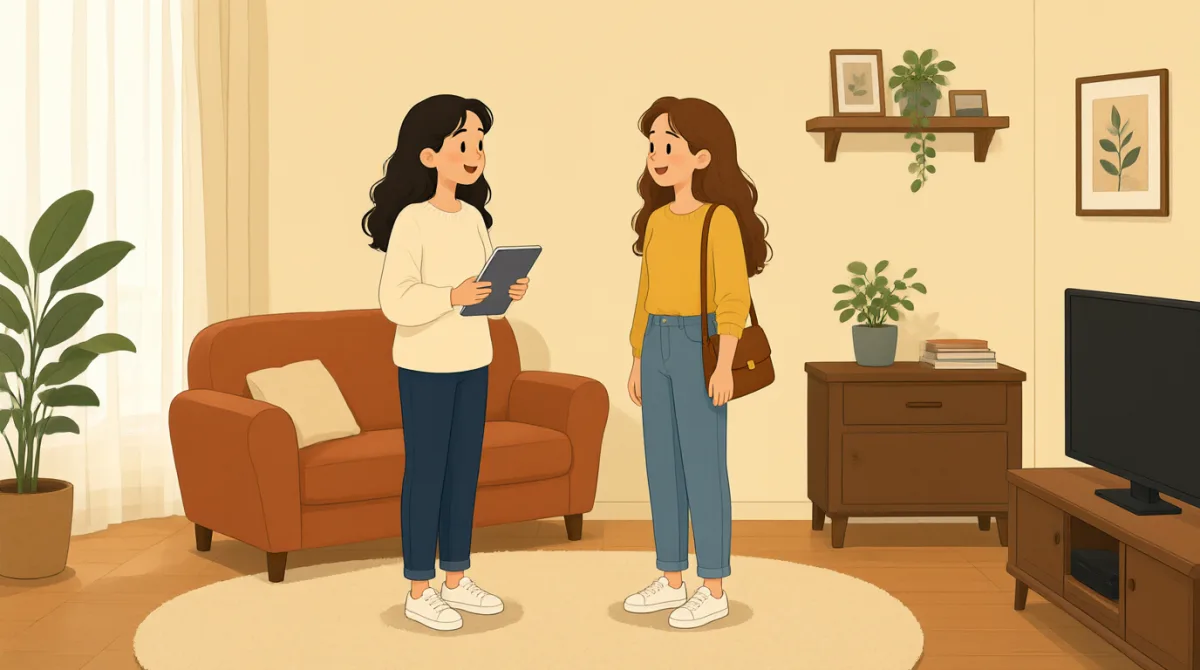

Hi, Emma. I’m calling with good news. We found your suitcase.
Hola, Emma. Te llamo para darte buenas noticias. Hemos encontrado tu maleta.

That’s great! Thank you for letting me know.
¡Qué bien! Gracias por avisarme.
We’ll deliver it to your hotel this evening. Will you be there?
Te la entregaremos en el hotel esta tarde. ¿Estarás allí?
Yes, I’ll be there after six. Is that okay?
Sí, estaré allí después de las seis. ¿Está bien?
That works. We have your hotel address and phone number.
Perfecto. Tenemos la dirección de tu hotel y tu número de teléfono.
Great. Will the driver call me when the bag arrives?
Genial. ¿El conductor me llamará cuando llegue la maleta?
Yes, the driver will call you before delivery. Please keep your phone on.
Sí, el conductor te llamará antes de la entrega. Por favor, mantén el teléfono encendido.
I will. Thanks so much for your help, Grace.
Lo haré. Muchas gracias por tu ayuda, Grace.
Vocabulario7
- good newsbuenas noticias
This means something positive has happened. You can use it when you want to share happy information.
Significa que ha ocurrido algo positivo. Puedes usar esta expresión cuando quieras compartir una buena noticia.
- We found your suitcase.Hemos encontrado tu maleta.
This means the lost suitcase has been located. Use “We found your...” to tell someone that a missing item has been found.
Significa que han localizado la maleta perdida. Usa “We found your...” para decirle a alguien que han encontrado algo que había perdido.
- deliver it to your hotelentregártela en el hotel
This means to bring the suitcase to the hotel. Use “deliver it to...” to say where something will be brought.
Significa llevar la maleta al hotel. Usa “deliver it to...” para decir adónde llevarán algo.
- Will you be there?¿Estarás allí?
This asks if someone will be at a place at a future time. You can change “there” to a place, such as “Will you be at the hotel?”
Pregunta si alguien estará en un lugar en un momento futuro. Puedes cambiar “there” por un lugar, como en “Will you be at the hotel?” (¿Estarás en el hotel?).
- That works.Me parece bien.
This means that a plan or time is okay. It is a simple way to agree with a suggestion.
Significa que un plan o una hora está bien. Es una forma sencilla de aceptar una propuesta.
- keep your phone onmantén el teléfono encendido
This means to leave your phone turned on. You can use this when someone may need to call you.
Significa dejar el teléfono encendido. Puedes usar esta expresión cuando alguien quizá necesite llamarte.
- Thanks so much for your help.Muchas gracias por tu ayuda.
This is a warm way to thank someone. You can use it when someone has helped you with a problem.
Es una forma cálida de darle las gracias a alguien. Puedes usarla cuando alguien te haya ayudado con un problema.
Frases clave8
- 1
I’m calling with good news.
Te llamo para darte buenas noticias.
Use this to introduce positive information during a call. You can replace “good news” with another short update.
Usa esta frase para introducir una noticia positiva durante una llamada. Puedes sustituir “good news” por otra novedad breve.
- 2
We found your suitcase.
Hemos encontrado tu maleta.
This is a clear way to tell someone that a lost item has been located. Replace “suitcase” with another missing item.
Es una forma clara de decirle a alguien que han localizado algo que había perdido. Sustituye “suitcase” por otro objeto perdido.
- 3
We’ll deliver it to your hotel this evening.
Te la entregaremos en el hotel esta tarde.
Use this to explain what will happen and when. You can change the item, destination, or time to fit your plan.
Usa esta frase para explicar qué ocurrirá y cuándo. Puedes cambiar el objeto, el destino o la hora según tus planes.
- 4
Will you be there?
¿Estarás allí?
This is a simple way to check if someone will be at a place later. You can use it when arranging a delivery or meeting.
Es una forma sencilla de confirmar si alguien estará en un lugar más tarde. Puedes usarla para organizar una entrega o un encuentro.
- 5
I’ll be there after six.
Estaré allí después de las seis.
Use this to say when you will arrive or be available. Change “after six” to another time.
Usa esta frase para decir cuándo llegarás o cuándo estarás disponible. Cambia “after six” por otra hora.
- 6
Will the driver call me when the bag arrives?
¿El conductor me llamará cuando llegue la maleta?
This is a useful question when you want to know how you will get an update. You can change “the driver” or “the bag” to fit another situation.
Es una pregunta útil cuando quieres saber cómo recibirás información. Puedes cambiar “the driver” o “the bag” para adaptarlo a otra situación.
- 7
Please keep your phone on.
Por favor, mantén el teléfono encendido.
Use this polite request when someone may need to contact you. You can replace “your phone” with another device or thing to keep ready.
Usa esta petición cortés cuando alguien quizá necesite ponerse en contacto contigo. Puedes sustituir “your phone” por otro dispositivo o cosa que debas tener a mano.
- 8
Thanks so much for your help, Grace.
Muchas gracias por tu ayuda, Grace.
This is a friendly way to thank someone for helping you. Say the person’s name at the end to make it personal.
Es una forma amistosa de darle las gracias a alguien por su ayuda. Di el nombre de la persona al final para que suene más personal.