Sleeping Better
Dormir mejor
Leo tells Mia that he tried the new habits and slept better. They talk about how he will keep up the changes.
Leo le cuenta a Mia que probó los nuevos hábitos y durmió mejor. Hablan de cómo mantendrá esos cambios.
Diálogo8
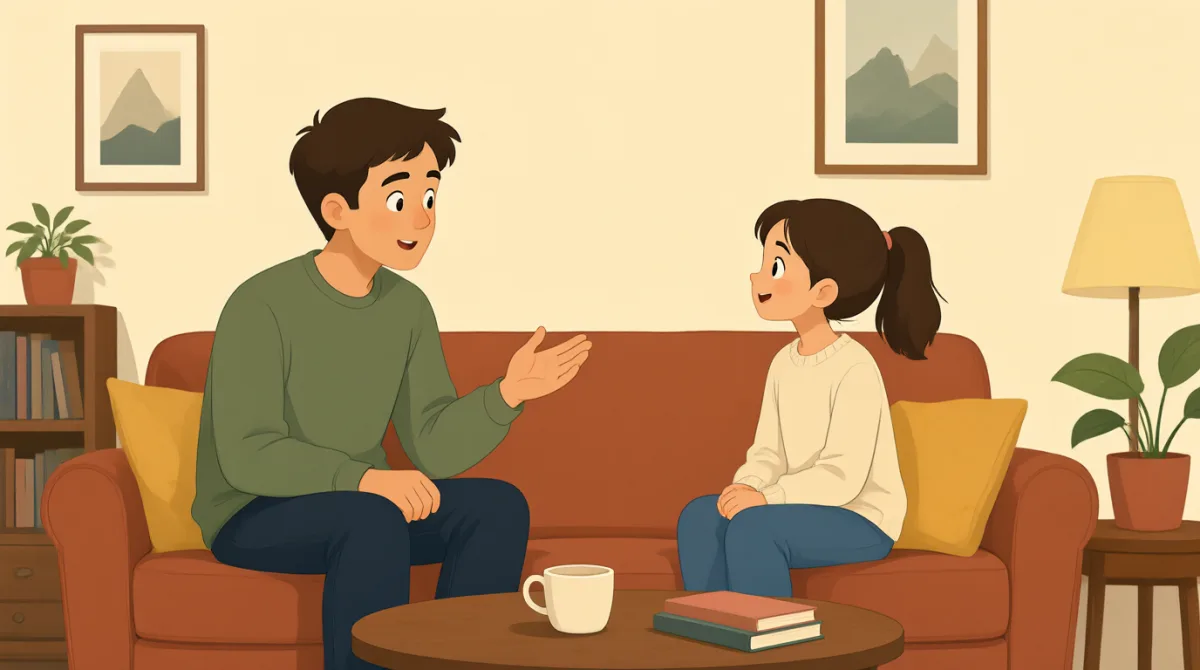

I put my phone away early last night, and I slept much better.
Anoche dejé el celular temprano y dormí mucho mejor.

That’s great! Did you go to bed earlier, too?
¡Qué bien! ¿También te acostaste más temprano?
Yes, I went to bed at ten. I woke up feeling rested.
Sí, me acosté a las diez. Me desperté sintiéndome descansado.
How do you feel at work today?
¿Cómo te sientes hoy en el trabajo?
Much better. I’m not sleepy, and I can focus more easily.
Mucho mejor. No tengo sueño y puedo concentrarme más fácilmente.
Will you keep putting your phone away before bed?
¿Vas a seguir dejando el celular a un lado antes de acostarte?
I will. I’ll try to keep the same bedtime every night.
Sí. Voy a intentar acostarme a la misma hora todas las noches.
Good plan. If you keep it up, you may sleep well more often.
Es un buen plan. Si sigues así, puede que duermas bien más seguido.
Vocabulario6
- put my phone awaydejar el celular a un lado
To put your phone away is to stop using it and place it somewhere. You can say this when you want to avoid looking at your phone.
“Put my phone away” significa dejar de usar el celular y ponerlo en algún lugar. Puedes decirlo cuando quieras evitar mirar el celular.
- go to bedacostarse
To go to bed means to get into bed to sleep. You can use it to talk about what time you plan to sleep.
“Go to bed” significa meterse en la cama para dormir. Puedes usar esta expresión para hablar de la hora a la que piensas dormir.
- sleepytener sueño
Sleepy means tired and ready to sleep. You can use it to explain how you feel during the day.
“Sleepy” significa tener cansancio y estar listo para dormir. Puedes usar esta palabra para explicar cómo te sientes durante el día.
- focus more easilyconcentrarse más fácilmente
To focus more easily means to give your attention to something without as much difficulty. You can use it when you can work or study better.
“Focus more easily” significa prestar atención a algo sin tanta dificultad. Puedes usar esta expresión cuando te resulta más fácil trabajar o estudiar.
- keep the same bedtimeacostarse siempre a la misma hora
This means to go to bed at the same time each night. You can use it to talk about building a regular sleep routine.
“Keep the same bedtime” significa acostarse a la misma hora todas las noches. Puedes usar esta expresión para hablar de crear una rutina regular de sueño.
- keep it upseguir así
To keep it up means to continue doing something. You can use it to encourage someone to continue a good habit.
“Keep it up” significa seguir haciendo algo. Puedes usar esta expresión para animar a alguien a mantener un buen hábito.
Frases clave7
- 1
I put my phone away early last night, and I slept much better.
Anoche dejé el celular temprano y dormí mucho mejor.
Use this sentence to say that a change you made helped you sleep. You can replace “put my phone away” with another action you tried.
Usa esta oración para decir que un cambio que hiciste te ayudó a dormir. Puedes reemplazar “put my phone away” por otra acción que hayas probado.
- 2
Did you go to bed earlier, too?
¿También te acostaste más temprano?
This is a simple way to ask if someone went to bed earlier than usual. You can replace “go to bed” with another activity to ask about a change.
Esta es una forma sencilla de preguntar si alguien se acostó más temprano de lo habitual. Puedes reemplazar “go to bed” por otra actividad para preguntar por un cambio.
- 3
I woke up feeling rested.
Me desperté sintiéndome descansado.
Use this to describe waking up with energy after a good night’s sleep. You can replace “rested” with another feeling, such as “happy” or “tired.”
Usa esta frase para describir que te despiertas con energía después de dormir bien. Puedes reemplazar “rested” por otro estado de ánimo, como “happy” o “tired”.
- 4
I’m not sleepy, and I can focus more easily.
No tengo sueño y puedo concentrarme más fácilmente.
This sentence explains how someone feels and works after sleeping better. You can use “I can focus more easily” when a task feels easier to concentrate on.
Esta oración explica cómo se siente y trabaja alguien después de dormir mejor. Puedes usar “I can focus more easily” cuando te resulta más fácil concentrarte en una tarea.
- 5
Will you keep putting your phone away before bed?
¿Vas a seguir dejando el celular a un lado antes de acostarte?
Use this question to ask if someone plans to continue a habit. You can replace “putting your phone away” with another action.
Usa esta pregunta para saber si alguien piensa mantener un hábito. Puedes reemplazar “putting your phone away” por otra acción.
- 6
I’ll try to keep the same bedtime every night.
Voy a intentar acostarme a la misma hora todas las noches.
This is a useful way to talk about a plan or goal. You can replace “keep the same bedtime” with another regular habit.
Esta es una forma útil de hablar de un plan o una meta. Puedes reemplazar “keep the same bedtime” por otro hábito regular.
- 7
If you keep it up, you may sleep well more often.
Si sigues así, puede que duermas bien más seguido.
This sentence encourages someone to continue a good habit and explains a possible result. You can use “If you keep it up” to talk about other positive results, too.
Esta oración anima a alguien a mantener un buen hábito y explica un posible resultado. También puedes usar “If you keep it up” para hablar de otros resultados positivos.