Waiting at the Empty Baggage Belt
Esperando junto a la cinta de equipaje vacía
Emma waits at the baggage belt, but her suitcase never comes. She asks another traveler what to do.
Emma espera junto a la cinta de equipaje, pero su maleta no aparece. Le pregunta a otro viajero qué debe hacer.
Diálogo8
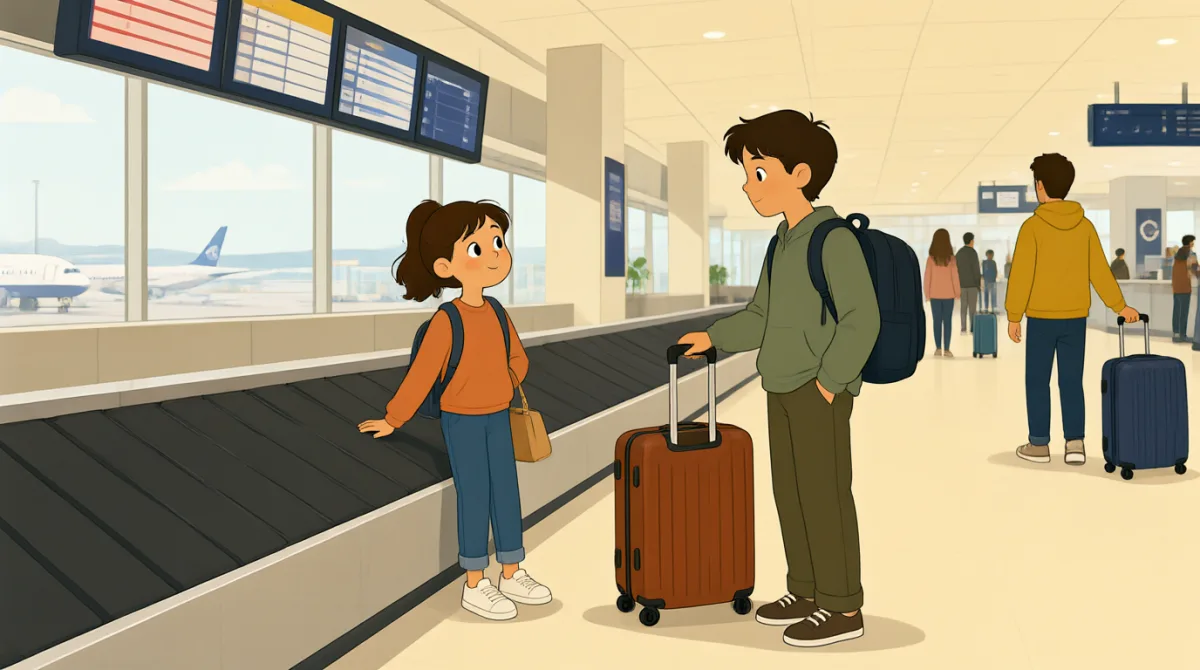

I’ve been waiting here for twenty minutes, but my suitcase hasn’t come out.
Llevo veinte minutos esperando aquí, pero mi maleta no ha salido.

That’s frustrating. Did you check the other side of the belt?
Qué frustrante. ¿Has mirado al otro lado de la cinta?
Yes, I looked all around. There are no bags left now.
Sí, he mirado por todas partes. Ya no quedan maletas.
You should talk to someone at the baggage service desk.
Deberías hablar con alguien en el mostrador de atención de equipaje.
Where can I find that desk? I don’t see any signs.
¿Dónde está ese mostrador? No veo ningún letrero.
It’s near the exit, next to the information desk. I can show you.
Está cerca de la salida, junto al mostrador de información. Puedo acompañarte.
Thanks. I’m worried because my suitcase has my clothes and toiletries.
Gracias. Estoy preocupada porque en mi maleta están mi ropa y mis artículos de aseo.
They can help you report it. Keep your baggage claim ticket ready.
Pueden ayudarte a denunciarlo. Ten a mano el comprobante de equipaje.
Vocabulario6
- frustratingfrustrante
Something is frustrating when it makes you feel annoyed or upset. Here, Jack understands that Emma is unhappy about her missing suitcase.
Algo es frustrante cuando te hace sentir molesto o disgustado. En este caso, Jack entiende que Emma está preocupada porque no encuentra su maleta.
- looked all aroundmirar por todas partes
This means searched in every direction or place nearby. You can use it to explain that you have searched carefully.
Significa buscar en todos los lugares o direcciones cercanos. Puedes usar esta expresión para explicar que has buscado con cuidado.
- baggage service deskmostrador de atención de equipaje
A place at the airport where staff help with problems about luggage.
Un lugar del aeropuerto donde el personal ayuda a resolver problemas con el equipaje.
- near the exitcerca de la salida
This means close to the way out. Use it to give someone a simple location.
Significa que está próximo al lugar por donde se sale. Úsalo para indicar una ubicación de forma sencilla.
- show youacompañarte
This means guide someone to a place or help them find it. You can say, “I can show you,” when offering help.
Significa guiar a alguien hasta un lugar o ayudarle a encontrarlo. Puedes decir “I can show you” cuando te ofreces a ayudar.
- baggage claim ticketcomprobante de equipaje
A ticket or tag connected to your checked luggage. Keep it ready when asking the airport for help.
Una etiqueta o comprobante asociado al equipaje que facturas. Tenlo a mano cuando pidas ayuda en el aeropuerto.
Frases clave8
- 1
I’ve been waiting here for twenty minutes, but my suitcase hasn’t come out.
Llevo veinte minutos esperando aquí, pero mi maleta no ha salido.
This is useful for explaining that your bag has not arrived. You can replace “twenty minutes” with another length of time.
Esta frase sirve para explicar que tu maleta no ha llegado. Puedes cambiar “twenty minutes” por otro período de tiempo.
- 2
Did you check the other side of the belt?
¿Has mirado al otro lado de la cinta?
Use this question to suggest checking another place. Replace “the other side of the belt” with another location.
Usa esta pregunta para sugerir que alguien revise otro lugar. Cambia “the other side of the belt” por otra ubicación.
- 3
There are no bags left now.
Ya no quedan maletas.
This is a simple way to say that all the bags have been collected. You can use “There are no [items] left now” in other situations.
Esta es una forma sencilla de decir que ya se han recogido todas las maletas. Puedes usar “There are no [items] left now” en otras situaciones.
- 4
You should talk to someone at the baggage service desk.
Deberías hablar con alguien en el mostrador de atención de equipaje.
This sentence gives someone practical advice. Use “You should talk to someone at…” to suggest where to get help.
Esta frase da un consejo práctico. Usa “You should talk to someone at…” para sugerir dónde se puede pedir ayuda.
- 5
Where can I find that desk?
¿Dónde está ese mostrador?
Use this question when you need directions to a place someone has mentioned. Replace “that desk” with the place you are looking for.
Usa esta pregunta cuando necesites indicaciones para llegar a un lugar que alguien ha mencionado. Cambia “that desk” por el lugar que estás buscando.
- 6
I can show you.
Puedo acompañarte.
This is a friendly way to offer to guide someone. You can use it when you know where a place is.
Esta es una forma amable de ofrecerte a guiar a alguien. Puedes usarla cuando sabes dónde está un lugar.
- 7
I’m worried because my suitcase has my clothes and toiletries.
Estoy preocupada porque en mi maleta están mi ropa y mis artículos de aseo.
This explains why you are concerned about your luggage. Use “I’m worried because…” to give a reason for your concern.
Esta frase explica por qué te preocupa tu equipaje. Usa “I’m worried because…” para dar una razón de tu preocupación.
- 8
Keep your baggage claim ticket ready.
Ten a mano el comprobante de equipaje.
This is a useful instruction when someone may need a document. Replace “baggage claim ticket” with the item they should prepare.
Esta es una instrucción útil cuando alguien puede necesitar un documento. Cambia “baggage claim ticket” por el objeto que debe preparar.