Waiting at the Empty Baggage Belt
खाली बैगेज बेल्ट के पास इंतज़ार
Emma waits at the baggage belt, but her suitcase never comes. She asks another traveler what to do.
एमा बैगेज बेल्ट के पास इंतज़ार करती है, लेकिन उसका सूटकेस नहीं आता। वह दूसरे यात्री से पूछती है कि उसे क्या करना चाहिए।
संवाद8
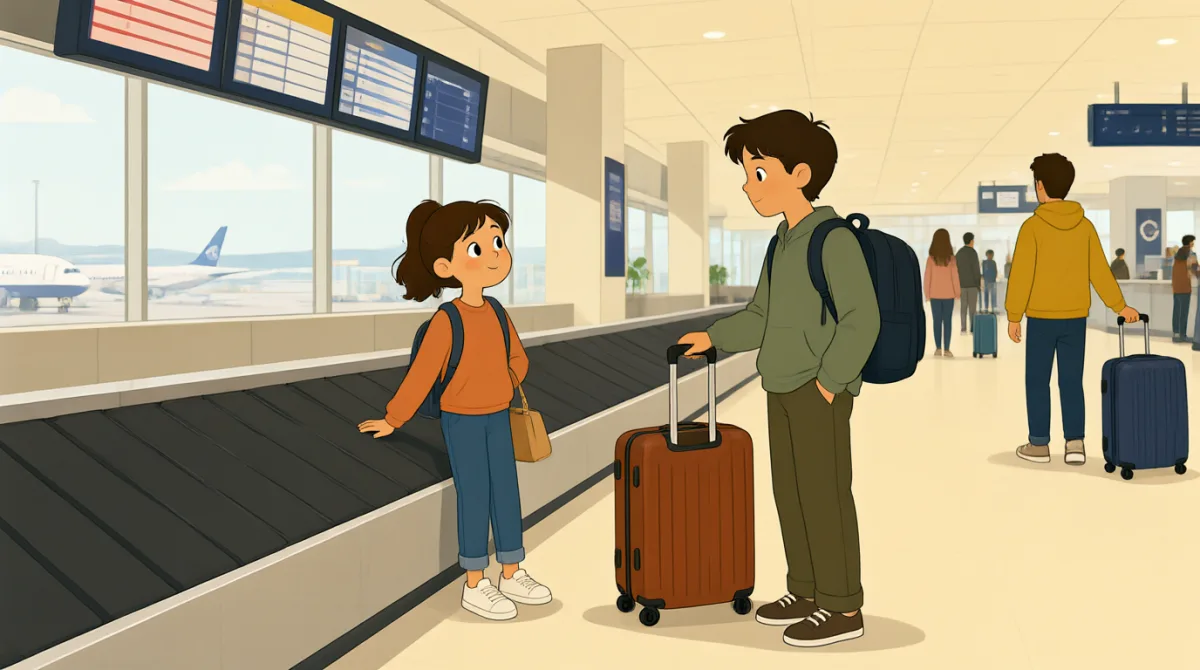

I’ve been waiting here for twenty minutes, but my suitcase hasn’t come out.
मैं यहाँ बीस मिनट से इंतज़ार कर रही हूँ, लेकिन मेरा सूटकेस बाहर नहीं आया।

That’s frustrating. Did you check the other side of the belt?
यह तो बहुत परेशान करने वाली बात है। क्या आपने बेल्ट के दूसरी तरफ़ देखा?
Yes, I looked all around. There are no bags left now.
हाँ, मैंने चारों तरफ़ देखा। अब वहाँ कोई बैग नहीं बचा है।
You should talk to someone at the baggage service desk.
आपको बैगेज सर्विस डेस्क पर किसी से बात करनी चाहिए।
Where can I find that desk? I don’t see any signs.
मुझे वह डेस्क कहाँ मिलेगी? मुझे कोई संकेत नहीं दिख रहा।
It’s near the exit, next to the information desk. I can show you.
वह निकास के पास, सूचना डेस्क के बगल में है। मैं आपको वहाँ ले चल सकता हूँ।
Thanks. I’m worried because my suitcase has my clothes and toiletries.
शुक्रिया। मुझे चिंता हो रही है, क्योंकि मेरे सूटकेस में मेरे कपड़े और प्रसाधन का सामान है।
They can help you report it. Keep your baggage claim ticket ready.
वे इसकी रिपोर्ट दर्ज करने में आपकी मदद कर सकते हैं। अपना बैगेज क्लेम टिकट तैयार रखें।
शब्दावली6
- frustratingपरेशान करने वाला
Something is frustrating when it makes you feel annoyed or upset. Here, Jack understands that Emma is unhappy about her missing suitcase.
कोई बात परेशान करने वाली तब होती है जब उससे आपको झुंझलाहट या दुख महसूस हो। यहाँ जैक समझता है कि एमा अपना सूटकेस न मिलने से परेशान है।
- looked all aroundचारों तरफ़ देखा
This means searched in every direction or place nearby. You can use it to explain that you have searched carefully.
इसका मतलब है हर दिशा में या आस-पास की हर जगह तलाश करना। आप इसका इस्तेमाल यह बताने के लिए कर सकते हैं कि आपने ध्यान से खोजा है।
- baggage service deskबैगेज सर्विस डेस्क
A place at the airport where staff help with problems about luggage.
हवाई अड्डे पर वह जगह जहाँ कर्मचारी सामान से जुड़ी समस्याओं में मदद करते हैं।
- near the exitनिकास के पास
This means close to the way out. Use it to give someone a simple location.
इसका मतलब है बाहर जाने के रास्ते के करीब। किसी को किसी जगह का आसान पता बताने के लिए इसका इस्तेमाल करें।
- show youवहाँ ले चलना
This means guide someone to a place or help them find it. You can say, “I can show you,” when offering help.
इसका मतलब है किसी को किसी जगह तक पहुँचाना या उसे जगह ढूँढ़ने में मदद करना। मदद की पेशकश करते हुए आप कह सकते हैं, “I can show you” (मैं आपको वहाँ ले चल सकता हूँ)।
- baggage claim ticketबैगेज क्लेम टिकट
A ticket or tag connected to your checked luggage. Keep it ready when asking the airport for help.
यह चेक-इन किए गए सामान से जुड़ा टिकट या टैग होता है। हवाई अड्डे से मदद माँगते समय इसे तैयार रखें।
मुख्य वाक्य8
- 1
I’ve been waiting here for twenty minutes, but my suitcase hasn’t come out.
मैं यहाँ बीस मिनट से इंतज़ार कर रही हूँ, लेकिन मेरा सूटकेस बाहर नहीं आया।
This is useful for explaining that your bag has not arrived. You can replace “twenty minutes” with another length of time.
अपना बैग न पहुँचने की बात बताने के लिए यह वाक्य काम आता है। “twenty minutes” की जगह आप कोई और समय बता सकते हैं।
- 2
Did you check the other side of the belt?
क्या आपने बेल्ट के दूसरी तरफ़ देखा?
Use this question to suggest checking another place. Replace “the other side of the belt” with another location.
किसी दूसरी जगह देखने का सुझाव देने के लिए यह सवाल पूछें। “the other side of the belt” की जगह किसी दूसरी जगह का नाम लें।
- 3
There are no bags left now.
अब वहाँ कोई बैग नहीं बचा है।
This is a simple way to say that all the bags have been collected. You can use “There are no [items] left now” in other situations.
यह बताने का आसान तरीका है कि सभी बैग ले लिए गए हैं। दूसरी स्थितियों में “There are no [items] left now” का इस्तेमाल कर सकते हैं।
- 4
You should talk to someone at the baggage service desk.
आपको बैगेज सर्विस डेस्क पर किसी से बात करनी चाहिए।
This sentence gives someone practical advice. Use “You should talk to someone at…” to suggest where to get help.
यह वाक्य किसी को काम की सलाह देता है। मदद कहाँ मिलेगी, यह सुझाने के लिए “You should talk to someone at…” का इस्तेमाल करें।
- 5
Where can I find that desk?
मुझे वह डेस्क कहाँ मिलेगी?
Use this question when you need directions to a place someone has mentioned. Replace “that desk” with the place you are looking for.
किसी के बताई हुई जगह का रास्ता पूछने के लिए यह सवाल पूछें। “that desk” की जगह उस जगह का नाम लें जिसे आप ढूँढ़ रहे हैं।
- 6
I can show you.
मैं आपको वहाँ ले चल सकता हूँ।
This is a friendly way to offer to guide someone. You can use it when you know where a place is.
किसी को रास्ता दिखाने की पेशकश करने का यह दोस्ताना तरीका है। जब आपको पता हो कि वह जगह कहाँ है, तब इसका इस्तेमाल करें।
- 7
I’m worried because my suitcase has my clothes and toiletries.
मुझे चिंता हो रही है, क्योंकि मेरे सूटकेस में मेरे कपड़े और प्रसाधन का सामान है।
This explains why you are concerned about your luggage. Use “I’m worried because…” to give a reason for your concern.
यह वाक्य बताता है कि आपको अपने सामान की चिंता क्यों है। अपनी चिंता का कारण बताने के लिए “I’m worried because…” का इस्तेमाल करें।
- 8
Keep your baggage claim ticket ready.
अपना बैगेज क्लेम टिकट तैयार रखें।
This is a useful instruction when someone may need a document. Replace “baggage claim ticket” with the item they should prepare.
जब किसी को कोई दस्तावेज़ चाहिए हो सकता है, तब यह निर्देश काम आता है। जिस चीज़ को तैयार रखना है, उसके नाम से “baggage claim ticket” को बदलें।