Checking the Bags
Revisar las bolsas
Emma brings the grocery bags inside and checks the items against her order. She notices that one item is missing.
Emma lleva las bolsas de la compra adentro y comprueba los artículos con su pedido. Se da cuenta de que falta un artículo.
Diálogo8
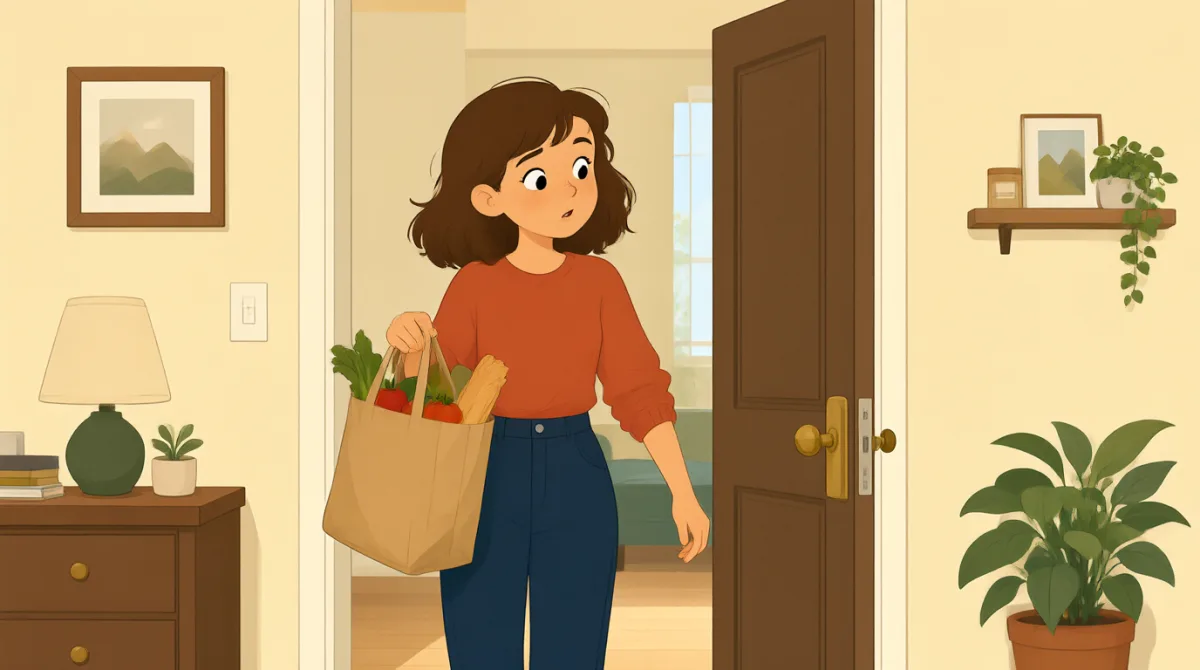

The bags are here. Let’s bring them inside and check the order.
Ya llegaron las bolsas. Vamos a meterlas y revisar el pedido.

Sure. I’ll read the list while you take out the groceries.
Claro. Yo leo la lista mientras tú sacas las cosas de las bolsas.
We have the milk, eggs, apples, and bread.
Tenemos la leche, los huevos, las manzanas y el pan.
Great. The rice and tomatoes are here, too.
Genial. También están el arroz y los tomates.
Wait, I don’t see the yogurt. It’s on the list.
Espera, no veo el yogur. Está en la lista.
You’re right. Let’s check the bags one more time.
Tienes razón. Revisemos las bolsas una vez más.
I checked them all. The yogurt is missing.
Ya las revisé todas. Falta el yogur.
Let’s keep the order receipt. You can report it later.
Guardemos el recibo del pedido. Puedes informar del problema más tarde.
Vocabulario8
- bring them insidemeterlas adentro
To carry the bags into the house. You can use this phrase when taking groceries or other things indoors.
Llevar las bolsas al interior de la casa. Puedes usar esta expresión cuando llevas la compra u otras cosas adentro.
- check the orderrevisar el pedido
To compare the groceries with what you ordered. Use it when you want to make sure everything is correct.
Comparar los productos con lo que pediste. Úsala cuando quieras asegurarte de que todo esté bien.
- take out the groceriessacar las cosas de las bolsas
To remove the groceries from the bags. You can use this phrase when unpacking after shopping.
Sacar los productos de las bolsas. Puedes usar esta expresión cuando desempacas después de hacer las compras.
- on the listestar en la lista
Included on a written list of things to buy or do. Use it to say that something is listed.
Estar incluido en una lista escrita de cosas que hay que comprar o hacer. Úsala para decir que algo aparece en la lista.
- one more timeuna vez más
Again, or an additional time. Use it when you want to repeat an action or check something again.
De nuevo, o una vez adicional. Úsala cuando quieras repetir una acción o revisar algo otra vez.
- is missingfaltar
Is not there when it should be. Use this phrase to explain that an expected item cannot be found.
No estar donde debería. Usa esta expresión para explicar que no encuentras algo que esperabas recibir.
- order receiptrecibo del pedido
A record of what you ordered. Keep it to check your purchase or report a problem.
Un comprobante de lo que pediste. Guárdalo para revisar tu compra o informar de un problema.
- report it laterinformar del problema más tarde
Tell someone about a problem at a later time. You can use this phrase when you will contact a store or service after checking.
Contarle a alguien sobre un problema más adelante. Puedes usar esta expresión si vas a comunicarte con una tienda o un servicio después de revisar el pedido.
Frases clave8
- 1
Let’s bring them inside and check the order.
Vamos a meterlas y revisar el pedido.
This is a useful way to suggest carrying something in and checking that everything is correct. You can reuse “Let’s [action] and [action]” to suggest two activities.
Esta es una forma útil de proponer llevar algo adentro y comprobar que todo esté bien. Puedes reutilizar “Let’s [action] and [action]” para proponer dos actividades.
- 2
I’ll read the list while you take out the groceries.
Yo leo la lista mientras tú sacas las cosas de las bolsas.
This sentence divides two tasks between people. Use “I’ll [action] while you [action]” to explain what each person will do at the same time.
Esta oración divide dos tareas entre varias personas. Usa “I’ll [action] while you [action]” para explicar qué hará cada persona al mismo tiempo.
- 3
We have the milk, eggs, apples, and bread.
Tenemos la leche, los huevos, las manzanas y el pan.
This is a simple way to say which items you have. You can replace the grocery names with other things from a list.
Esta es una forma sencilla de decir qué artículos tienes. Puedes cambiar los nombres de los productos por otras cosas de una lista.
- 4
The rice and tomatoes are here, too.
También están el arroz y los tomates.
Use this sentence to confirm that more items have arrived. “Are here, too” means they are present in addition to the items already mentioned.
Usa esta oración para confirmar que también llegaron otros artículos. “Are here, too” significa que están presentes además de los artículos que ya se mencionaron.
- 5
Wait, I don’t see the yogurt.
Espera, no veo el yogur.
This is a natural way to say that you cannot find something. Replace “the yogurt” with any item you are looking for.
Esta es una forma natural de decir que no encuentras algo. Cambia “the yogurt” por cualquier artículo que estés buscando.
- 6
You’re right. Let’s check the bags one more time.
Tienes razón. Revisemos las bolsas una vez más.
This sentence agrees with someone and suggests checking again. You can use “You’re right” to show agreement and “Let’s check [something] one more time” to suggest another check.
Esta oración expresa acuerdo con alguien y propone volver a revisar. Puedes usar “You’re right” para mostrar que estás de acuerdo y “Let’s check [something] one more time” para proponer otra revisión.
- 7
The yogurt is missing.
Falta el yogur.
Use this short sentence to say that an expected item is not there. Replace “The yogurt” with any missing item.
Usa esta oración breve para decir que algo que esperabas recibir no está. Cambia “The yogurt” por cualquier artículo que falte.
- 8
You can report it later.
Puedes informar del problema más tarde.
This sentence tells someone they can inform a person or company about a problem at a later time. Replace “it” with the problem you need to report.
Esta oración le dice a alguien que puede comunicarle un problema a una persona o empresa más adelante. Cambia “it” por el problema que necesitas reportar.