The Driver Calls
El conductor llama
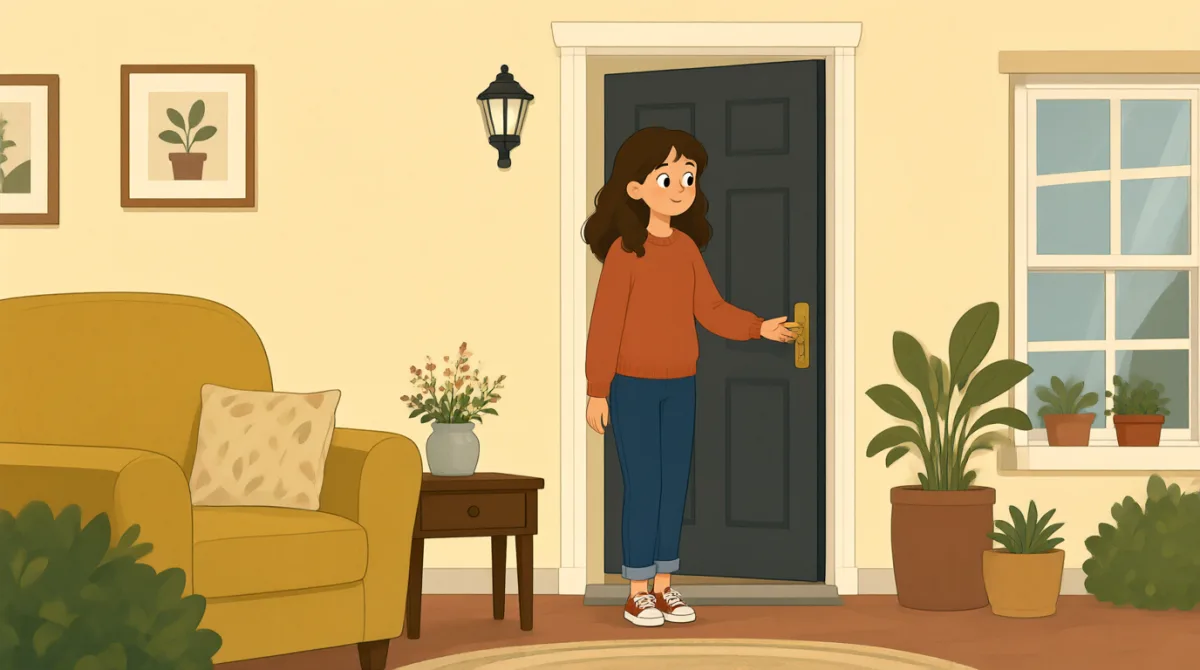
The driver calls Emma to say he is near her home. Emma gives him clear directions and asks him to leave the bags at her door.
El conductor llama a Emma para decirle que está cerca de su casa. Emma le da indicaciones claras y le pide que deje las bolsas en la puerta.
Diálogo9

Hi, this is Leo, your grocery delivery driver. I’m near your home now.
Hola, soy Leo, el repartidor de tus compras. Estoy cerca de tu casa.

Hi, Leo. I’m at 24 Oak Street, in the blue house.
Hola, Leo. Estoy en Oak Street 24, en la casa azul.
I see the street, but I’m not sure which house is yours.
Veo la calle, pero no estoy seguro de cuál es tu casa.
Go past the small park, then turn left at the corner.
Pasa el parquecito y luego gira a la izquierda en la esquina.
Okay, I see a blue house. Should I leave the bags at the door?
De acuerdo, veo una casa azul. ¿Dejo las bolsas en la puerta?
Yes, please. Leave them by the front door, not on the steps.
Sí, por favor. Déjalas junto a la puerta principal, no en los escalones.
Got it. I’ll put them next to the door and send you a message.
Entendido. Las pondré junto a la puerta y te enviaré un mensaje.
Thanks! Please keep the cold items together in one bag.
¡Gracias! Por favor, pon los productos fríos juntos en una sola bolsa.
Sure, I’ll do that now. Have a nice day!
Claro, lo hago ahora. ¡Que tengas un buen día!
Vocabulario8
- delivery driverrepartidor
A delivery driver brings groceries or other items to your home. You can use this phrase when talking about a person delivering an order.
Un “delivery driver” (repartidor) lleva compras u otros artículos a tu casa. Puedes usar esta expresión para hablar de la persona que entrega un pedido.
- near your homecerca de tu casa
This means close to your home. You can say it to tell someone where you are.
“Near your home” significa cerca de tu casa. Puedes decirlo para contarle a alguien dónde estás.
- go pastpasar de largo
This means to continue beyond a place. Use it to give simple directions.
“Go past” significa seguir más allá de un lugar. Úsalo para dar indicaciones sencillas.
- turn leftgirar a la izquierda
This means to change direction to the left. You can use it when guiding someone on a street.
“Turn left” significa cambiar de dirección hacia la izquierda. Puedes usarlo para guiar a alguien por una calle.
- leave the bags at the doordejar las bolsas en la puerta
This means to put the bags by the door and go without handing them to someone. Use this request for a delivery.
“Leave the bags at the door” significa dejar las bolsas junto a la puerta e irse sin entregárselas a alguien en mano. Puedes pedirlo cuando recibes una entrega.
- front doorpuerta principal
This is the main door at the front of a house. You can use it to show where a delivery should be left.
La “front door” es la puerta principal de una casa. Puedes decirlo para indicar dónde deben dejar una entrega.
- next to the doorjunto a la puerta
This means beside the door. Use it to give a clear place for someone to put something.
“Next to the door” significa al lado de la puerta. Úsalo para indicar con claridad dónde debe poner algo una persona.
- cold itemsproductos fríos
These are groceries that need to stay cold, such as milk or frozen food. You can ask someone to keep them together.
Los “cold items” son alimentos que deben mantenerse fríos, como la leche o los productos congelados. Puedes pedir que los dejen juntos.
Frases clave8
- 1
I’m near your home now.
Estoy cerca de tu casa.
This is a simple way to tell someone you are close to their home. You can replace “your home” with another place, such as “the store” or “the office.”
Esta es una forma sencilla de decirle a alguien que estás cerca de su casa. Puedes reemplazar “your home” por otro lugar, como “the store” o “the office”.
- 2
I’m at 24 Oak Street, in the blue house.
Estoy en Oak Street 24, en la casa azul.
Use this sentence to give your address and help someone identify your home. Replace the street address and house description with your own.
Usa esta frase para dar tu dirección y ayudar a alguien a reconocer tu casa. Cambia la dirección y la descripción de la casa por las tuyas.
- 3
Go past the small park, then turn left at the corner.
Pasa el parquecito y luego gira a la izquierda en la esquina.
This gives two clear steps for finding a place. You can use the same pattern with other landmarks and directions.
Esta frase da dos pasos claros para encontrar un lugar. Puedes usar la misma estructura con otros puntos de referencia e indicaciones.
- 4
Should I leave the bags at the door?
¿Dejo las bolsas en la puerta?
Use this question to check where someone wants a delivery left. Replace “the bags” with another item, such as “the package.”
Usa esta pregunta para confirmar dónde quiere alguien que dejen una entrega. Puedes reemplazar “the bags” por otro artículo, como “the package”.
- 5
Yes, please.
Sí, por favor.
This is a polite way to agree to a request or answer a question. You can use it in many everyday situations.
Esta es una forma educada de aceptar algo o responder a una pregunta. Puedes usarla en muchas situaciones cotidianas.
- 6
Leave them by the front door, not on the steps.
Déjalas junto a la puerta principal, no en los escalones.
This sentence gives a clear instruction and says where not to put something. Replace “them” with the items you mean.
Esta frase da una instrucción clara y también indica dónde no hay que poner algo. Reemplaza “them” por los artículos a los que te refieres.
- 7
I’ll put them next to the door and send you a message.
Las pondré junto a la puerta y te enviaré un mensaje.
Use “I’ll” to say what you plan to do. You can reuse this structure to describe two actions you will take.
Usa “I’ll” para decir lo que piensas hacer. Puedes reutilizar esta estructura para describir dos acciones que llevarás a cabo.
- 8
Please keep the cold items together in one bag.
Por favor, pon los productos fríos juntos en una sola bolsa.
This is a polite request about how groceries should be packed. Replace “cold items” with other things you want kept together.
Esta es una petición educada sobre cómo deben empacarse las compras. Reemplaza “cold items” por otras cosas que quieras que se mantengan juntas.